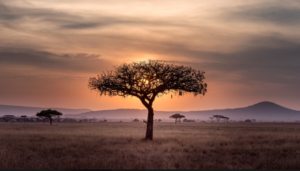
Lake Manyara National Park is one of the most distinctive destinations on Tanzania’s famous Northern Safari Circuit. Located beneath the dramatic escarpment of the Great Rift Valley, the park combines groundwater forest, acacia woodland, wetlands, open floodplains and the alkaline waters of Lake Manyara in a remarkably compact area.
A Tanzania safari tour Lake Manyara adventure can therefore feel very different from a safari in the open plains of Serengeti or the dry baobab country of Tarangire. Travelers may begin the morning driving beneath enormous forest trees filled with monkeys and baboons before emerging onto open areas where elephants, buffaloes, giraffes, zebras and wildebeest can appear.
Lake Manyara is especially famous for its tree-climbing lions, elephants and diverse birdlife. Flamingos can gather around the lake depending on water levels and feeding conditions, while hippos, pelicans, storks, herons and many other waterbirds make the wetlands especially rewarding for photographers and birdwatchers. TANAPA reports more than 400 bird species in the wider Lake Manyara ecosystem.
For travelers exploring northern Tanzania, Manyara is also conveniently located between Arusha, Tarangire, Karatu and Ngorongoro, making it easy to include within longer safari itineraries. The main gate is near Mto wa Mbu, approximately 125 km from Arusha by road.
Why Choose a Tanzania Safari Tour Lake Manyara Adventure?
Lake Manyara appeals to travelers who want more than simply ticking animals off a checklist. Its biggest attraction is the variety of environments encountered during a relatively short game drive.
The park sits at the foot of the Great Rift Valley escarpment and encompasses an impressive combination of landscapes. Visitors can explore dense groundwater forest, acacia woodland, marshes, floodplains, hot springs and the soda lake shoreline.
This habitat variety creates opportunities for very different wildlife encounters.
During one safari you may see:
- African elephants
- Giraffes
- Buffaloes
- Zebras
- Wildebeest
- Hippos
- Baboons
- Blue monkeys
- Impalas
- Bushbuck
- Warthogs
- Tree-climbing lions
- Numerous waterbirds and raptors
Lake Manyara’s location also makes it convenient for travelers following Tanzania’s Northern Circuit safari route.
A popular itinerary may look like:
Arusha → Tarangire → Lake Manyara → Serengeti → Ngorongoro → Arusha
Alternatively:
Arusha → Lake Manyara → Ngorongoro → Serengeti → Arusha
This flexibility makes Manyara suitable for short safaris as well as longer Tanzania wildlife adventures.
1. Lake Manyara’s Famous Tree-Climbing Lions
One of the animals most closely associated with Lake Manyara is the African lion.
But these are not simply lions walking across the savannah.
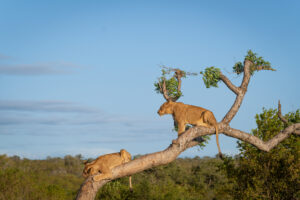
Lake Manyara became famous because lions have sometimes been observed resting in trees, particularly acacias.
Seeing a lion stretched along a branch can be one of the most memorable moments of a Lake Manyara safari adventure.
TANAPA itself promotes Lake Manyara as a destination known for tree-climbing lions.
However, travelers should understand something important:
Tree-climbing lions are never guaranteed.
Safari wildlife is completely wild.
Your guide may search areas where lions have recently been seen, but there is no guarantee that lions will be visible or that they will be resting in trees during your visit.
That uncertainty is part of what makes an African safari exciting.
2. Elephants of Lake Manyara
Elephants are another major highlight.
The groundwater forest, woodland and surrounding ecosystem provide suitable habitat for elephants, and visitors frequently encounter individuals or family groups moving through the vegetation.
Lake Manyara’s elephants can produce especially memorable photography opportunities because of the surrounding greenery.
Imagine driving slowly through the forest when an elephant emerges between enormous trees only a short distance from your safari vehicle.
Your guide stops the Land Cruiser.
Everyone becomes quiet.
The elephant moves calmly through the vegetation before disappearing again into the forest.
These intimate encounters make Manyara feel very different from the huge open landscapes found elsewhere in Tanzania.
TANAPA specifically identifies elephants as one of Lake Manyara’s signature wildlife attractions.
3. Flamingos and Lake Manyara Birdlife
Lake Manyara is internationally associated with flamingos.
The alkaline lake provides feeding habitat for both lesser and greater flamingos, although their numbers vary according to seasonal water conditions and food availability.
Therefore, travelers should avoid planning a safari with the expectation that enormous flamingo concentrations will always be present.
Sometimes impressive flocks may be seen.
At other times birds may be more scattered or located farther from accessible game-drive tracks.
Besides flamingos, Lake Manyara supports spectacular birdlife.
Birdwatchers may search for:
- Pelicans
- Cormorants
- Storks
- Herons
- Spoonbills
- Hornbills
- Bee-eaters
- African fish eagles
- Kingfishers
- Raptors
- Migratory waterbirds
TANAPA reports more than 400 bird species recorded in the ecosystem, making Lake Manyara an excellent stop for dedicated birdwatching safaris.
4. The Groundwater Forest
One of the most surprising experiences when entering Lake Manyara National Park is the lush groundwater forest.
Many first-time safari travelers expect every Tanzanian park to resemble endless dry grasslands.
Lake Manyara immediately challenges that expectation.
Underground water and freshwater springs support tall evergreen vegetation near the park entrance.
Massive fig and mahogany trees create shade while monkeys move through the branches overhead.
Look carefully and you may see:
- Blue monkeys
- Large baboon troops
- Bushbuck
- Hornbills
- Forest birds
- Occasionally elephants moving through thick vegetation
TANAPA describes this groundwater forest as one of the defining environments within the park.
5. Great Rift Valley Scenery
Lake Manyara is not only about animals.
The landscape itself is spectacular.
The towering escarpment of the Great Rift Valley rises dramatically behind the park.
During certain viewpoints, travelers can look across woodland, floodplains and the lake while the Rift Valley wall dominates the horizon.
This geological setting gives the park a strong visual identity.
For photographers, the combination of wildlife and landscape can be exceptional.
A giraffe silhouetted against the Rift Valley wall.
Elephants crossing green floodplains.
Flamingos gathering along the water.
A safari vehicle surrounded by forest.
These are scenes that make Lake Manyara different from almost every other park on Tanzania’s Northern Circuit.
6. Hippo Pools
Another popular Lake Manyara attraction is the wetland habitat used by hippos.
Visitors can sometimes observe hippos resting in shallow water while birds feed around them.
A single wetland area can contain an extraordinary mixture of wildlife.
You might see:
Hippos in the water.
Buffaloes nearby.
Storks walking through shallow marshes.
Pelicans flying overhead.
Zebras grazing along open areas.
TANAPA identifies the hippo pools and wetlands among Lake Manyara’s main natural attractions.
7. Maji Moto Hot Springs
Toward the southern part of the park are thermal areas commonly known as Maji Moto, meaning “hot water” in Swahili.
These mineral-rich springs are connected with the geological activity of the Rift Valley.
The environment is noticeably different from the northern forest.
Open landscapes, wetlands and mineral-streaked ground provide excellent opportunities for scenic photography.
Depending on road conditions and available time, your guide may incorporate this area into an extended Lake Manyara game drive.
TANAPA lists the Maji Moto hot springs among the park’s notable attractions.
8. Lake Manyara Game Drives
The most popular safari activity remains the traditional game drive.
Visitors explore the park aboard a safari vehicle while an experienced guide searches for wildlife.
A typical Tanzania safari vehicle is a 4×4 Land Cruiser with a pop-up roof, allowing passengers to stand safely inside the vehicle while photographing animals.
Game drives may pass through several environments.
Groundwater Forest
Excellent for monkeys, baboons, elephants and forest birds.
Acacia Woodland
A possible area for giraffes, antelopes and lions.
Floodplains
Open spaces where zebra, wildebeest and buffalo may appear.
Lake Shoreline
Excellent for waterbirds and landscape views when accessible.
Wetlands
Potential hippo and birding areas.
Southern Hot Springs
A scenic extension during longer game drives when conditions permit.
Day game drives are listed by TANAPA as one of Lake Manyara’s primary visitor activities.
9. Lake Manyara Canopy Walk
Visitors wanting something different from a traditional vehicle safari can consider the canopy walkway.
The walkway provides elevated views through part of the forest environment and offers opportunities to observe smaller wildlife from another perspective.
TANAPA describes Lake Manyara as having a long tree-canopy walkway with viewing platforms positioned among the trees.
It can be an interesting addition for:
Families
Nature lovers
Photographers
Birdwatchers
Travelers wanting to stretch their legs after several days inside a safari vehicle
Availability and operating conditions should always be confirmed when booking.
10. Birdwatching Safari
Lake Manyara is particularly suitable for travelers whose safari interests extend beyond the Big Five.
Dedicated birdwatchers can spend hours searching forests, wetlands and the lakeshore.
The range of habitats means different species can appear within relatively short distances.
During migratory periods, bird diversity can become even more interesting.
For professional photographers or serious birdwatchers, adding extra time in Manyara can therefore make more sense than visiting for only a short afternoon.
Best Time for a Tanzania Safari Tour Lake Manyara Adventure
Lake Manyara National Park can be visited throughout the year.
Each season creates a different experience.
June to October
These months correspond broadly with Tanzania’s main dry season.
Vegetation can become less dense, potentially making larger animals easier to locate.
Dry-season safaris also combine conveniently with wildlife viewing in:
Tarangire
Serengeti
Ngorongoro
Northern Serengeti migration areas
This period is one of Tanzania’s most popular safari seasons.
November to December
Short rains usually begin around this period, although weather patterns vary.
The landscape can start becoming greener.
Birdlife becomes increasingly interesting as migratory species arrive.
Short showers normally do not prevent safari activities for the entire day.
January to February
These months often have comparatively warm weather and can provide excellent safari conditions.
They are also popular for travelers combining Lake Manyara with southern Serengeti and Ndutu during the wildebeest calving season.
A common route might therefore include:
Lake Manyara → Ngorongoro → Ndutu
or
Tarangire → Lake Manyara → Ngorongoro → Ndutu
March to May
This generally corresponds with Tanzania’s long-rain season.
The landscape becomes exceptionally green.
Birdlife can be excellent.
Visitor numbers may be lower.
However, heavy rain can occasionally affect road conditions and wildlife distribution.
Photographers who appreciate dramatic skies and lush scenery may find this season rewarding.
How Long Should You Spend in Lake Manyara?
For most Tanzania safari travelers, half a day to one full day works very well.
Lake Manyara is often used as either the first or final wildlife destination on a Northern Circuit safari.
Half-Day Safari
Suitable if you have a tight itinerary.
Example:
Morning: Depart Karatu.
Late morning: Enter Lake Manyara.
Afternoon: Game drive.
Evening: Continue to Arusha.
Full-Day Safari
Better if you want more relaxed wildlife viewing and photography.
A full day provides additional time to explore different habitats rather than rushing between sightings.
Overnight Around Lake Manyara
Staying nearby gives you more flexibility.
Popular accommodation areas include:
- Mto wa Mbu
- Karatu
- Rift Valley escarpment
- Areas close to Lake Manyara
There are budget, mid-range and luxury options.
TANAPA notes that accommodation is available both around Mto wa Mbu and Karatu, while capacity inside the park itself is more limited.
Sample 1-Day Lake Manyara Safari from Arusha
A typical day could look like this:
6:30 AM – Depart Arusha
Meet your safari guide and travel toward Lake Manyara.
The road passes through northern Tanzania countryside before reaching Mto wa Mbu.
9:00 AM – Enter Lake Manyara National Park
Begin your wildlife drive in the groundwater forest.
Look for baboons, monkeys and elephants.
10:30 AM – Explore Woodland and Floodplain
Search for giraffes, buffaloes, zebra, wildebeest and lions.
1:00 PM – Lunch
Enjoy a packed or picnic lunch at an authorized area.
2:00 PM – Afternoon Game Drive
Continue toward wetlands, viewpoints or other wildlife areas depending on conditions.
4:00 PM – Exit Lake Manyara
Start the drive back toward Arusha.
6:00–7:00 PM – Arrive Arusha
Exact timing depends on road and safari conditions.
Sample 3-Day Tanzania Safari With Lake Manyara
Day 1 – Arusha to Tarangire
Depart Arusha and explore Tarangire National Park.
Look for:
Elephants
Giraffes
Zebras
Wildebeest
Lions
Baobab landscapes
Overnight near Karatu or Mto wa Mbu.
Day 2 – Ngorongoro Crater
Drive toward Ngorongoro Conservation Area.
Descend into the crater for a full wildlife experience.
Potential wildlife includes:
Lions
Elephants
Buffaloes
Hippos
Wildebeest
Zebras
Hyenas
Possibly black rhinoceros
Return to Karatu.
Day 3 – Lake Manyara to Arusha
Enter Lake Manyara for your final game drive.
Explore forest, wetlands, floodplains and lake views before returning to Arusha.
This is one of the best short itineraries for travelers who do not have enough time to reach Serengeti.
Sample 5-Day Northern Circuit Adventure
For travelers wanting a more complete experience:
Day 1 – Arusha → Tarangire
Game drive among elephants and baobabs.
Day 2 – Tarangire → Serengeti
Drive through Ngorongoro highlands toward the Serengeti plains.
Day 3 – Serengeti
Full-day Serengeti wildlife safari.
Day 4 – Serengeti → Ngorongoro
Morning game drive followed by transfer toward Ngorongoro.
Day 5 – Ngorongoro → Lake Manyara → Arusha
Explore Ngorongoro Crater and continue according to itinerary structure.
For a less rushed program, a sixth day can be added specifically for Lake Manyara.
Lake Manyara vs Tarangire
Travelers frequently ask whether they should visit Lake Manyara or Tarangire.
The answer depends on your priorities.
| Lake Manyara | Tarangire |
|---|---|
| Groundwater forest | Open woodland and savannah |
| Famous tree-climbing lions | Famous elephant populations |
| Flamingos and waterbirds | Baobab landscapes |
| Rift Valley scenery | Tarangire River |
| Hippo wetlands | Large dry-season wildlife concentrations |
| Excellent birdlife | Excellent general wildlife viewing |
If you have enough time, visiting both is ideal because the ecosystems are completely different.
Lake Manyara vs Ngorongoro Crater
Ngorongoro generally offers a stronger opportunity to see large concentrations of mammals during a relatively short period.
Lake Manyara provides greater habitat variety and birdwatching opportunities.
Therefore, they complement each other very well.
A traveler may experience:
Lake Manyara
Forest, lake, monkeys, elephants and birds.
Ngorongoro
Open crater floor, lions, buffalo, hyenas, hippos and potentially rhinos.
Together they produce a more varied safari.
Lake Manyara vs Serengeti
Serengeti is much larger.
It is famous for endless plains, predator populations and the Great Wildebeest Migration.
Lake Manyara is more compact and visually intimate.
Therefore, Lake Manyara should generally be viewed as a complementary destination rather than a replacement for Serengeti.
A strong first-time Tanzania itinerary frequently combines both.
Wildlife Photography in Lake Manyara
Photographers can find excellent opportunities throughout the park.
Good subjects include:
Elephants under forest canopy
Baboons and monkeys
Tree-climbing lions
Giraffes against the Rift Valley escarpment
Hippos
Flamingos
Pelicans
Raptors
Wetland reflections
Safari landscapes
The forest environment creates interesting lighting conditions that are quite different from open savannah photography.
Long lenses are useful for birds and distant wildlife, while wider lenses can capture the impressive Rift Valley scenery.
TANAPA also promotes filming and photography among the activities for visitors.
What to Pack for Lake Manyara Safari
Keep your safari packing simple.
Recommended items include:
- Lightweight neutral-colored clothing
- Comfortable closed shoes
- Sunglasses
- Hat
- Sunscreen
- Binoculars
- Camera
- Spare camera batteries
- Power bank
- Insect repellent
- Light jacket
- Refillable water bottle
- Personal medication
- Passport or identification
For early-morning departures, a light sweater or jacket is useful.
Private Lake Manyara Safari
Travelers wanting maximum flexibility should consider a private safari.
With a private vehicle you can normally control:
Departure times
Length of game drives
Photography stops
Meal timing
Wildlife interests
Birdwatching pace
Family requirements
A private safari is especially beneficial for photographers because the guide can spend longer at interesting sightings.
Group Lake Manyara Safari
Shared safaris can reduce the per-person cost.
Travelers share the safari vehicle with other guests following the same itinerary.
This option works especially well for:
Solo travelers
Couples on a budget
Backpackers
Students
Travelers comfortable with fixed schedules
The trade-off is reduced flexibility compared with a private safari.
Family Safari to Lake Manyara
Lake Manyara can work particularly well for families because game drives can be shorter than those required to reach deeper parts of Serengeti.
The changing scenery can also keep children interested.
Families may encounter:
Monkeys in the forest
Elephants beside the road
Giraffes
Hippos
Colorful birds
Zebras
Lions
Combining a game drive with the canopy walkway can add even more variety.
Honeymoon Lake Manyara Adventure
Lake Manyara can also be incorporated into romantic Tanzania honeymoon safaris.
Couples can stay in lodges overlooking the Rift Valley and combine Manyara with:
Serengeti luxury camps
Ngorongoro crater-rim lodges
Tarangire safari lodges
Zanzibar beach holidays
A popular honeymoon structure is:
Arusha → Tarangire → Lake Manyara → Ngorongoro → Serengeti → Zanzibar
This combines wildlife, scenery and tropical beaches in one journey.
Cultural Experiences Around Mto wa Mbu
The nearby town of Mto wa Mbu can add a cultural dimension to a wildlife-focused itinerary.
Depending on arrangements, visitors may participate in village walks, local market visits, cycling experiences or cultural tours.
TANAPA lists cultural visits around Mto wa Mbu among the visitor experiences associated with Lake Manyara.
This can be an enjoyable addition for travelers wanting to experience everyday Tanzanian life beyond national parks.
How to Reach Lake Manyara National Park
Lake Manyara is easily accessible from Arusha.
TANAPA states that the park is approximately 125 km from Arusha, with road travel normally taking around 2–2.5 hours, depending on conditions.
Its location near Mto wa Mbu makes it a natural stop en route to:
Karatu
Ngorongoro Conservation Area
Serengeti National Park
Lake Eyasi
Tarangire National Park
Manyara Airstrip can also support scheduled or charter aviation arrangements.
Lake Manyara Safari Accommodation
Accommodation selection depends on your budget.
Budget
Simple lodges and guesthouses around Mto wa Mbu and Karatu.
Mid-Range
Comfortable lodges with private rooms, restaurant facilities and attractive gardens.
Luxury
Boutique lodges and high-end properties situated on or near the Rift Valley escarpment.
Some luxury accommodations provide spectacular views over the Lake Manyara ecosystem.
Is Lake Manyara Worth Visiting?
Yes—particularly when incorporated intelligently into a Northern Tanzania itinerary.
Lake Manyara is ideal for travelers who value:
Different landscapes
Elephants
Birdwatching
Photography
Monkeys and baboons
Wetland ecosystems
Rift Valley scenery
Shorter game drives
Tree-climbing lion possibilities
It is especially worthwhile when combined with Tarangire, Ngorongoro and Serengeti rather than visited as your only Tanzanian wildlife destination.
Plan Your Tanzania Safari Tour Lake Manyara Adventure
A Tanzania safari tour Lake Manyara adventure offers something very different from the endless plains commonly associated with Tanzania.
Within a relatively small geographic area, travelers can move from dense forest into acacia woodland, wetlands, open floodplains and the shores of an alkaline lake.
Elephants can appear beneath towering trees.
Baboons may cross the road in large troops.
Hippos rest in wetlands.
Giraffes browse against the Great Rift Valley escarpment.
Flamingos and other waterbirds transform sections of the lakeshore.
And, with some luck, a lion may be spotted resting high in an acacia tree.
The park’s greatest advantage is its diversity.
Lake Manyara can be enjoyed during a one-day safari from Arusha, added to a short Tarangire-and-Ngorongoro adventure, or incorporated into a complete Northern Circuit safari including Serengeti.
For travelers seeking wildlife, dramatic scenery, birdwatching, photography and an easy connection between Tanzania’s major northern destinations, Lake Manyara National Park deserves a place in the itinerary.