Skip to content

A well-planned Tanzania wildlife safari itinerary gives you time to enjoy the animals, landscapes, and changing rhythm of life in the bush. It also balances game drives with realistic travel days, comfortable overnight stops, and opportunities to rest.
For a first visit, a route combining Tarangire National Park, Serengeti National Park, and Ngorongoro Crater offers a varied introduction to northern Tanzania. Tarangire brings elephant encounters and baobab scenery, the Serengeti offers expansive plains, and Ngorongoro adds a distinctive crater landscape.
This guide presents a suggested seven-day trip, including arrival and departure, and explains how to adapt it to your interests.
How Many Days Should You Allow?
When comparing safari itineraries, check whether the advertised duration includes airport transfers and hotel nights. A seven-day holiday with arrival and departure days provides less wildlife-viewing time than seven full days inside the parks.
For the route below, you have five days of safari travel and game viewing. Two nights in the Serengeti provide a full day of exploration between the journey into the park and the journey out.
Travelers with more time can add nights in a favorite destination. Extra nights often improve the experience more than adding another park: you spend less time packing and transferring, and more time observing wildlife.
Suggested Seven-Day Tanzania Wildlife Safari Itinerary
| Day | Route or activity | Overnight location |
|---|---|---|
| 1 | Arrive and transfer to Arusha | Arusha |
| 2 | Arusha to Tarangire; game drive | Near Tarangire or Karatu |
| 3 | Travel to Central Serengeti; game viewing as time allows | Central Serengeti |
| 4 | Full day exploring the Serengeti | Central Serengeti |
| 5 | Morning game drive; travel toward Ngorongoro | Crater rim or Karatu |
| 6 | Ngorongoro Crater game drive; return to Arusha | Arusha |
| 7 | Airport transfer or onward journey | Departure |
This is a suggested private safari route. Accommodation locations, road conditions, flight schedules, and seasonal wildlife movements may require adjustments.
Day 1: Arrival in Arusha
Arrive at Kilimanjaro International Airport or Arusha Airport and transfer to your hotel. Keep the rest of the day relaxed, especially after an overnight international flight.
Use your safari briefing to discuss dietary requirements, photography interests, luggage arrangements, and the next morning’s departure. Having these details settled helps your first safari day begin smoothly.
An arrival night also provides a useful buffer if your flight is delayed.
Day 2: Discover Tarangire National Park
After breakfast, depart for Tarangire and begin your first game drive. The park is known for elephants and prominent baobab trees. During drier periods, its river becomes an important gathering point for wildlife. Tarangire National Park
Spend time watching animal behavior rather than rushing between sightings. An elephant family moving through woodland or animals approaching water can be as memorable as a predator encounter.
Have lunch at a designated picnic area, then continue exploring before leaving for your accommodation. Staying near Tarangire reduces the evening transfer; staying in Karatu positions you farther along the route for the following day.
Day 3: Travel to the Serengeti
Today involves a substantial road journey toward Central Serengeti. Expect changing scenery and scheduled stops, but recognize that this is partly a transfer day.
Depending on your departure time, accommodation location, and arrival at the park, enjoy game viewing on the way to camp. Avoid planning this day as though it provides the same viewing time as a full day in the Serengeti.
Arrive for dinner and settle into your lodge or tented camp. Your guide can explain the plan for tomorrow based on recent sightings.
Day 4: A Full Day in the Serengeti
Dedicate the day to exploring the Serengeti. The park supports lions, leopards, elephants, buffalo, and other wildlife, alongside the moving herds associated with the Great Migration. Individual sightings remain unpredictable. TANAPA
Your guide may suggest a full-day drive with a picnic lunch or separate morning and afternoon outings. The choice depends on wildlife locations, your camp, and your preferred pace.
Allow time for quieter observations: birds around a waterhole, giraffes feeding, or antelope scanning the grassland. A rewarding safari includes these moments alongside headline sightings.
A balloon safari may be an optional addition, subject to availability, weather, and a separate booking.
Day 5: Serengeti to the Ngorongoro Highlands
Enjoy a morning game drive before traveling toward Ngorongoro. The schedule should leave enough time to reach your accommodation comfortably.
A lodge on the crater rim offers convenient access for the following morning. Accommodation in Karatu provides another option, with different settings and price levels.
Keep a warm layer accessible for the evening and early morning. After several active days, use this overnight stop to rest before your crater visit.
Day 6: Explore Ngorongoro Crater
Depart early for your descent into the crater. Ngorongoro’s enclosed landscape and year-round food and water support a rich wildlife community. se.tzembassy.go.tz
Follow the guide’s route through different habitats, allowing time for sightings and a picnic stop. Discuss any particular wildlife interests beforehand, while keeping expectations flexible.
After the crater visit, return to Arusha. An overnight stay gives you time to shower, reorganize luggage, and enjoy a relaxed final evening. If you prefer a flight that evening, confirm that the transfer and check-in schedule are practical before booking it.
Day 7: Departure or Continue to Zanzibar
Transfer to the airport for your onward journey. You can also extend your holiday with a beach stay in Zanzibar.
Confirm which airport your flight uses: Arusha Airport and Kilimanjaro International Airport are separate departure points. Your transfer must match the airport shown on your ticket.
When Should You Travel?
The best timing depends on what you hope to experience. Tanzania’s tourism guidance highlights July to September for travelers seeking a chance of Mara River migration crossings, and November to March for greener landscapes and birdwatching. Heavy rains in April and May can disrupt wildlife viewing and travel. Tanzania Tourism
A migration-focused itinerary needs more specific planning than a general wildlife trip. The herds move, and a Central Serengeti stay does not automatically place you near river crossings.
Ask where you should stay for your dates, how long transfers will take, and whether additional nights are needed. River crossings cannot be scheduled or guaranteed.
Choosing Your Accommodation
Your overnight locations affect both comfort and the time available for game drives.
Camping suits travelers who enjoy a simple outdoor experience. Ask what bedding is provided and whether bathrooms are shared.
Mid-range lodges and tented camps offer more comfort. A tented camp may have proper beds and a private bathroom, so it should not be confused with basic camping.
Luxury accommodation can add spacious rooms, attentive service, and special settings. However, a higher room price does not guarantee better sightings.
Choose accommodation by location as well as appearance. A beautiful property with a long daily transfer may provide less viewing time than a conveniently located camp.
What Determines the Safari Cost?
The price of a Tanzania wildlife safari itinerary depends on travel dates, group size, accommodation, park charges, vehicle arrangements, and optional activities.
Request a written quotation showing whether it includes:
- Park entry and applicable conservation charges.
- Accommodation and the stated meal plan.
- Safari vehicle, fuel, and guide.
- Drinking water and other specified drinks.
- Airport transfers and any domestic flights.
- Optional activities, tips, and other exclusions.
Compare the complete route and inclusions alongside the total price. Two quotations with the same number of days may offer very different amounts of time in the parks.
What Should You Pack?
Bring lightweight clothing, comfortable shoes, sun protection, a warm layer, and a light rain jacket. Binoculars help with distant sightings, while spare camera batteries and memory cards are useful for photography.
Use manageable luggage and confirm the operator’s storage arrangements. If your itinerary includes a small aircraft, check that airline’s baggage allowance before packing.
Can Kilipath African Safaris customize the route?
Share your dates, group size, preferred accommodation, and main interests with Kilipath African Safaris. These details help shape a Tanzania wildlife safari itinerary with suitable overnight locations and a practical daily pace.
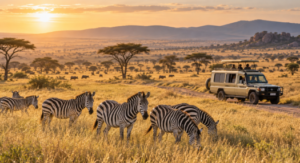
Image caption: Elephants in golden savanna grass with a safari vehicle in the distance—an AI-generated illustration.