Skip to content

A Tanzania wildlife safari Lake Manyara experience introduces travelers to one of the most diverse landscapes on Tanzania’s famous Northern Safari Circuit. Set beneath the dramatic Great Rift Valley escarpment, Lake Manyara National Park combines groundwater forest, acacia woodland, wetlands, open floodplains, hot springs, and an alkaline lake within one remarkably compact protected area.
Although travelers often associate Tanzania with the enormous plains of Serengeti or the wildlife-filled Ngorongoro Crater, Lake Manyara offers something different. Here, safari drives can take you from dense green forest filled with monkeys to open areas where elephants, giraffes, buffaloes, zebras, and other wildlife roam beneath the Rift Valley cliffs.
The park is particularly famous for its tree-climbing lions, elephant sightings, flamingos, hippos, baboons, and exceptional birdlife. Tanzania National Parks describes Lake Manyara as covering approximately 648.7 square kilometers and containing an unusually diverse range of habitats.
Where Is Lake Manyara National Park?
Lake Manyara National Park is located in northern Tanzania, beneath the western wall of the Great Rift Valley and close to the colorful town of Mto wa Mbu.
It is conveniently positioned along Tanzania’s Northern Circuit, making it easy to combine with:
- Tarangire National Park
- Ngorongoro Crater
- Serengeti National Park
- Arusha
- Karatu
- Cultural experiences around Mto wa Mbu
From Arusha, Lake Manyara is approximately 125 km by road, with the journey normally taking around 2 to 2.5 hours, depending on road and traffic conditions.
Its convenient location is one reason Lake Manyara works particularly well as the first or final wildlife destination on a longer Tanzania safari.
Why Choose a Tanzania Wildlife Safari Lake Manyara?
The biggest attraction of a Tanzania wildlife safari Lake Manyara is variety.
You do not spend the entire game drive crossing one type of landscape. Shortly after entering the park, travelers pass through lush groundwater forest fed by natural springs emerging near the Rift Valley escarpment.
As the drive continues, the vegetation changes into woodland, grassland, wetlands, and open areas around the lake.
This combination of environments supports mammals, primates and an impressive variety of birds. TANAPA identifies groundwater forest, alkaline lake shores, wetlands, acacia woodland, hippo pools, hot springs and the Great Rift Valley escarpment among the park’s major natural highlights.
For photographers, the constantly changing scenery also provides opportunities for dramatically different safari photographs within a relatively short drive.
Wildlife You Can See in Lake Manyara
1. Tree-Climbing Lions
Lake Manyara is famous internationally for lions that are sometimes seen resting on tree branches.
Seeing one is never guaranteed. Wildlife moves naturally, and lions can be difficult to locate among thick vegetation. However, finding a lion stretched across the branch of an acacia tree can become one of the most memorable moments of a Tanzania safari.
TANAPA specifically lists the park’s tree-climbing lions as one of its signature wildlife attractions.
Their unusual resting behavior has helped make Lake Manyara one of Tanzania’s most distinctive safari destinations.
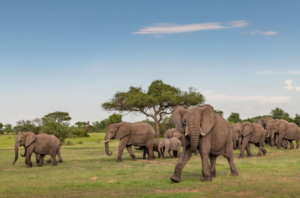
2. African Elephants
Elephants are another major highlight.
Lake Manyara’s forest and woodland habitats provide excellent environments for elephants, and visitors may encounter individuals or family groups moving between feeding and drinking areas.
Watching an elephant appear between the trees can be particularly impressive because encounters sometimes feel much closer than sightings across vast open plains.
Always remain inside the safari vehicle where required and follow the instructions of your professional guide, particularly around elephants.
3. Giraffes
Giraffes are frequently associated with Lake Manyara’s woodland and more open environments.
Their height makes them especially photogenic against the Rift Valley escarpment.
You may see giraffes feeding on trees, slowly crossing the safari track, or appearing alongside zebras and other herbivores.
4. Buffaloes
African buffaloes can also be encountered during Lake Manyara game drives.
They may occur individually or in groups, particularly around areas where water and grazing are available.
Large bulls can sometimes be observed resting around muddy or wet areas.
5. Hippos
Lake Manyara’s wetlands and hippo pools create opportunities to observe hippos.
Much of a hippo’s body may remain underwater during the daytime, so binoculars are useful for observing them from a safe distance.
Waterbirds are often found in the same environment, making these wetland areas especially interesting for wildlife photography.
6. Zebras and Wildebeest
Open floodplains support grazing animals including zebras and wildebeest.
Their numbers and exact locations vary throughout the year according to vegetation, water and natural wildlife movements.
7. Baboons and Blue Monkeys
One of the first things visitors may notice after entering Lake Manyara is the presence of primates.
The groundwater forest supports baboons and blue monkeys, while bushbuck and numerous forest bird species may also be encountered.
Baboons can occasionally appear close to roads and picnic areas, so visitors should never feed wildlife and should keep food properly secured.
Flamingos at Lake Manyara
Flamingos are strongly associated with Lake Manyara, but travelers should understand an important point:
Flamingo sightings are seasonal and cannot be guaranteed.
Their presence and concentration depend on factors such as water levels and feeding conditions.
When conditions are favorable, lesser and greater flamingos can gather on the alkaline lake alongside pelicans and other waterbirds.
This can create one of Lake Manyara’s most impressive scenes—pink birds spread across the water with the Rift Valley escarpment rising behind them.
However, travelers should book Lake Manyara for its entire ecosystem rather than visiting solely for flamingos.
Lake Manyara Is a Paradise for Birdwatchers
For bird lovers, Lake Manyara can be one of the highlights of a Tanzania safari.
TANAPA reports more than 400 bird species associated with the park’s different environments.
Depending on season and location, visitors may search for species such as flamingos, pelicans, storks, herons, spoonbills, fish eagles and bee-eaters.
The variety comes from the park’s mixture of:
Lake habitat: attracts water-dependent birds.
Wetlands: excellent for herons, storks and other waterbirds.
Groundwater forest: supports forest species.
Acacia woodland: provides habitat for many smaller birds and raptors.
Open floodplain: creates another completely different birding environment.
Bring binoculars even if birdwatching is not your main priority. Many travelers arrive primarily interested in lions and elephants but leave Lake Manyara impressed by its birdlife.
The Groundwater Forest
One feature that immediately distinguishes Lake Manyara from many other northern Tanzania parks is its groundwater forest.
Freshwater springs emerging from beneath the Rift Valley feed dense vegetation near the park entrance.
Tall trees create a cool, almost tropical atmosphere where baboons, monkeys, bushbuck and birds can be found.
Driving through this green environment provides a dramatic contrast to the open savannah landscapes many travelers imagine when thinking about an African safari.
The Great Rift Valley Escarpment
The huge Rift Valley wall forms a spectacular background to Lake Manyara.
From many sections of the park, visitors can see steep cliffs rising above the forests and floodplains.
This scenery is one reason Lake Manyara is worth visiting even when major predators are difficult to find.
Photographers can capture elephants, giraffes or safari vehicles against one of northern Tanzania’s most recognizable geological landscapes.
Maji Moto Hot Springs
The southern region of Lake Manyara includes natural thermal areas commonly known as Maji Moto, meaning “hot water” in Swahili.
These mineral-rich springs provide another example of the geological forces associated with the Rift Valley.
TANAPA lists Maji Moto among the park’s natural attractions along with viewpoints, wetlands, forest and lake environments.
Safari Activities in Lake Manyara
Game driving is the main activity, but travelers can experience Lake Manyara in several ways.
Day Game Drives
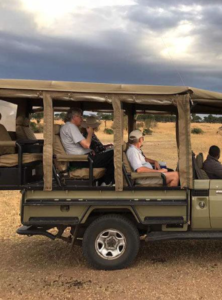
Most visitors explore Lake Manyara in a 4×4 safari vehicle with a professional guide.
A pop-up roof provides excellent visibility for observing and photographing wildlife.
Because the park is relatively compact, Lake Manyara can fit comfortably into itineraries that continue toward Ngorongoro or Serengeti.
Birdwatching
With hundreds of recorded species and several habitats, Lake Manyara is an excellent location for both beginner and experienced birdwatchers.
Canopy Walkway
Lake Manyara also offers a canopy walkway experience that gives visitors a different perspective of the forest environment. TANAPA lists the canopy tree walk among the experiences available in the park.
Photography
Between elephants, primates, birds, forest scenery, Rift Valley cliffs and the lake itself, photographers have an enormous range of subjects.
Morning and late-afternoon light can be particularly attractive.
Mto wa Mbu Cultural Experience
Lake Manyara can also be combined with a cultural visit around nearby Mto wa Mbu.
This provides a chance to experience an aspect of local life beyond wildlife viewing and can be particularly useful for travelers who want their Tanzania journey to combine nature and culture.
Best Time for a Tanzania Wildlife Safari Lake Manyara
Lake Manyara National Park can be visited throughout the year.
The ideal period depends on what kind of safari experience you prefer.
June to October
These are generally drier months.
Vegetation can become less dense in certain areas, and wildlife often concentrates near available water. These months also combine easily with Serengeti itineraries during Tanzania’s popular northern safari season.
November to May
The greener months transform Lake Manyara into a lush landscape.
This period can be excellent for scenery, photography and birdwatching.
Migratory birds can add even more diversity to an already impressive bird population.
Rain should not automatically discourage visitors. Short periods of rain can produce dramatic skies, fresh vegetation and beautiful photographic conditions.
Wildlife remains wild in every season, however, so no specific animal sighting should ever be guaranteed.
How Long Should You Spend at Lake Manyara?
For many travelers, one day is enough to experience Lake Manyara’s main environments.
A common northern circuit program might look like:
Day 1: Arusha → Lake Manyara → Karatu
Day 2: Ngorongoro Crater
Day 3: Drive toward Serengeti
Day 4: Serengeti game drives
Alternatively, Lake Manyara can be included toward the end of a Tarangire–Serengeti–Ngorongoro itinerary.
Travelers particularly interested in birding, photography or a slower journey may choose to stay longer in the area.
Lake Manyara or Tarangire?
Travelers frequently compare the two parks because both are relatively accessible from Arusha.
They offer different experiences.
Choose Lake Manyara if you particularly enjoy:
- Green and varied scenery
- Primates
- Birdwatching
- Wetlands
- Rift Valley landscapes
- The possibility of tree-climbing lions
- A compact game-drive destination
Consider Tarangire if your priority is:
- Larger savannah landscapes
- Baobab scenery
- Extended wildlife drives
- Large elephant concentrations, especially during favorable seasonal conditions
Many northern Tanzania itineraries include both, allowing travelers to experience two very different ecosystems.
Lake Manyara, Ngorongoro and Serengeti Safari
One of the best ways to experience Lake Manyara is as part of a longer Northern Circuit journey.
A 4–7 day safari can combine several destinations, for example:
Arusha → Lake Manyara → Serengeti → Ngorongoro Crater → Arusha
Longer itineraries can also add Tarangire National Park.
This approach provides enormous variety. Lake Manyara contributes forest and lake environments; Serengeti offers vast plains; Ngorongoro provides spectacular crater scenery; and Tarangire contributes baobab landscapes and another important wildlife ecosystem.
What to Pack for Lake Manyara Safari
You do not need complicated equipment, but several items can improve your experience.
Bring comfortable neutral-colored clothes, a light jacket for early mornings, sunscreen, sunglasses, a hat, insect repellent, binoculars, camera equipment, spare batteries or a power bank, reusable water bottle and closed comfortable shoes.
TANAPA also recommends sun protection, binoculars and appropriate wildlife-safari clothing for visitors.
Responsible Wildlife Viewing
A Tanzania wildlife safari should always respect the animals and environment.
Remain inside the safari vehicle except in officially designated areas. Never feed monkeys, baboons or other wildlife. Keep noise low around animals and bird colonies. Follow park regulations and your guide’s instructions, and maintain appropriate distances from elephants, hippos and predators.
TANAPA specifically advises visitors to remain on designated routes and boardwalks, avoid feeding animals and maintain safe wildlife-viewing distances.
Responsible tourism helps protect Lake Manyara’s forests, wetlands and wildlife for future generations.
Is Lake Manyara Worth Visiting?
Yes—especially when you view it as a complete ecosystem rather than expecting one particular animal.
Lake Manyara’s appeal comes from the combination of dense forest, elephants, primates, wetlands, birdlife, open plains, the alkaline lake and the spectacular Great Rift Valley escarpment.
The possibility of finding a tree-climbing lion adds excitement, while the park’s compact size makes it particularly suitable for travelers combining several northern Tanzania destinations.
Plan Your Lake Manyara Safari with Kilipath African Safaris
A Tanzania wildlife safari Lake Manyara can be organized as a day trip or incorporated into a longer Tanzania safari covering Tarangire, Ngorongoro and Serengeti.
With Kilipath African Safaris, travelers can arrange private or shared safari options depending on their preferred itinerary, travel style and budget.
Whether your dream is photographing elephants beneath the Rift Valley, searching for tree-climbing lions, watching monkeys in the groundwater forest or combining Lake Manyara with Tanzania’s most famous national parks, this compact destination adds something unique to a Northern Tanzania adventure.
Lake Manyara may be smaller than Serengeti, but its remarkable variety of landscapes, wildlife and birdlife makes it a rewarding addition to a Tanzania safari.