Lake Manyara vs. Nyerere Safari Prices | Tanzania Guide
A Lake Manyara safari can cost USD 150–220 per person for a shared day trip from Arusha. A published example of a…
Read articleArusha City - Tanzania
Safari & Travel Tips
September 1, 2026 · 15 min read
Discover breathtaking landscapes, diverse wildlife, fascinating birdlife, and authentic Tanzanian hospitality with our Tanzania wildlife safari Lake Manyara deal. This carefully designed safari experience is ideal for couples, families, solo travelers, photographers, and groups searching for an affordable and memorable wildlife adventure in northern Tanzania.
Lake Manyara National Park may be smaller than Serengeti National Park or the Ngorongoro Conservation Area, but it offers an impressive concentration of habitats and wildlife. During a single game drive, you can explore groundwater forests, open grasslands, acacia woodlands, wetlands, hot springs, and the shores of the beautiful alkaline lake.
Our Lake Manyara safari deals can be arranged as a private trip, a shared group safari, a day tour from Arusha, or part of a longer Northern Circuit itinerary. Whether you have one day or an entire week, we can help you create a safari that matches your available time, accommodation preference, and budget.
Lake Manyara National Park is located at the base of the Great Rift Valley escarpment in northern Tanzania. Its convenient position makes it easy to combine with Tarangire National Park, Ngorongoro Crater, Serengeti National Park, and the cultural communities around Mto wa Mbu.
The park is known for its beautiful scenery and variety of ecosystems. You can begin your game drive beneath a dense groundwater forest, continue through woodland and grassy floodplains, and eventually reach viewpoints overlooking the lake.
Reasons to include Lake Manyara in your Tanzania safari include:
Lake Manyara is particularly suitable for travelers who want to experience more than the famous open plains of Tanzania. Its combination of forest, wetlands, woodland and lake scenery creates a distinctive safari atmosphere.
Lake Manyara National Park lies approximately 120–130 kilometres from Arusha, depending on your departure point and route. The road journey usually takes about two to three hours.
The park sits between the Great Rift Valley escarpment and Lake Manyara. Although water levels and wildlife distribution change according to rainfall and seasonal conditions, the area remains an important habitat for many species.
A typical Lake Manyara safari begins with a morning departure from Arusha. After arriving at the park entrance and completing registration, you enter the groundwater forest and begin your game drive. Your guide explores different habitats based on current animal movements, road conditions, weather and recent sightings.
You will normally stop at a designated picnic area for lunch before continuing the afternoon game drive. A day trip usually returns to Arusha in the late afternoon or early evening. On a multi-day safari, you may instead continue to Karatu, Mto wa Mbu, Tarangire or another destination.
Lake Manyara National Park supports an impressive range of wildlife. Sightings can never be guaranteed because the animals live freely in their natural environment, but every game drive offers something interesting.
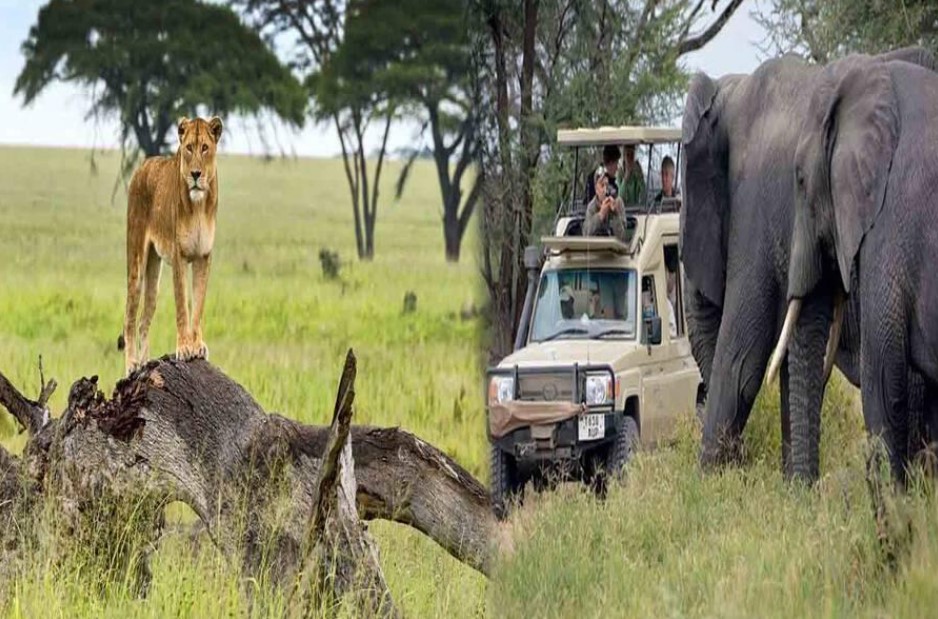
Elephants are among the most exciting animals to encounter in Lake Manyara. They may be seen walking through the woodland, feeding on branches or moving between forested areas and open spaces.
Watching elephants in this environment is particularly memorable because the vegetation creates opportunities for close but safe observation. Your guide will maintain a respectful distance and explain the elephants’ behavior, family structure and communication.
Lake Manyara is often associated with tree-climbing lions. Lions may climb trees to rest, escape insects, enjoy a breeze or gain a better view of their surroundings.
However, tree-climbing behavior is unpredictable. A visitor should appreciate it as a special possibility rather than a guaranteed sighting. Lions can also be found resting on the ground or moving through woodland and grassland.
Large troops of olive baboons are frequently observed, particularly in and around the groundwater forest. Visitors may see them grooming, feeding, playing, carrying their young or moving together along the road.
Blue monkeys can also be found in the forest. Their movements through the trees can make them more difficult to photograph, but they are one of the park’s characteristic primates.
Masai giraffes are regularly encountered in woodland and open areas. Their height allows them to feed on leaves that many other herbivores cannot reach.
Lake Manyara’s dramatic escarpment and vegetation provide a beautiful background for giraffe photography.
African buffaloes may appear alone, in small groups or in larger herds. They often remain close to areas with water and suitable grazing.
Although buffaloes can look calm, they are powerful wild animals. All observations must take place from the safety of the safari vehicle and under the instructions of your guide.
Zebras and wildebeest can be found on the open floodplains. Their numbers and locations may change with rainfall, water levels and the availability of fresh grass.
Unlike the Serengeti, Lake Manyara is not primarily visited for the Great Migration. Nevertheless, seeing grazing animals beneath the Great Rift Valley escarpment is a wonderful experience.
Hippos can often be observed in suitable wetland areas. They spend much of the day in water to stay cool, becoming more active on land during the evening and night.
A viewing point may provide an opportunity to watch hippos while also observing waterbirds and the landscape around the lake.
Depending on seasonal conditions and luck, you may also encounter:
Leopards live in the wider ecosystem but are secretive and difficult to find. Your guide will look for fresh tracks, warning calls and other signs of predator activity.
Lake Manyara is an excellent destination for travelers interested in birds. The combination of lake, forest, woodland and floodplain habitats attracts many resident and migratory species.
Depending on the season and local conditions, visitors may see flamingos, pelicans, storks, herons, egrets, hornbills, kingfishers, eagles and other waterbirds or woodland species.
Flamingo numbers vary considerably because they depend on water depth, food availability, salinity and conditions elsewhere in the Rift Valley. Advertisements sometimes show the entire shoreline covered in pink flamingos, but such scenes are seasonal and should not be promised for every visit.
Travelers who are serious about birdwatching should inform us while planning the safari. We can arrange a private itinerary with more time at birding locations and, subject to availability, a guide with strong bird identification knowledge.
One of the park’s greatest attractions is its changing scenery. The compact area contains several different habitats, each supporting different plants and animals.
Water from the nearby highlands and escarpment supports a lush forest close to the park entrance. Tall trees and dense vegetation provide shelter for monkeys, baboons, elephants, bushbucks and many birds.
The cool, shaded environment feels very different from Tanzania’s open savannahs.
Acacia woodland offers food and shelter to giraffes, elephants, antelopes and numerous bird species. Predators may also use the vegetation for shade or concealment.
The open floodplains provide grazing areas for zebras, wildebeest, buffaloes and other herbivores. Animal distribution changes according to rainfall and lake levels.
Wetlands support hippos, waterbirds and many smaller species. The appearance of the lakeshore can change substantially between dry and rainy periods.
The steep escarpment rising behind the park creates one of Lake Manyara’s most recognizable landscapes. It also makes the area surrounding the park attractive for hiking, cycling, cultural activities and scenic accommodation.
Our safari deal is designed to provide good value without compromising essential safety, service or wildlife-viewing quality. The final price depends on the number of travelers, travel dates, itinerary length, accommodation standard and whether you choose a private or shared safari.
A standard package may include:
Each quotation clearly explains what is included and excluded. This allows you to compare options fairly and avoid unexpected costs.
Your guide collects you from your hotel or an agreed pickup location in Arusha. After a short briefing, you begin the drive toward Lake Manyara National Park.
The journey passes through northern Tanzania’s countryside and may offer views of villages, farms, busy roadside communities and the Great Rift Valley landscape.
After completing the entrance formalities, your game drive begins in the groundwater forest. Look for baboons, blue monkeys, bushbucks and elephants as your guide drives slowly through the vegetation.
You then continue toward woodland, floodplain and wetland habitats. Your exact route is chosen according to road accessibility and the latest wildlife information.
Lunch is normally served at an authorized picnic site. Please do not feed birds, monkeys or other wildlife. Feeding animals can change their behavior and may create safety problems for future visitors.
Dietary requirements such as vegetarian, vegan or halal meals can generally be accommodated when communicated in advance.
After lunch, you continue searching for giraffes, zebras, buffaloes, elephants, hippos, lions and birdlife. The afternoon light can be beautiful for landscape photography.
You exit the park and drive back to Arusha. Arrival is generally in the late afternoon or early evening, although the exact time depends on traffic, road conditions and the game-drive schedule.
Depart Arusha after breakfast and travel to Lake Manyara National Park. Enjoy a morning and afternoon game drive with a picnic lunch.
After the game drive, continue to your lodge, tented camp or campsite in Mto wa Mbu or Karatu. Dinner and overnight are provided according to your selected package.
After an early breakfast, travel to the Ngorongoro Conservation Area. Descend into the crater for a game drive among its grasslands, forests and wetlands.
The crater is known for its dense wildlife population and the possibility of seeing lions, elephants, buffaloes, hippos, zebras, wildebeest and, with luck, the endangered black rhinoceros.
After lunch and additional wildlife viewing, ascend from the crater and return to Arusha.
This combination is suitable for travelers who have limited time but want to experience two very different ecosystems.
Depart Arusha and travel to Tarangire, a park famous for its baobab trees, elephants and seasonal wildlife concentration around the Tarangire River.
Enjoy a game drive and picnic lunch before continuing to your accommodation.
Travel to Ngorongoro and descend to the crater floor for a full game-drive experience. Explore grasslands, woodland and wetland habitats before returning to your lodge or camp.
After breakfast, visit Lake Manyara National Park. Explore the forest, floodplains and lakeshore before returning to Arusha in the evening.
The order of the parks may be changed to improve logistics or accommodate availability.
Travelers with four or more days can combine Lake Manyara with Serengeti National Park and Ngorongoro Crater. A typical itinerary might include:
Adding extra nights in Serengeti provides more time for wildlife viewing and reduces the pressure of long driving days.
Private safaris offer the greatest flexibility. Shared safari routes follow fixed schedules and may not support every requested combination.
A private safari provides a dedicated vehicle and guide for your booking. You will not share the vehicle with travelers outside your party.
This option is recommended for:
A private safari allows you to decide, within park regulations, how long to remain at sightings and when to take breaks. It is also easier to arrange cultural visits or accommodation upgrades.
Budget camping is the most economical way to enjoy a multi-day Tanzania wildlife safari. It generally includes tents, mattresses, sleeping bags, meals prepared by a safari cook and shared campsite facilities.
Public campsites offer an adventurous experience but have simpler bathrooms and limited electricity. Hot water and reliable charging facilities cannot always be guaranteed.
Mid-range packages use comfortable lodges or tented camps, usually with private bathrooms. This option provides a good balance between comfort and affordability.
Facilities vary, so each accommodation should be checked individually rather than assuming that every property has air conditioning, continuous electricity or strong Wi-Fi.
Luxury itineraries feature higher-end lodges or tented camps with enhanced service, spacious rooms and attractive locations. Some properties offer swimming pools, private decks, premium dining and views over the Rift Valley.
A luxury package improves accommodation and service standards, but wildlife sightings remain dependent on nature.
Lake Manyara can be visited throughout the year. The best period depends on your interests.
The drier months generally offer comfortable road conditions and easier wildlife observation in less dense vegetation. This is a popular travel period, so early booking is recommended.
Short rains may bring greener landscapes and refreshing scenery. Rainfall patterns vary, and showers do not necessarily continue throughout the day.
These months can provide warm weather, green landscapes and excellent opportunities to combine Lake Manyara with other Northern Circuit destinations.
This is traditionally the wetter period. The park can be lush and beautiful, with fewer visitors and good birdwatching. Some roads or accommodation operations may be affected by heavy rain, so flexible planning is useful.
Climate patterns are becoming less predictable. Our team can advise you based on current conditions when you make your inquiry.
Your safari can be combined with several optional experiences around Mto wa Mbu and the Rift Valley.
A guided cultural tour can introduce visitors to local farming, food production, markets, workshops and community life. The experience should be organized respectfully through a reputable local guide.
Cycling tours may pass through farms, local neighborhoods and scenic countryside. Routes and difficulty levels vary.
When water levels and operating conditions permit, canoeing may be available in designated areas. This activity must be arranged through an authorized operator and is subject to safety and environmental conditions.
A canopy walkway can provide a different perspective of the forest. Availability, fees and operating conditions should be confirmed when booking.
Night game drives may be available in approved areas through authorized operators. They offer the possibility of observing nocturnal animals not usually seen during daytime drives.
Travelers can arrange a traditional meal or cooking experience in the Mto wa Mbu area. This is a good opportunity to learn about Tanzanian ingredients and regional dishes.
Optional activities may carry additional charges and should be requested before finalizing the itinerary.
For a comfortable Lake Manyara safari, consider packing:
Bright colors are not prohibited, but neutral shades are generally more practical. Avoid wearing heavy perfume because it may attract insects.
Lake Manyara offers excellent opportunities for landscape, wildlife and bird photography. A telephoto lens is useful for birds and distant animals, while a wider lens can capture the forest and escarpment.
Useful photography tips include:
Our safari vehicles have pop-up roofs for wildlife viewing. Charging sockets may be available, but travelers should bring a power bank because electricity cannot be guaranteed everywhere.
Responsible tourism protects wildlife and supports host communities. During your safari:
A good safari is not only about seeing animals. It is also about ensuring that future generations can experience healthy ecosystems and respected communities.
We understand that choosing a safari company involves trust. Our goal is to provide clear communication, dependable arrangements and an itinerary suited to your expectations.
When you book with us, you receive:
We can also assist with Zanzibar extensions, domestic flights, Kilimanjaro trekking, Mount Meru trekking and additional wildlife destinations.
Experience the forests, floodplains, wildlife and dramatic scenery of one of northern Tanzania’s most distinctive national parks. Whether you want an affordable day trip, a private family safari, a romantic lodge experience or a complete Northern Circuit adventure, we can prepare a package around your needs.
Send us the following details to receive a personalized quotation:
Contact us today and let us create your Tanzania wildlife safari Lake Manyara deal—a journey filled with beautiful scenery, fascinating wildlife and unforgettable moments.
A Lake Manyara safari can cost USD 150–220 per person for a shared day trip from Arusha. A published example of a…
Read articlePlanning a Tanzania safari that combines Lake Manyara National Park and Nyerere National Park is an excellent way to experience the country's…
Read articlePlanning an unforgettable African wildlife adventure from Zanzibar? Understanding the Tanzania safari package Zanzibar price is an important first step toward choosing…
Read articlePlanning an African wildlife adventure? Understanding the group Tanzania safari price is an important step toward choosing an affordable and unforgettable safari…
Read article