

Budget Ngorongoro Crater Safari Holiday
Planning a budget Ngorongoro Crater safari holiday from Arusha? Compare a crater day trip, a two-day Tarangire and Ngorongoro safari, or a…
Read articleArusha City - Tanzania
Safari & Travel Tips
August 22, 2026 · 9 min read
Tarangire National Park is one of the finest wildlife destinations in northern Tanzania. Famous for its enormous elephant herds, ancient baobab trees and beautiful savannah landscapes, the park offers an authentic safari experience without the heavier crowds sometimes found in other popular reserves.
The Tarangire River is the park’s principal water source. During the dry season, it attracts elephants, zebras, wildebeest, giraffes, buffaloes and numerous antelope species. Predators—including lions, leopards, cheetahs and spotted hyenas—follow these animals, creating excellent opportunities for dramatic wildlife sightings.
Tarangire is approximately a two-hour drive from Arusha, making it suitable for day trips and longer northern Tanzania safari itineraries.
| Category | Details |
|---|---|
| Location | Northern Tanzania |
| Distance from Arusha | Approximately 2–3 hours by road |
| Best known for | Elephants, baobab trees and dry-season wildlife |
| Best overall period | June to October |
| Green season | November to May |
| Recommended stay | One or two nights |
| Main activity | Guided game drives |
| Suitable for | Couples, families, photographers and groups |
| Nearby destinations | Lake Manyara, Ngorongoro Crater and Serengeti |
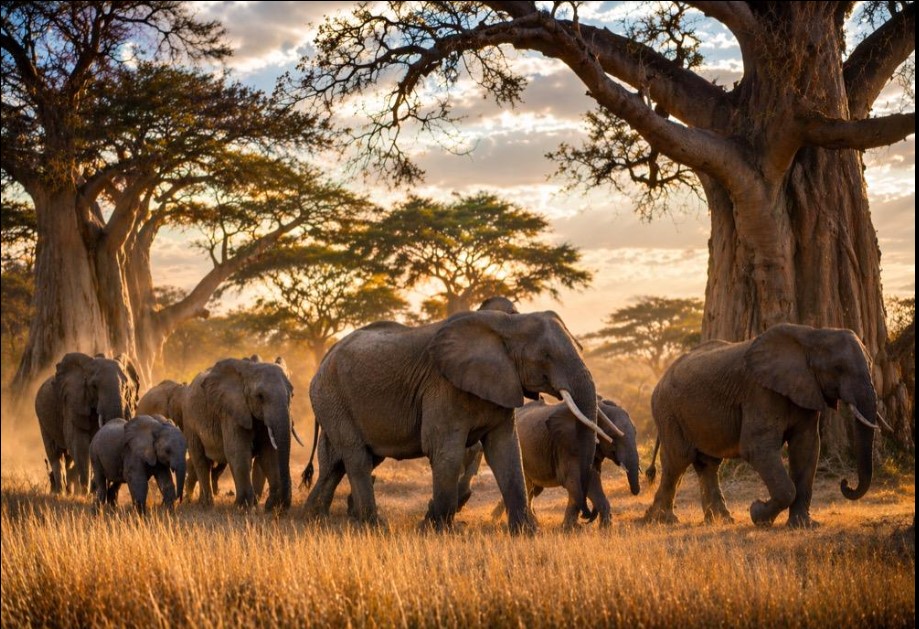
Tarangire is particularly famous for elephants. Visitors may encounter families walking between baobab trees, gathering beside the river or crossing directly in front of safari vehicles.
Observing their social behavior is one of the park’s greatest highlights. Young elephants play under the protection of their mothers while larger adults lead the herd toward water and feeding areas.
The landscape is dominated by magnificent baobab trees, some of which are hundreds of years old. Their enormous trunks and unusual branches create one of Tanzania’s most recognizable safari settings.
Baobabs store water inside their trunks, helping them survive Tarangire’s long dry seasons. Elephants sometimes strip their bark to reach the moisture contained beneath it.
The Tarangire River provides essential water for wildlife throughout the dry season. As temporary water sources disappear, animals migrate toward the river, producing impressive concentrations of wildlife.
A game drive along the river may reveal elephants, buffaloes, zebras, wildebeest and giraffes drinking or resting nearby. Lions and other predators are also frequently found around these productive areas.
Although Tarangire is part of Tanzania’s popular Northern Safari Circuit, many travelers visit it only briefly. Spending a full day or staying overnight allows you to explore quieter sections of the park and enjoy a more relaxed experience.
A Tanzania wildlife safari in Tarangire can include sightings of:
Tarangire is not normally considered a complete Big Five destination because rhinoceros sightings are extremely unlikely. However, elephants, lions, buffaloes and occasionally leopards can be seen.
Tarangire is also an outstanding destination for bird lovers, with hundreds of recorded species. Its combination of woodland, grassland, riverine vegetation and seasonal wetlands supports remarkable bird diversity.
Travelers may see:
The green season is particularly rewarding because migrant species arrive, resident birds display colorful breeding plumage and the landscape becomes lush.
The dry season is generally the best period for concentrated wildlife viewing. Animals gather around the Tarangire River and other remaining water sources, increasing the possibility of seeing large herds.
Advantages include:
This is also a busy travel season, so early accommodation reservations are recommended.
The rainy or green season transforms Tarangire into a vibrant landscape. Vegetation becomes greener, migratory birds arrive and many animals give birth.
Advantages include:
Wildlife remains present throughout the year, although some migratory animals disperse beyond the central river area when water becomes widely available.
April and May generally receive heavier rainfall. Roads can become muddy, and afternoon showers are possible. Nevertheless, the park remains beautiful and peaceful.
Travelers considering these months should select suitable accommodation and use an experienced safari operator with a properly equipped four-wheel-drive vehicle.
A one-day trip is suitable for travelers with limited time. It usually begins early in Arusha and includes several hours of game viewing before returning in the evening.
This option provides a good introduction, but the day involves considerable driving.
Two days provide a more complete Tarangire experience. Staying near or inside the park allows you to enjoy morning and late-afternoon game drives when wildlife is particularly active.
This option is ideal for photographers, couples and travelers who prefer a less hurried itinerary.
Tarangire combines naturally with:
A four- to seven-day northern Tanzania safari can include Tarangire alongside Serengeti and Ngorongoro.
Morning: Depart Arusha after breakfast and drive to Tarangire National Park.
Late morning and afternoon: Enjoy a game drive through baobab woodland, open savannah and the Tarangire River area. Stop for a packed or hot lunch at an approved picnic location.
Evening: Leave the park and return to Arusha.
Day 1: Arusha to Tarangire
Travel from Arusha to the park and begin your game drive. Explore wildlife-rich areas around the river before continuing to your lodge or camp.
Day 2: Tarangire to Arusha
Take another morning game drive, visiting a different section of the park. After lunch, return to Arusha or continue to another safari destination.
Day 1: Arusha to Tarangire National Park
Day 2: Tarangire area to Serengeti National Park
Day 3: Serengeti to Ngorongoro Conservation Area
Day 4: Ngorongoro Crater tour and return to Arusha
This is a popular option for travelers who want to see several different ecosystems within a limited period.
Public camping is usually the most affordable option. A camping package may include tents, mattresses, sleeping bags, meals prepared by a safari chef and shared bathroom facilities.
Camping brings you close to nature, but travelers should expect simple facilities and natural nighttime sounds.
Budget lodges are generally located outside the park and offer beds, private or shared bathrooms, meals and essential services. They are suitable for travelers who want more comfort than camping while controlling costs.
Mid-range camps typically provide spacious furnished tents, private bathrooms, proper beds and restaurant facilities. They combine comfort with a traditional safari atmosphere.
Luxury properties may offer panoramic views, swimming pools, premium dining, private decks and highly personalized service. Some are located inside private concessions or scenic wilderness areas near the park.
The best accommodation depends on your budget, travel dates and preferred level of comfort.
A standard package may include:
Always read the quotation carefully because inclusions vary between companies and accommodation categories.
Common exclusions include:
Ask for a detailed list of inclusions and exclusions before paying a deposit.
The cost depends on:
Private safari prices per person usually decrease when more travelers share the vehicle. A one-day trip may appear cheaper, but a multi-day itinerary often provides better overall value and a more relaxed experience.
Request a personalized quotation for accurate prices based on your dates and group size.
Recommended items include:
Avoid very bright colors. Dark blue and black clothing can also attract tsetse flies in some woodland areas.
For better safari photographs:
Tarangire’s elephants, baobabs and open landscapes are particularly attractive during sunrise and late-afternoon light.
Tarangire can be an excellent family destination. Children can learn about elephants, animal tracks, ecosystems and conservation while enjoying exciting game drives.
Families should consider:
Parents should always follow the guide’s safety instructions and closely supervise children at unfenced accommodation.
Tarangire is generally safe when visitors follow park regulations and professional guidance.
Essential precautions include:
Wild animals may move through camps, especially at night. Always request an escort when required.
Travelers can reduce their environmental impact by:
A responsible safari protects the ecosystem and supports communities connected to conservation.
A Tarangire safari combines close elephant encounters, dramatic baobab scenery and rewarding game drives in one of northern Tanzania’s most distinctive national parks.
Kilipath African Safaris can arrange private or shared tours based on your dates, group size and preferred accommodation level. Your itinerary can also combine Tarangire with Serengeti National Park, Ngorongoro Crater and other outstanding Tanzanian destinations.
Contact us with your travel dates, number of travelers and preferred budget to receive a personalized Tarangire safari itinerary and quotation.
Planning a budget Ngorongoro Crater safari holiday from Arusha? Compare a crater day trip, a two-day Tarangire and Ngorongoro safari, or a…
Read articleA Lake Manyara safari can cost USD 150–220 per person for a shared day trip from Arusha. A published example of a…
Read articleA Tanzania safari from Zanzibar can mean a short mainland trip during your beach holiday or a complete package with flights, game…
Read articleLooking for a group Tanzania safari price from Kilipath African Safaris? A published example for our four-day shared camping safari through Tarangire,…
Read article

