Skip to content
Tarangire and Ruaha offer two different sides of a Tanzania safari. Tarangire is known for elephant herds, baobab trees and wildlife drawn to the Tarangire River. Ruaha offers a larger, more remote wilderness, with game drives through river valleys, woodland and rocky landscapes. Visiting both gives you time to enjoy familiar safari highlights and explore a park that sees fewer visitors.
The important detail when planning Tarangire and Ruaha safari tours is geography. Tarangire belongs to Tanzania’s northern safari circuit, while Ruaha is in the south-central part of the country. They are not neighboring parks. A trip combining them needs enough days and a carefully planned transfer between regions.
Why visit Tarangire National Park?
Tarangire makes a rewarding beginning to a safari from Arusha. Its landscape is immediately recognizable: broad savanna, huge baobabs and the Tarangire River winding through the park. Elephants are a particular highlight, and you may also see giraffes, zebras, wildebeest, buffalo and a wide variety of birds. Lions and leopards live here too, though sightings depend on luck, season and time spent exploring. Tanzania National Parks describes the river and nearby habitats as important wildlife gathering areas during the dry season.
A single day in Tarangire can be enjoyable, but an overnight stay gives your guide more flexibility. You can explore beyond the busiest areas and make better use of the early morning and late afternoon, when temperatures are cooler and wildlife can be more active.
Tarangire also fits naturally into a longer northern circuit itinerary. Travelers often pair it with the Ngorongoro Crater or Serengeti before continuing to another region. If your main goal is to combine Tarangire with Ruaha, however, you can give both parks more time without trying to fit every northern destination into the same trip.
What makes Ruaha different?
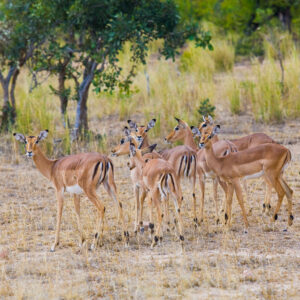
Ruaha National Park feels expansive. Its scenery includes the Great Ruaha River, seasonal waterways, baobab-studded savanna, rocky outcrops and miombo woodland. Game drives can move between these habitats as your guide follows current wildlife activity. Tanzania National Parks notes that elephants and buffalo gather around river systems during the dry season; the park is also known for predators and distinctive antelope, including greater kudu. No particular sighting can be guaranteed.
Ruaha suits travelers who enjoy the journey as much as the sightings. You may spend a quiet stretch watching elephants near a riverbed, searching for tracks or stopping to study birds. Its scale rewards patience. Spending several nights here gives you a better chance to explore different parts of the park than a rushed overnight visit would.
Guided walking safaris may also be possible in designated areas, subject to current park rules and arrangements with a licensed operator. If walking is important to your trip, request it while planning so it can be checked and included in the itinerary.
When is the best time to visit Tarangire and Ruaha?
June to October is a strong period for a trip focused on wildlife viewing in both parks. As conditions become drier, animals often concentrate around dependable water sources. In Tarangire, the river becomes especially important. In Ruaha, the Great Ruaha River, pools and seasonal riverbeds influence where wildlife gathers.
That does not mean every game drive will produce the same sightings. Wildlife moves freely, and conditions vary from year to year. An experienced guide will adjust each day’s route to what is happening in the park.
The greener months bring a different experience. Landscapes can be lush, birdwatching is rewarding and photography benefits from fresh vegetation and dramatic skies. Travel plans may need more flexibility when roads are affected by rain, especially in remote areas. If you have fixed dates, ask your safari operator what those dates typically mean for driving conditions and accommodation access.
How do you combine Tarangire and Ruaha?
Because the parks are in different regions, the transfer is a central part of the itinerary. The most comfortable approach for many travelers is to arrange a flight connection between the northern safari area and Ruaha, using the route available for their travel dates. Flight schedules and connections must be confirmed before the itinerary is finalized.
An overland journey is possible as part of a longer Tanzania trip, but it uses considerably more travel time. It is best chosen by travelers who want to include places along the way, rather than those hoping to move quickly between the two parks. Ruaha can be reached by road through Iringa, and Tanzania National Parks lists air access as another option.
Before booking, look at the whole route: where you arrive in Tanzania, where you depart, the number of nights in each park and how much of each day remains for game drives after transfers.
A sample six-day Tarangire and Ruaha itinerary
This outline shows how a combined safari could work. The transfer day will depend on available flights, so it should be treated as a planning example rather than a fixed schedule.
Day 1: Arrive in Arusha. Meet your safari team, rest after your journey and review the route for the days ahead.
Day 2: Explore Tarangire. Drive to the park for game viewing among the baobabs, river habitats and open plains. Stay near or inside the park.
Day 3: Enjoy more time in Tarangire. Start early and explore a different area before returning to your accommodation or positioning for the next day’s journey.
Day 4: Travel to Ruaha. Take the flight connection arranged for your dates and settle into your Ruaha accommodation. If arrival time allows, enjoy an afternoon game drive.
Day 5: Discover Ruaha. Spend the day following wildlife activity around the rivers, woodland and open country, with a break during the hottest hours if desired.
Day 6: Morning in Ruaha and departure. Depending on your onward travel time, fit in a final game drive before leaving the park.
If time and budget allow, add another night in Ruaha. The extra day gives you more room to explore without making the visit depend on one full game-drive day.
What should you consider before booking?
Accommodation shapes the pace of this trip. A camp or lodge in a convenient location can reduce daily driving and make early starts easier. Ask whether each property is inside the park or outside its boundary, what meals are included and whether it offers the comfort level you prefer.
It is also useful to request a clear breakdown of the trip price. A quote should explain accommodation, meals, park fees, game drives, guide services, regional flights and airport transfers. Optional activities, such as a walking safari, should be listed separately if they are not included.
Most of all, allow enough time in each park. Tarangire and Ruaha are rewarding because they let you observe wildlife in very different settings. Giving each destination breathing room makes the long-distance combination worthwhile.
Plan your safari with Kilipath African Safaris
A journey through Tarangire and Ruaha can be built around your dates, interests and preferred style of accommodation. Tell Kilipath African Safaris how many days you have, where you will arrive and depart, and whether you would like to add another Tanzania destination. We can help you plan a practical route and provide a clear, personalized safari quote.
Contact Kilipath African Safaris to start planning your Tarangire and Ruaha adventure.