Skip to content

A Tarangire safari Arusha vacation is one of the easiest ways to combine the convenience of staying in Tanzania’s northern safari hub with an authentic African wildlife experience. Tarangire National Park is famous for enormous elephant herds, ancient baobab trees, beautiful savannah landscapes and excellent wildlife viewing.
For travelers staying in Arusha, Tarangire works perfectly as either a day safari or the first destination on a longer Northern Tanzania itinerary. The journey from Arusha takes approximately 2.5 to 3 hours by road, making the park accessible without requiring a domestic flight.
Once inside the park, the scenery immediately changes. Giant baobab trees rise above open grasslands, elephants move between woodland and river valleys, giraffes browse from acacia trees and zebras gather around water sources.
Whether you are planning your first African safari, a honeymoon, a family holiday or a longer wildlife adventure, Tarangire deserves a place on your Tanzania itinerary.
Why Visit Tarangire National Park From Arusha?
Arusha is considered one of the main gateways to Tanzania’s Northern Safari Circuit. Travelers arriving through Kilimanjaro International Airport or Arusha Airport can easily spend a night in Arusha before beginning their safari.
Tarangire National Park is particularly convenient because it can be reached by road without spending an entire day traveling.
Leaving Arusha early in the morning gives travelers enough time to reach Tarangire, enter the park and enjoy several hours of wildlife viewing before either returning to Arusha or continuing to nearby safari accommodation.
However, convenience is only part of Tarangire’s attraction.
The park covers approximately 2,850 square kilometers and is especially famous for elephants and baobab-covered landscapes. The Tarangire River passes through the ecosystem and becomes particularly important for wildlife during the dry months.
This combination of accessibility, scenery and wildlife makes a Tarangire safari from Arusha attractive to both first-time visitors and experienced safari travelers.
The Famous Elephants of Tarangire
Elephants are undoubtedly one of the biggest highlights of a Tarangire safari.
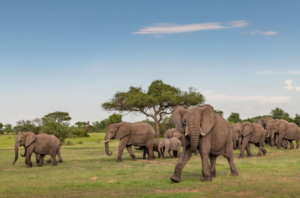
Families of elephants can often be seen moving peacefully across the plains, feeding beneath trees, drinking near the river or helping younger calves navigate through the bush.
Tarangire is widely recognized for its significant elephant population, and Tanzania National Parks describes the area as an elephant heartland where large families can be observed around the river terraces and baobab landscapes.
Watching elephants in the wild is very different from simply seeing them in photographs.
You may observe adults protecting calves, young elephants playing together or entire groups crossing the safari road in front of your vehicle. Because visitors remain inside the safari vehicle during normal game drives, these encounters can often be enjoyed quietly while allowing the animals space to continue their natural behavior.
For wildlife photographers, elephant families against the background of giant baobab trees create some of Tarangire’s most memorable images.
Ancient Baobab Trees and Incredible Landscapes
Tarangire is not only about animals.
Its landscapes are among the most recognizable in Northern Tanzania.
Enormous baobab trees stand throughout parts of the park, sometimes surrounded by elephants, zebras or giraffes. Their unusually thick trunks and wide branches make them excellent subjects for safari photography.
The vegetation varies as you travel through the park. You may pass open grasslands, acacia woodland, riverine vegetation, seasonal wetlands and areas dominated by baobabs.
Silale Swamp is another important landscape within Tarangire. During drier periods, areas around the swamp and river can attract elephants, buffalo and numerous bird species.
The changing environments also mean that a game drive rarely feels repetitive. One moment you may be photographing elephants beneath baobabs; later you could be scanning open plains for lions.
Wildlife You May See on a Tarangire Safari
Although elephants receive much of the attention, Tarangire supports a wide variety of wildlife.
Travelers may encounter giraffes walking between acacia trees, zebras and wildebeest moving across the grasslands, buffalo gathering near water and antelope feeding across the plains.
Predators including lions, leopards and hyenas also live within the ecosystem. Sightings always depend on nature, location, weather and timing, so no responsible safari operator can guarantee particular animals.
Bird lovers have even more to look forward to. Tanzania National Parks highlights Tarangire as an exceptional birding destination, with more than 550 species associated with the park.
Kori bustards, ostriches, bee-eaters, lovebirds and different birds of prey are among the species visitors may encounter.
This diversity makes Tarangire rewarding even during moments when large mammals are less active.
Best Time for a Tarangire Safari Arusha Vacation
Tarangire can be visited throughout the year, but each season creates a different safari experience.
The dry season, particularly from around June through October, is popular because wildlife becomes increasingly dependent on permanent water sources. Animals can gather around the Tarangire River and other remaining water areas, making wildlife viewing especially rewarding.
Tanzania National Parks notes that the ecosystem receives short rains around November and December and longer rains from approximately March through May.
The greener months should not automatically be considered a poor time to visit.
After rainfall, the park becomes greener and more colorful. Birdlife can be excellent, landscapes are attractive for photography and some periods may feel less crowded than the busiest safari months.
January and February can also provide enjoyable conditions between the major rainy periods.
The best month therefore depends on what you value most. Travelers prioritizing concentrated wildlife may prefer the dry season, while photographers and repeat safari visitors may appreciate the greener landscapes of the wetter months.
A Typical Tarangire Day Trip From Arusha
A Tarangire day safari usually starts early.
Your safari guide can collect you from your accommodation in Arusha before sunrise or shortly afterwards. From there, you travel south toward Tarangire National Park.
The drive itself gives visitors their first look at rural Tanzania, with towns, villages, farms and changing landscapes along the way.
After completing park-entry procedures, the game drive begins.
Rather than following a fixed sightseeing route, experienced guides usually adapt the drive according to recent animal movements and information exchanged between guides.
You might spend the morning following elephant families, searching for lions or exploring areas around the Tarangire River.
Lunch can normally be enjoyed at an appropriate picnic location before continuing with an afternoon game drive.
Later in the afternoon, travelers doing a day trip begin the return journey toward Arusha.
For people with limited time in Tanzania, this makes Tarangire one of the most practical ways to experience a genuine African safari while using Arusha as a base.
Staying Overnight Near Tarangire
Although a day trip is possible, spending one or two nights around Tarangire allows travelers to enjoy the area at a more relaxed pace.
Accommodation ranges from public camping areas to tented camps and safari lodges located either inside or around the park. Tanzania National Parks advises visitors to book early for the peak dry-season months because accommodation demand can be high.
Staying overnight means you do not have to spend several hours returning to Arusha immediately after your game drive.
Instead, you can relax at your lodge or camp and continue exploring the following morning.
This option is particularly suitable for photographers, honeymooners, families and travelers building a longer Northern Circuit itinerary.
Combining Tarangire With Serengeti and Ngorongoro
One of the greatest advantages of starting your safari from Arusha is the ability to combine Tarangire with Tanzania’s other famous wildlife destinations.
A classic Northern Tanzania safari might begin in Tarangire before continuing toward Ngorongoro and Serengeti.
Tarangire introduces travelers to elephant-rich woodland and baobab scenery. Ngorongoro offers a completely different environment inside its famous crater, while Serengeti provides vast plains and exceptional wildlife viewing.
Each area therefore contributes something different rather than simply repeating the same safari experience.
Travelers with approximately four or five days can often combine several parks, while visitors with six or seven days have more time for slower game drives and additional nights in Serengeti.
Your itinerary should always consider driving distances. Trying to include too many destinations in too few days can result in spending more time on the road and less time watching wildlife.
Private Safari or Group Safari?
Both private and shared safaris can work well for a Tarangire safari Arusha vacation.
Private safaris give travelers their own safari vehicle and guide. This allows more flexibility when deciding how long to stay at particular wildlife sightings and is particularly attractive to families, couples, honeymooners and photographers.
Shared safaris can provide a more affordable alternative because transport and guiding expenses are divided among several travelers.
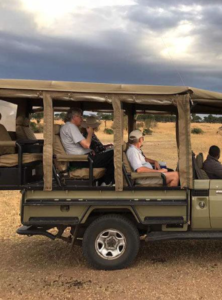
At Kilipath African Safaris, our shared safari vehicles accommodate a limited number of travelers so guests can enjoy comfortable wildlife viewing and window access.
The right option depends mainly on your budget, preferred travel style and desired flexibility.
What to Wear on Your Tarangire Safari
Comfortable clothing is more important than fashionable safari clothing.
Lightweight neutral colors such as beige, khaki, brown and olive work well. A light jacket is useful for cooler early mornings, while sunglasses, a hat and sunscreen help during sunny afternoons.
Tarangire has areas associated with tsetse flies, so neutral clothing is preferable to very dark shades such as black or dark blue.
Closed comfortable shoes are also useful, particularly if your itinerary includes walking activities or stops outside the vehicle.
Do not forget your camera, extra batteries and binoculars. Safari vehicles normally allow excellent viewing, but binoculars make distant wildlife and birds much easier to appreciate.
Photography in Tarangire
Tarangire is an excellent destination for wildlife photography because both animals and landscapes provide strong photographic opportunities.
Early morning and late afternoon usually create softer light, while baobab trees offer distinctive backgrounds for elephants and giraffes.
A zoom lens can be helpful for animals that remain farther from the road.
However, some of the best photographs are wider landscape images showing wildlife within the surrounding environment.
Instead of concentrating only on close-up portraits, photograph elephant families beneath baobabs, giraffes crossing the savannah and safari tracks disappearing toward distant hills.
These images often communicate the scale and atmosphere of Tarangire more effectively than wildlife close-ups alone.
Tarangire Safari for Families
Tarangire can also be an excellent safari destination for families traveling with children.
Elephants are large and relatively easy for younger travelers to spot compared with animals hidden in dense vegetation. Giraffes, zebras, monkeys and colorful birds can also keep children interested during game drives.
Families may benefit from booking a private safari because stops and schedules can be adapted around the children.
A knowledgeable guide can also transform the safari into an educational experience by explaining animal behavior, tracks, plants and conservation.
Parents should remember that game drives involve several hours inside a vehicle, so snacks, water and suitable breaks can make the experience more enjoyable.
Responsible Safari Travel
Visitors play an important role in protecting Tanzania’s wildlife areas.
Wild animals should always be given sufficient space, and safari vehicles should avoid blocking their movement.
Guests should remain inside vehicles except in designated areas and should never feed animals.
TANAPA regulations also require visitors to use designated tracks and follow instructions from guides and authorized rangers.
Responsible safari tourism helps ensure these environments remain protected while supporting jobs and communities connected with Tanzania’s tourism industry.
Why Start Your Tanzania Safari in Arusha?
Arusha offers excellent logistics for travelers visiting Northern Tanzania.
Visitors can arrive, rest after an international flight and meet their safari team before beginning the journey.
Accommodation ranges from budget guesthouses to comfortable hotels and luxury properties.
The city also places travelers within reach of several major safari destinations, meaning the same trip can include Tarangire, Ngorongoro, Serengeti and Lake Manyara depending on available time.
Arusha therefore works not simply as a transportation stop but as an important base for organizing a smooth Tanzania safari.
Plan Your Tarangire Safari With Kilipath African Safaris
A Tarangire safari Arusha vacation combines convenient access, spectacular scenery and excellent wildlife viewing in one unforgettable Tanzania experience.
From huge elephant families walking beneath ancient baobab trees to lions resting in the grasslands and giraffes moving slowly between acacias, every game drive offers something different.
At Kilipath African Safaris, we arrange private and shared Tanzania safaris departing from Arusha, including Tarangire day trips and multi-day Northern Circuit adventures.
Your safari can be customized according to your travel dates, group size, accommodation preference and budget.
Whether you have only one free day in Arusha or want to combine Tarangire with Serengeti and Ngorongoro, careful planning can turn your Tanzania vacation into an experience you will remember for years.
Ready to explore Tarangire? Contact Kilipath African Safaris and start planning your Tanzania safari from Arusha today.