Skip to content
Introduction to Tarangire Safari Southern Circuit Planning
Planning a Tanzania safari does not always mean choosing between the famous Northern Circuit and the remote Southern Circuit. Travelers with enough time can experience both regions in one itinerary, creating a journey filled with elephants, baobab forests, predators, rivers, wilderness and dramatically different landscapes.
This is where Tarangire safari Southern Circuit planning becomes particularly interesting.
Tarangire National Park is located in northern Tanzania and is especially famous for its elephants, ancient baobab trees, seasonal wildlife concentrations and the Tarangire River. Southern Tanzania, meanwhile, offers enormous wilderness areas such as Ruaha and Nyerere National Parks.
Combining these regions allows travelers to experience two distinct sides of Tanzania.
In Tarangire, safari drives reveal rolling savannah, huge baobabs, elephant families and wildlife gathering around permanent water sources. Farther south, Ruaha introduces immense landscapes, the Great Ruaha River, predators and comparatively remote game-viewing areas. Nyerere adds yet another dimension with the Rufiji River system, where visitors can combine conventional game drives with boat safari experiences.
The key is planning the route correctly.
Because Tarangire and the Southern Circuit are separated by considerable distances, a successful itinerary requires realistic travel times, sensible use of domestic flights and enough days to avoid turning your holiday into a sequence of transfers.
This guide explains how to plan it.
Where Is Tarangire National Park?
Tarangire National Park lies in northern Tanzania, within easy reach of Arusha.
It covers roughly 2,850 square kilometers and is renowned for its combination of river valleys, swamps, woodland, open plains and dramatic baobab landscapes.
TANAPA’s visitor information places Tarangire approximately 2.5–3 hours by road from Arusha, depending on conditions and the route taken. Kuro Airstrip inside the park also accommodates scheduled and charter safari flights.
For most international travelers, the journey starts through either:
- Kilimanjaro International Airport — JRO
- Arusha Airport — ARK
- Arusha city
- Moshi, when combining safari with a Kilimanjaro climb
Tarangire is normally combined with Lake Manyara, Ngorongoro Crater and Serengeti National Park.
However, travelers with approximately 8–14 days can extend their journey into southern Tanzania.
Is Tarangire Part of Tanzania’s Southern Circuit?
No.
This is one of the most important things travelers should understand when researching Tarangire safari Southern Circuit planning.
Tarangire belongs to Tanzania’s Northern Circuit. TANAPA’s Northern Zone includes Tarangire, Lake Manyara, Kilimanjaro, Arusha and Mkomazi National Parks.
Southern safari destinations generally include areas such as:
Ruaha National Park
One of Tanzania’s great wilderness destinations, characterized by huge landscapes, the Great Ruaha River, elephants, buffalo, predators and excellent birdlife.
Nyerere National Park
A vast wilderness associated with the Rufiji River, lakes, floodplains and forests. Visitors can encounter lions, elephants, buffalo, hippos, crocodiles and African wild dogs, while boat safaris provide a completely different experience from traditional game drives.
Depending on the itinerary, travelers may also consider destinations around Mikumi, Udzungwa, Iringa or other southern Tanzania areas.
Therefore, a Tarangire–Southern Circuit safari should be viewed as a combined Northern and Southern Tanzania safari, rather than a single-circuit itinerary.
Why Include Tarangire in a Southern Tanzania Safari?
There is an excellent reason.
Tarangire offers ecological and photographic experiences that complement rather than duplicate southern Tanzania.
Exceptional elephant viewing
Tarangire is especially associated with elephants. During the dry season, animals become increasingly dependent on permanent water sources and large numbers can gather within the ecosystem.
TANAPA describes Tarangire as an elephant heartland and highlights its large elephant populations.
Watching a large elephant family moving beneath ancient baobabs can become one of the defining memories of a Tanzania safari.
Iconic baobab landscapes
Few northern Tanzanian safari destinations feature baobabs as dramatically as Tarangire.
The enormous trees create spectacular photography opportunities, particularly during sunrise and late afternoon.
Ruaha also contains impressive baobab country, meaning travelers who combine Tarangire and Ruaha can observe how these landscapes change across different ecosystems.
Excellent dry-season wildlife concentrations
The Tarangire River acts as an important water source during the dry months.
Wildebeest, zebra, hartebeest and other herbivores move through the ecosystem as surrounding areas become drier. Wildlife concentration around water can make July through October especially rewarding.
Great birding
Tarangire is also a strong birdwatching destination. TANAPA reports more than 550 recorded bird species in the park.
Combining it with Ruaha and Nyerere produces a particularly diverse safari for bird enthusiasts.
Different safari atmosphere
Tarangire provides a classic northern Tanzania experience while Ruaha and Nyerere introduce a much more expansive southern wilderness atmosphere.
Together, they make a safari feel much more varied.
Wildlife to See in Tarangire National Park
Wildlife is the main reason most travelers include Tarangire in their Tanzania itinerary.
Elephants
Elephants are Tarangire’s signature species.
You may encounter solitary bulls, mothers with calves or large family groups moving through woodland and river valleys.
Observing elephants interacting naturally is particularly rewarding because safari vehicles sometimes encounter them at close—but safe—viewing distances.
Lions
Lions occur throughout Tarangire and may be seen resting beneath trees, stalking prey around river systems or relaxing in open grassland.
Termite mounds also provide elevated observation points for predators.
Leopards
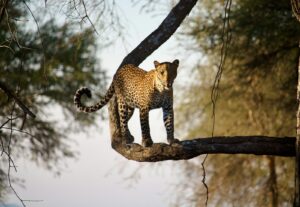
Leopards are present but generally more difficult to find than lions.
Experienced guides search riverine woodland and areas with suitable trees where leopards may rest during the hotter part of the day.
Cheetahs
Cheetahs can occur in open areas where visibility allows them to hunt.
Sightings cannot be guaranteed, making each encounter particularly rewarding.
Buffalo
Large buffalo herds are among Tarangire’s impressive dry-season attractions.
Giraffes
Giraffes are regularly encountered and create beautiful photography opportunities against baobab and acacia landscapes.
Zebra and wildebeest
Seasonal movements bring substantial numbers into the wider Tarangire ecosystem, particularly when water becomes scarce outside the park.
Other animals may include:
- Impala
- Warthog
- Waterbuck
- Dik-dik
- Hartebeest
- Eland
- Hyena
- Jackal
- Mongoose
- Baboon
- Vervet monkey
Wildlife sightings are always natural and can never be guaranteed, which is part of what makes a genuine African safari exciting.
Best Time for a Tarangire Safari
Tarangire is open throughout the year, but conditions change dramatically by season.
June to October – Dry Season
For many first-time visitors, this is the strongest period for wildlife viewing.
As seasonal water disappears, animals increasingly depend on permanent resources such as the Tarangire River and Silale Swamp.
This can create impressive wildlife concentrations.
July, August, September and October are particularly popular.
Advantages include:
- Excellent elephant viewing
- Concentrated wildlife
- Easier game spotting
- Generally dry conditions
- Excellent photography
- Comfortable safari driving conditions
The disadvantage is demand.
Popular lodges and camps can become busy, so accommodation should be reserved early.
November to December – Short Rains
The landscapes become greener as seasonal rainfall begins.
Wildlife may become more dispersed, but the park is beautiful and birding improves.
This period can offer a quieter safari experience.
January to February
These months can provide warm temperatures, attractive landscapes and excellent birding.
Combining Tarangire with the wider northern region is also attractive during this period because travelers interested in seasonal migration movements may incorporate Ndutu farther north.
March to May – Long Rains
These are typically wetter months.
Tarangire remains beautiful and dramatically green, but road conditions can be more challenging in some areas. TANAPA recommends 4×4 vehicles during wet conditions.
There may also be fewer visitors.
For photographers, the combination of green scenery, dramatic skies and reduced traffic can be very rewarding.
Best Time to Combine Tarangire With the Southern Circuit
For a combined Tarangire, Ruaha and Nyerere safari, June through October is usually the easiest window for travelers focused primarily on classic wildlife viewing.
Ruaha’s peak safari months also generally fall within the dry season, when animals congregate around reliable water sources.
TANAPA recommends booking Ruaha accommodation early for the June–October peak period.
This makes July through October particularly convenient because wildlife viewing conditions can be strong in both northern and southern Tanzania.
However, travelers interested in birdlife, landscapes and fewer vehicles should not automatically dismiss the wetter seasons.
Tarangire vs Ruaha: What Is the Difference?
Travelers sometimes wonder whether visiting both is necessary because both contain elephants and baobabs.
The experience is actually very different.
Tarangire
Tarangire is relatively easy to access from Arusha.
Its highlights include:
- Large elephant populations
- Ancient baobabs
- Tarangire River
- Silale Swamp
- Northern Tanzania accessibility
- Excellent birding
- Easy combination with Ngorongoro and Serengeti
Ruaha
Ruaha is much larger and more remote.
TANAPA states that Ruaha covers approximately 20,226 square kilometers, making it one of Tanzania’s great wilderness areas.
Highlights include:
- Remote wilderness
- Great Ruaha River
- Lions
- Leopards
- Elephants
- Buffalo
- Crocodiles
- Hippos
- Excellent birdlife
- Fewer safari vehicles in many areas
- Dramatic rocky and baobab landscapes
Ruaha provides an excellent contrast after Tarangire.
Tarangire vs Nyerere National Park
These destinations are even more different.
Tarangire is largely about classic vehicle-based safari exploration through woodland, river environments and baobab country.
Nyerere’s defining geographical feature is the Rufiji River system.
One major attraction is the possibility of a boat safari.
TANAPA highlights boating along the Rufiji as one of Nyerere’s characteristic experiences, allowing visitors to encounter hippos, crocodiles, elephants and abundant birdlife from the water.
Wildlife can include:
- African elephants
- Lions
- Buffalo
- Leopards
- African wild dogs
- Hippos
- Crocodiles
- Giraffes
- Various antelope species
- Rich birdlife
For this reason, Tarangire + Nyerere works particularly well for travelers seeking variety rather than simply maximizing the number of game drives.
How Many Days Do You Need?
For Tarangire alone, travelers should ideally consider one to two full safari days.
A one-day safari can cover the major northern game-viewing areas.
However, staying overnight allows:
- Early morning game drives
- Late afternoon wildlife viewing
- More time around Silale Swamp
- Less pressure to rush back toward Arusha
- Better opportunities for photography
For a combined Tarangire and Southern Circuit itinerary, approximately 8–12 days provides a much better experience.
Shorter combinations are possible, particularly with domestic flights.
Sample 8-Day Tarangire and Southern Circuit Safari
Day 1 – Arrival in Arusha
Arrive at Kilimanjaro International Airport.
Meet your safari representative and transfer to your accommodation in Arusha.
Rest after your international flight and receive a safari briefing.
Day 2 – Arusha to Tarangire National Park
After breakfast, depart toward Tarangire.
Enter the park and begin your first game drive.
Search for elephants, giraffes, zebra, buffalo and predators while exploring the baobab landscapes.
Overnight near or inside Tarangire.
Day 3 – Full-Day Tarangire Safari
Spend the day exploring deeper sections of the park.
Visit river circuits and areas around Silale where wildlife concentrations can be particularly rewarding.
Overnight Tarangire.
Day 4 – Transfer Toward Southern Tanzania
Depending on the selected itinerary, return toward Arusha and connect with a domestic flight, or structure the trip via another flight hub.
Using flights is usually preferable to spending excessive safari time on long road transfers.
Day 5 – Ruaha National Park
Begin your Southern Circuit adventure with morning and afternoon game drives.
Explore riverine habitats, woodland and open wilderness.
Day 6 – Full-Day Ruaha
Spend an entire day searching for elephants, lions, buffalo, leopards and other wildlife.
Ruaha’s size means additional time greatly improves the experience.
Day 7 – Ruaha Safari
Enjoy another morning game drive.
Travelers with more time could continue onward to Nyerere instead of completing the safari here.
Day 8 – Fly to Dar es Salaam or Zanzibar
Fly from the safari region toward Dar es Salaam or Zanzibar and continue with your beach holiday or international journey.
Recommended 10-Day Safari Plan
Travelers with more time could use:
Day 1: Arrive Arusha
Day 2: Tarangire National Park
Day 3: Tarangire National Park
Day 4: Transfer/fly south
Day 5: Ruaha National Park
Day 6: Ruaha National Park
Day 7: Fly to Nyerere
Day 8: Nyerere game drive
Day 9: Boat safari + game drive
Day 10: Fly to Dar es Salaam or Zanzibar
This format gives travelers considerably more variety.
Should You Drive or Fly Between Safari Circuits?
For most travelers, flying is the better option when combining Tarangire and the Southern Circuit.
The reason is simple: distance.
A conventional Northern Circuit safari uses Arusha as its major gateway, while southern Tanzania itineraries are commonly connected through Dar es Salaam and regional airstrips.
Driving all the way between regions can consume valuable holiday time.
Domestic safari flights reduce long transfer days and allow travelers to spend more time watching wildlife.
Tarangire itself has Kuro Airstrip, while Ruaha has safari airstrips including Msembe and Jongomero.
Your operator should build connections around the flight schedules available on your exact dates.
Accommodation Options
There is accommodation for almost every safari style.
Budget safari
Budget travelers can use:
- Public campsites
- Basic safari camps
- Budget lodges outside park boundaries
- Shared safari arrangements where practical
Camping keeps costs lower while providing a genuine wilderness atmosphere.
Mid-range safari
Mid-range accommodation normally provides:
- Private rooms or safari tents
- Ensuite bathrooms
- Proper beds
- Restaurant facilities
- Comfortable communal areas
- Excellent locations near safari parks
This category often provides the best balance between comfort and value.
Luxury safari
Luxury safaris may include:
- High-end tented camps
- Luxury lodges
- Premium wilderness locations
- Fine dining
- Private guiding
- Bush meals
- Sundowners
- Fly-in safari arrangements
- Personalized services
Inside Tarangire, accommodation options range from campsites to lodges and tented camps around areas such as the Tarangire River and Silale region.
Safari Activities in Tarangire
Tarangire offers more than standard game drives.
Available activities can include:
Day game drives
The classic way to explore the park.
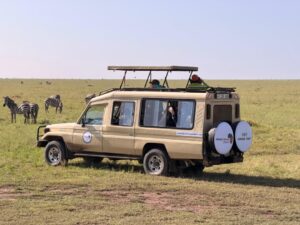
A pop-up-roof safari vehicle allows excellent visibility and photography.
Guided walking safaris
Walking experiences are available in designated areas and must follow park regulations with authorized guides or rangers.
Night game drives
TANAPA lists night game drives among Tarangire’s visitor experiences.
Night drives provide opportunities to experience an entirely different side of the ecosystem.
Photographic safaris
Tarangire is particularly suitable for photography because of its:
- Elephant herds
- Baobabs
- River valleys
- Sunsets
- Raptors
- Predator sightings
- Open landscapes
Balloon safari
Balloon experiences are also offered in Tarangire, subject to availability and operating conditions.
Activities in the Southern Circuit
Combining Tarangire with southern Tanzania expands your activity choices.
In Ruaha, visitors may enjoy:
- Game drives
- Guided walking safaris
- Photography
- Birdwatching
- Wilderness exploration
- Sundowners
TANAPA specifically lists game drives, designated-zone walking, birding and photographic safaris among Ruaha experiences.
In Nyerere, activities may include:
- Game drives
- Boat safaris
- Birdwatching
- Wildlife photography
- River exploration
- Guided wilderness experiences where available
The boat safari is one of the most distinctive additions to a combined Tanzania itinerary.
What Vehicle Is Best?
A 4×4 safari Land Cruiser is ideal.
Typical safari vehicles feature:
- Pop-up roof
- Window seating
- Charging points
- Cooler or refrigerator
- Radio communication
- First-aid equipment
- Space for photography equipment
During wet conditions, a true 4×4 becomes particularly important because some safari roads can become muddy.
TANAPA specifically recommends 4×4 access for Tarangire during the wetter months.
What to Pack
Pack light and focus on practical clothing.
Useful items include:
- Neutral-colored safari clothing
- Lightweight long trousers
- T-shirts
- Long-sleeved shirts
- Comfortable closed shoes
- Sandals
- Warm jacket
- Hat
- Sunglasses
- Sunscreen
- Insect repellent
- Camera
- Binoculars
- Power bank
- Reusable water bottle
- Small daypack
- Personal medication
Early morning game drives can be surprisingly cool.
Neutral colors such as beige, khaki, olive and brown are generally suitable for safari.
Private vs Shared Safari
Private safari
A private safari is the strongest choice for a complicated Northern + Southern Circuit journey.
Advantages include:
- Private vehicle
- Dedicated guide
- Flexible departure times
- Longer wildlife sightings
- Customized accommodation
- Flexible photography stops
- Easier flight coordination
Families, couples, honeymooners and photographers frequently prefer this option.
Shared safari
Shared safaris are economical but operate according to fixed routes and departure schedules.
They are far more common on classic Northern Circuit routes.
Combining a standard Tarangire shared safari with remote southern parks can therefore require separate arrangements.
For a seamless Tarangire–Ruaha–Nyerere itinerary, private planning is generally preferable.
Safari Costs
There is no single fixed cost for a Tarangire safari Southern Circuit planning itinerary.
The final price depends on:
- Number of travelers
- Number of safari days
- Travel season
- Accommodation category
- Private versus shared vehicle
- Domestic flights
- Park fees
- Activities
- Airport transfers
- Number of parks
- Single-room supplements
- Optional experiences
Traveling as two, four or six people on a private safari can reduce the per-person vehicle cost because transportation expenses are shared.
Always request a detailed quote showing exactly what is included and excluded.
Park charges should also be checked against the current TANAPA tariff before travel because fees can change.
Can Tarangire Be Combined With Zanzibar?
Absolutely.
This is one of the most attractive ways to finish the itinerary.
A journey could look like:
Arusha → Tarangire → Ruaha → Nyerere → Zanzibar
After several days of early game drives and adventurous travel, Zanzibar provides a relaxing contrast.
Travelers can enjoy:
- White-sand beaches
- Indian Ocean swimming
- Stone Town
- Spice tours
- Snorkeling
- Diving
- Dhow cruises
- Seafood
- Resort relaxation
Domestic flights make safari-and-beach combinations much easier than road travel.
Tarangire and Southern Circuit for Honeymooners
This combination can make an exceptional honeymoon.
Instead of following only Tanzania’s most common safari route, couples can experience both classic and remote wilderness.
A luxury honeymoon might include:
- Private safari vehicle
- Luxury Tarangire camp
- Sundowner
- Bush dinner
- Ruaha wilderness lodge
- Nyerere boat safari
- Domestic flights
- Zanzibar beachfront resort
The diversity makes the holiday feel like several completely different journeys in one.
Tarangire and Southern Tanzania for Photographers
Photographers should consider allocating at least two nights to each major park.
Rushing through a park limits the ability to wait for:
- Better light
- Animal behavior
- Predator movement
- Elephant interactions
- Sunrise landscapes
- Sunset silhouettes
Tarangire’s baobabs and elephants create classic African compositions.
Ruaha contributes huge wilderness landscapes and predators.
Nyerere adds river-based photography.
A private vehicle is strongly recommended because it allows photographers greater flexibility at sightings.
Family Safari Planning
Tarangire can also be excellent for families.
Elephants, giraffes, zebra and large mammals are relatively easy for younger travelers to appreciate.
When building a combined Southern Circuit itinerary, families should avoid excessive transfer days.
Flying between distant safari regions may cost more, but it can significantly reduce travel fatigue.
Family itineraries should also consider:
- Child-friendly accommodation
- Private safari vehicle
- Flexible game-drive duration
- Swimming pools where available
- Early meal times
- Shorter drives for younger children
- Family rooms
- Appropriate malaria precautions after medical consultation
Common Planning Mistakes to Avoid
Mistake 1: Treating Tarangire as a Southern Circuit park
It is not.
Tarangire belongs to northern Tanzania. Use the phrase “Northern and Southern Circuit combination safari” when designing the actual trip.
Mistake 2: Trying to cover too many parks
More parks do not automatically create a better safari.
Allow enough time to appreciate each destination.
Mistake 3: Ignoring distances
Tanzania is large.
A route that looks short on a map may require many hours by road.
Mistake 4: Booking flights before finalizing the safari
Your safari route should ideally be confirmed first so domestic and international flights match realistic park departure times.
Mistake 5: Choosing accommodation only by price
Location matters.
Sometimes paying slightly more for accommodation strategically positioned near the park saves significant driving time.
Mistake 6: Spending only a few hours in Tarangire
One day is possible, but two days provide a deeper experience.
Final Thoughts on Tarangire Safari Southern Circuit Planning
Successful Tarangire safari Southern Circuit planning begins with understanding that Tarangire and southern Tanzania belong to different safari regions.
That difference is precisely what makes combining them so rewarding.
Tarangire introduces travelers to one of Tanzania’s most recognizable landscapes: elephants walking beneath enormous baobabs, wildlife gathering around the Tarangire River and golden savannah stretching toward distant hills.
Ruaha changes the atmosphere completely. Its huge wilderness, river systems, predators and comparatively remote landscapes create the feeling of traveling deeper into wild Tanzania.
Nyerere provides another contrast with its Rufiji waterways, lakes and boat-safari opportunities.
Together, these destinations create a safari far more diverse than simply moving quickly from one national park to another.
The strongest approach is to give each destination sufficient time, use domestic flights where they save substantial travel hours and select accommodation strategically according to your comfort and budget.
For travelers with around 8–12 days, Tarangire and one Southern Circuit park can create an excellent itinerary. With 10–14 days or longer, Tarangire, Ruaha and Nyerere can be combined into a deeper Tanzania adventure. Adding Zanzibar afterward completes the journey with a relaxing Indian Ocean finish.
A carefully planned safari provides not just more destinations, but different ecosystems, different wildlife experiences and a much broader understanding of Tanzania.