Skip to content

The top Lake Manyara safari itinerary is ideal for travelers who want a varied wildlife experience without spending long hours on the road. Lake Manyara National Park lies along the base of the Great Rift Valley escarpment in northern Tanzania. Although it is smaller than Serengeti National Park or the Ngorongoro Conservation Area, it contains an impressive mix of groundwater forest, open grassland, acacia woodland, hot springs, wetlands, and lake views.
This diversity makes Lake Manyara an excellent destination for a first safari, family holiday, honeymoon, photography trip, or addition to a longer northern circuit tour. Visitors may encounter elephants, giraffes, buffaloes, zebras, wildebeest, hippos, baboons, monkeys, antelopes, and rich birdlife during a single game drive. The park is also famous for its tree-climbing lion stories, although any lion sighting depends on nature, timing, and luck.
For most travelers, one focused day in the park is enough to enjoy its major habitats. A two- to five-day itinerary can then combine Lake Manyara with Tarangire, Ngorongoro Crater, or Serengeti. The best route depends on your available time, budget, preferred accommodation, and whether you choose a private or shared safari.
Plan your safari with local experts: Kilipath African Safaris can customize a Lake Manyara itinerary around your arrival schedule, travel style, dietary needs, and preferred level of accommodation.
Why Include Lake Manyara in Your Tanzania Safari?
Lake Manyara offers a different atmosphere from Tanzania’s broad savannah parks. The entrance area is shaded by dense forest, where blue monkeys and large troops of baboons may be seen. As the road opens toward woodland and plains, travelers gain views of herbivores, birds, and the steep escarpment rising above the park.
The park works especially well in an itinerary for five reasons:
- Convenient location: It can be reached from Arusha and fits naturally between Tarangire, Karatu, and Ngorongoro.
- Habitat variety: Forest, woodland, floodplain, lake, and hot-spring environments create a constantly changing game-drive experience.
- Birdwatching: Pelicans, storks, hornbills, kingfishers, raptors, and many other species attract both casual visitors and experienced birders.
- Family-friendly pace: The park’s compact nature can be easier for children than a long, full-day drive across a vast reserve.
- Easy safari combinations: Lake Manyara can be paired with village activities, canoeing when conditions and operations permit, Tarangire, Ngorongoro, or Serengeti.
Travelers should remember that the lake and wildlife distribution change with rainfall. Water levels, vegetation, and animal movements can affect which roads are accessible and what is seen. A good itinerary therefore provides structure while allowing the guide to adjust the game-drive route according to current conditions.
Recommended 3-Day Lake Manyara Safari Itinerary
This three-day route is the strongest all-round option for travelers who want Lake Manyara plus two contrasting wildlife areas. It starts and ends in Arusha and can be arranged privately or, depending on departure availability, as part of a shared northern circuit safari.
Day 1: Arusha to Tarangire National Park
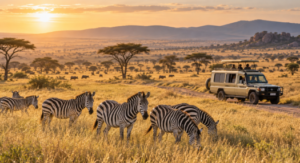
After an early breakfast, your guide collects you from your Arusha accommodation in a 4×4 Land Cruiser with a pop-up roof. Drive toward Tarangire National Park, a landscape known for baobab trees, seasonal marshes, and its important elephant population.
Enjoy a game drive while searching for elephants, giraffes, zebras, wildebeest, impalas, buffaloes, and predators. A picnic or hot lunch is served according to the chosen program. In the late afternoon, continue to your lodge, tented camp, or public campsite near Mto wa Mbu or Karatu.
Why this day works: Tarangire provides open landscapes and classic savannah wildlife before the greener, more compact environment of Lake Manyara.
Day 2: Lake Manyara National Park Game Drive
Enter Lake Manyara National Park after breakfast. Your guide will select the most productive roads based on recent sightings and ground conditions. Explore the groundwater forest, acacia woodland, open areas, and viewpoints toward the lake.
Look for baboons, blue monkeys, elephants, giraffes, buffaloes, zebras, warthogs, antelopes, and hippos. Bird enthusiasts should keep binoculars ready around wetland areas and forest edges. Lions may occasionally be found resting in trees or moving through the bush, but they are never guaranteed.
Pause for lunch at an approved picnic area, then continue the afternoon game drive. Later, travel to Karatu or another nearby accommodation. Staying close to Ngorongoro makes the following morning more efficient.
Day 3: Ngorongoro Crater and Return to Arusha
Depart early for the Ngorongoro Conservation Area and descend into the crater. The crater floor supports an exceptional concentration of wildlife within a dramatic volcanic setting. Depending on conditions, possible sightings include lions, elephants, buffaloes, zebras, wildebeest, hippos, hyenas, gazelles, and the rare black rhino at a distance.
After lunch and the final game drive, ascend the crater wall and return to Arusha. Arrival is normally in the late afternoon or early evening, but travelers should avoid booking a tight flight connection. A late-night flight from Kilimanjaro International Airport or an additional Arusha night is safer.
Best 4-Day Lake Manyara Safari Itinerary
Four days allow a more relaxed pace and create room for Serengeti or an additional cultural experience. A popular route is:
- Day 1: Arusha to Tarangire; afternoon game drive.
- Day 2: Lake Manyara game drive; overnight near Karatu.
- Day 3: Ngorongoro Crater game drive; overnight near Karatu or Mto wa Mbu.
- Day 4: Cultural activity, local market visit, or relaxed return to Arusha.
Travelers focused on wildlife may instead use Day 2 to drive toward Central Serengeti, spend Day 3 exploring Serengeti, and visit Ngorongoro on Day 4. This version is more ambitious and involves longer drives. It is rewarding for first-time visitors who want several famous parks, but guests who prefer a slow pace may enjoy the Tarangire–Manyara–Ngorongoro route more.
Ultimate 5-Day Northern Circuit Combination
The five-day itinerary is excellent for couples, families, and photographers who want greater wildlife variety without rushing every day.
Suggested route
- Day 1: Arusha to Tarangire National Park.
- Day 2: Tarangire to Central Serengeti, with wildlife viewing en route.
- Day 3: Full-day Serengeti game drive.
- Day 4: Morning Serengeti drive, then travel toward Ngorongoro or Karatu.
- Day 5: Lake Manyara game drive and return to Arusha.
An alternative places Lake Manyara on Day 2 and Ngorongoro Crater on Day 5. Your consultant can determine the most logical order after checking accommodation and park-entry logistics. Private safaris provide the greatest flexibility because the vehicle and guide are dedicated to your party.
Wildlife You May See
Lake Manyara’s appeal lies not only in a checklist of animals but also in the transitions between habitats. Common or possible sightings include:
- Elephants moving through woodland and forest edges
- Large baboon troops and playful monkeys
- Giraffes browsing among acacia trees
- Buffaloes, zebras, wildebeest, and several antelope species
- Hippos in suitable water areas
- Warthogs and smaller mammals
- Lions, leopards, and hyenas, which are possible but less predictable
- Numerous resident and migratory birds
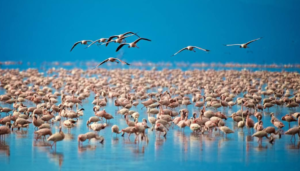
Flamingo numbers vary with water chemistry, food supply, and broader regional movement. Marketing images sometimes create the impression that the lake is permanently covered in pink birds; in reality, sightings can change considerably. Ethical safari planning avoids guaranteeing any wild animal or specific natural spectacle.
Best Time to Visit Lake Manyara
Lake Manyara is a year-round destination, but each season has advantages.
June to October: Drier period
Vegetation may be easier to see through in some areas, roads are generally more dependable, and the period combines well with the wider northern circuit high season. July through September can be busy, so early accommodation booking is important.
November to March: Green season and birdlife
Short rains can refresh the scenery, and migratory birds add interest. December through February can be particularly attractive for travelers combining Lake Manyara with the Ndutu calving region, although Ndutu normally requires a private itinerary rather than a standard shared safari.
April and May: Long-rain season
The landscape is lush and visitor numbers may be lower. Rain can affect roads and the timing of outdoor activities. Travelers choosing this season should value flexibility and consult a local operator about current access.
There is no single perfect month. The top Lake Manyara safari itinerary is the one aligned with your wider route, priorities, and comfort level.
Private Safari or Shared Safari?
A private safari gives your group its own vehicle and guide. Departure times, rest stops, photography time, and accommodation can be tailored. It is recommended for honeymooners, families with young children, travelers with special interests, and guests combining Lake Manyara with less conventional routes.
A shared safari lowers the cost by placing travelers with other guests. Kilipath shared safaris use a 4×4 Land Cruiser with a maximum of seven passengers, giving every guest a window seat. Shared departures follow a set program and are less flexible, but they offer an affordable way to experience the main northern circuit parks.
For either choice, confirm what is included: park fees, accommodation, meals, drinking water, guide services, transfers, and any applicable taxes. Also ask about exclusions such as tips, visas, insurance, optional activities, alcoholic drinks, and flights.
Accommodation Options
The Lake Manyara region offers choices for different budgets:
- Public camping: The most economical adventure, with tents and shared facilities. Equipment, sleeping bags, mattresses, and a safari chef can be included.
- Budget lodge: Simple rooms and essential comfort outside the park.
- Mid-range lodge or tented camp: Private bathroom, comfortable bedding, and a good balance of atmosphere and value.
- Luxury lodge: Premium locations, refined dining, spacious rooms, and highly personalized service.
Mto wa Mbu is convenient for the park and local activities. Karatu is a popular base between Lake Manyara and Ngorongoro, with many accommodation levels. Staying inside or very close to a protected area may reduce driving time but usually costs more.
What Determines the Safari Price?
The final price depends on travel dates, group size, accommodation level, private or shared transport, park fees, route length, number of nights, and optional activities. A private safari may cost more overall but becomes better value per person as the group grows because vehicle expenses are shared.
Request a written quotation that clearly states inclusions and exclusions. For an accurate proposal, provide:
- Exact or flexible travel dates
- Number of adults and children, including children’s ages
- Arrival and departure airports and flight times
- Private or shared preference
- Camping, budget, mid-range, or luxury accommodation
- Dietary requirements and allergies
- Activities you would like to add
- Approximate total or per-person budget
This information helps the consultant recommend a realistic route instead of offering a generic package.
Optional Activities Near Lake Manyara
Travelers can enrich the safari with a guided village visit, local food experience, market tour, cycling, cultural program, or canoeing when available and safe. Each activity should be booked through a responsible operator and fitted around park-entry timing.
Families may enjoy a gentle cultural activity after a game-drive day. Couples may prefer a private lodge, scenic sundowner, or special dinner. Photographers often gain more from extra game-drive time and a private vehicle that can wait at sightings.
What to Pack
Bring lightweight neutral clothing, a warm layer for early mornings, comfortable closed shoes, sun protection, insect repellent, personal medication, camera equipment, and binoculars if available. A soft-sided bag is easier to store in a safari vehicle and is often more suitable for domestic flights.
Avoid dark blue and black when visiting tsetse-prone areas such as parts of Tarangire. Pack a warmer jacket for Ngorongoro because the rim and early mornings can be cold. Keep travel documents, essential medicine, electronics, and one change of clothes in your hand luggage.
Responsible Safari Travel
Respect park rules and follow your guide’s instructions. Never ask a driver to leave approved roads, crowd wildlife, feed animals, or move dangerously close for a photograph. Keep noise low at sightings, do not litter, and reduce single-use plastic where possible.
Choose a company that uses licensed guides, communicates clearly, supports local employment, and treats wildlife viewing as observation rather than performance. Responsible behavior protects the ecosystem and improves the experience for future visitors.
Book Your Lake Manyara Safari
The top Lake Manyara safari itinerary should feel balanced, realistic, and personal. For many travelers, the three-day Tarangire–Lake Manyara–Ngorongoro route delivers the best combination of landscapes, wildlife, and manageable driving. Those with four or five days can add Serengeti or slow the journey down with cultural experiences and more comfortable lodge stays.
Kilipath African Safaris can arrange private or shared departures, airport transfers, accommodation, meals, park fees, and professional guiding. Vegetarian, vegan, halal, and other dietary needs can be handled when communicated in advance.
Ready to begin? Send your travel dates, number of guests, preferred safari style, and budget. A consultant will prepare a customized Lake Manyara proposal and help you reserve the best available option.