Lake Manyara National Park may be smaller than Serengeti National Park or the Ngorongoro Conservation Area, but it offers one of the most varied and visually impressive safari experiences in northern Tanzania. Within a relatively compact area, travelers can explore groundwater forest, acacia woodland, open floodplains, hot springs, wetlands and the shores of an alkaline lake.
The park is especially known for elephants, abundant birdlife, troops of baboons and its famous tree-climbing lions. However, the appeal of Lake Manyara extends beyond individual wildlife sightings. The dramatic Great Rift Valley escarpment, changing lake levels, dense forest and open plains give every section of the park a different character.
Successful best Lake Manyara safari planning involves more than selecting a travel date. Travelers must consider seasonal conditions, the amount of time available, preferred activities, accommodation standards, transportation and how Lake Manyara will fit into a wider Tanzania safari itinerary.
This complete guide explains how to organize a rewarding visit to Lake Manyara National Park, whether you are planning a one-day safari from Arusha, adding the park to a Northern Circuit itinerary or combining wildlife viewing with cultural experiences around Mto wa Mbu.
Why Visit Lake Manyara National Park?
Lake Manyara National Park is located beneath the cliffs of the Great Rift Valley escarpment in northern Tanzania. Its location between Arusha, Tarangire National Park and the Ngorongoro Highlands makes it a convenient addition to many safari routes.
The park is recognized for its contrasting habitats. Travelers may begin a game drive beneath towering trees in the groundwater forest, continue across grassy floodplains and later reach open areas overlooking the lake and escarpment.
According to Tanzania National Parks, Lake Manyara is home to elephants, tree-climbing lions, buffaloes, giraffes, zebras, wildebeest and several other wildlife species. The park’s alkaline lake also attracts seasonal concentrations of flamingos, pelicans and other waterbirds.
Several qualities make Lake Manyara worth including in a Tanzania safari:
- It is accessible from Arusha and nearby safari destinations.
- It contains diverse ecosystems within a relatively small area.
- It supports excellent birdwatching.
- It offers opportunities to see elephants at close range.
- It is suitable for short safari itineraries.
- It can be combined easily with Tarangire and Ngorongoro.
- It provides beautiful scenery for landscape photography.
- It offers additional activities in and around Mto wa Mbu.
Lake Manyara works particularly well for first-time safari travelers, families, photographers, birdwatchers and visitors who have limited time in northern Tanzania.
Understanding the Lake Manyara Landscape
The landscape is one of the most important reasons to visit Lake Manyara National Park. The park lies along the base of the Great Rift Valley escarpment, creating a narrow protected area between steep cliffs and the lake.
Tanzania National Parks describes Lake Manyara as a destination of strong contrasts, including groundwater forest, soda lake, floodplains and escarpment scenery.
Groundwater Forest
The northern entrance leads into a green groundwater forest supported by underground springs flowing from the escarpment.
Large fig, mahogany and other forest trees create shade and provide habitat for blue monkeys, vervet monkeys, bushbuck and large troops of olive baboons. Elephants may also move quietly through this forest.
The vegetation can sometimes make wildlife photography more challenging, but it creates an atmosphere that differs greatly from the open plains of the Serengeti.
Acacia Woodland
Beyond the forest, the environment gradually changes into acacia woodland. This habitat may support giraffes, elephants, impalas, dik-diks and predators.
The acacia trees are also among the areas where visitors hope to see Lake Manyara’s celebrated tree-climbing lions. However, lion sightings are never guaranteed, and visitors should appreciate the park’s wider wildlife and scenery rather than making one species the sole purpose of the trip.
Floodplains
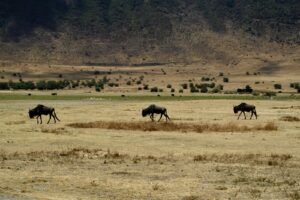
The open floodplains provide better visibility than the forested areas. Buffaloes, wildebeest, zebras, giraffes and warthogs may be seen grazing in these sections.
During dry periods, animals may gather around permanent water sources. After rainfall, the floodplains become greener and offer attractive settings for photography.
Lake Shore
Lake Manyara is an alkaline or soda lake whose size and shoreline change according to rainfall and water conditions.
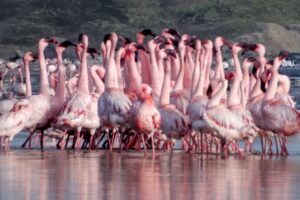
Waterbirds may include flamingos, pelicans, storks, herons, egrets and Egyptian geese. The number and location of flamingos vary, so travelers should not assume that the entire lake will always appear pink.
Great Rift Valley Escarpment
The steep escarpment forms a dramatic background throughout much of the park. It contributes greatly to Lake Manyara’s scenic character and makes the destination attractive even when wildlife is dispersed.
Hot Springs
The southern section of the park includes hot springs commonly known as Maji Moto. The combination of springs, wetlands, lake scenery and escarpment views gives this area a remote and peaceful feeling.
Reaching the southern section may require additional driving time, so it is more suitable for travelers who have a full day available.
Wildlife You May See in Lake Manyara
Lake Manyara is not normally promoted as a Big Five destination. It should instead be viewed as a diverse ecosystem where travelers can experience mammals, primates, birds and varied landscapes during one game drive.
Elephants
Elephants are among the park’s signature animals. They may be seen in the groundwater forest, woodland or more open habitats.
The enclosed vegetation can occasionally allow memorable close-range observations from a safari vehicle. Guests must remain quiet and follow their guide’s instructions, particularly when elephants are close to the road.
Tree-Climbing Lions
Lake Manyara is widely associated with lions resting in trees. Tanzania National Parks identifies tree-climbing lions as one of the park’s distinctive wildlife attractions.
Several theories have been proposed for this behavior, including avoiding insects, escaping heat and gaining a better view. Nevertheless, there is no guarantee that visitors will see lions in trees during every safari.
Finding lions depends on their movement, weather, recent prey activity and the skill and local knowledge of the safari guide.
Baboons and Monkeys
Large troops of olive baboons are frequently seen near the forest and park entrance. Travelers may observe feeding, grooming, playing and social behavior.
Blue monkeys and vervet monkeys can also be found in forested sections. Visitors should never feed primates or leave food unattended.
Buffaloes
African buffaloes are regularly seen on the floodplains, near water or along the lake shore. They may occur individually or in larger herds.
Buffaloes are powerful wild animals and should always be observed from a safe distance.
Giraffes
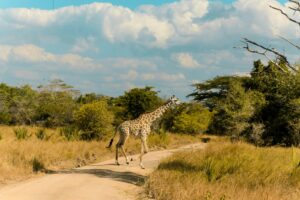
Giraffes may be seen browsing in woodland or moving across open plains. The escarpment and lake often create attractive backgrounds for photographing them.
Zebras and Wildebeest
Zebras and wildebeest are commonly associated with the park’s open areas. Their numbers and location vary according to water, grazing conditions and season.
Hippos
Hippos may be found in suitable pools and wetlands. Viewing opportunities depend on water levels and accessibility.
Other Animals
Depending on the route and conditions, travelers may also encounter:
- Impalas
- Waterbucks
- Bushbucks
- Warthogs
- Dik-diks
- Mongooses
- Hyenas
- Jackals
- Klipspringers
- Small antelopes
Leopards occur in the wider ecosystem but are secretive and difficult to find. Rhinoceroses are not a regular Lake Manyara sighting, so travelers hoping for the full Big Five should combine Manyara with destinations such as Ngorongoro and Serengeti.
Birdwatching in Lake Manyara
Lake Manyara is one of the best-known birding destinations on Tanzania’s Northern Circuit. Its variety of habitats supports waterbirds, woodland birds, raptors and seasonal migrants.
The soda lake may host lesser and greater flamingos, pelicans and other waterbirds when conditions are favorable.
Bird species travelers may encounter include:
- Greater and lesser flamingos
- Great white pelicans
- African fish eagles
- Grey crowned cranes
- Yellow-billed storks
- Marabou storks
- Cormorants
- Hornbills
- Kingfishers
- Herons
- Egrets
- Hammerkops
- Bee-eaters
- Weavers
- Rollers
- Raptors
The wetter months can be particularly rewarding for birdwatching because migratory species arrive and resident birds may display breeding plumage.
A private safari is often better for serious birdwatchers because the guide can spend more time identifying species, waiting for photographs and exploring particular habitats.
Best Time to Visit Lake Manyara
There is no single best month for every traveler. The most suitable season depends on whether your priority is mammal viewing, birdwatching, green scenery, photography, lower visitor numbers or comfortable road conditions.
June to October: Dry Season
The dry season is generally considered the strongest period for traditional wildlife viewing. Vegetation becomes less dense in some areas, rainfall is limited and animals may concentrate near permanent water sources.
June through October is frequently recommended for easier large-mammal viewing, although it is also a popular time on Tanzania’s Northern Circuit.
Advantages include:
- More predictable weather
- Reduced vegetation in open areas
- Easier wildlife spotting
- Better road conditions
- Comfortable conditions for combining several parks
Possible disadvantages include:
- Higher demand for accommodation
- More safari vehicles during peak travel months
- Dry or dusty landscapes in some areas
- Fewer migratory birds than in the wet season
July, August and September are especially popular because they coincide with summer holidays in several international markets and the wider Great Migration season in northern Tanzania.
Lake Manyara itself is not the main destination for seeing the Great Migration, but it fits naturally into itineraries continuing to Serengeti and Ngorongoro.
November to December: Short Rains
The short rains usually bring renewed vegetation and dramatic skies. Rain often falls in temporary showers rather than continuously throughout the day, although weather patterns cannot be guaranteed.
This can be an attractive period for photographers who enjoy green landscapes and fewer vehicles.
Advantages include:
- Greener scenery
- Migratory bird arrivals
- Fewer visitors than the peak dry season
- Attractive cloud formations and softer light
Possible disadvantages include:
- Occasional muddy roads
- Wildlife may spread out as water becomes more available
- Rain can interrupt outdoor activities
January to February: Warm, Relatively Dry Period
January and February can offer a useful balance between green landscapes and generally manageable travel conditions.
These months may work particularly well when Lake Manyara is combined with the Ndutu region, where the wildebeest calving season usually becomes an important safari attraction.
Advantages include:
- Green scenery
- Good birdlife
- Warm conditions
- Excellent combination possibilities with Ndutu and Ngorongoro
Possible disadvantages include:
- Increasing heat in some areas
- Wildlife can remain dispersed
- Demand may rise around the calving season
March to May: Long-Rain Season
The long rains bring lush vegetation, seasonal water, dramatic scenery and active birdlife. April is often among the wettest months, although rainfall varies from year to year.
Advantages include:
- Green landscapes
- Excellent birdwatching
- Lower accommodation demand in some properties
- Fewer vehicles
- Beautiful conditions for landscape photography
Possible disadvantages include:
- Muddy or difficult roads
- Dense vegetation
- Some lodges may close temporarily
- Heavy rain can affect daily schedules
- Wildlife may be more difficult to spot
Travel during the rainy season is possible, but itineraries should include flexibility and a suitable four-wheel-drive vehicle.
Best Lake Manyara Safari Planning by Month
January
January is warm and generally green. Birdlife is strong, and Lake Manyara can be combined with Ndutu, Ngorongoro and the southern Serengeti.
February
February is popular for calving-season itineraries. Manyara is often visited at the beginning or end of a longer northern Tanzania safari.
March
Rainfall usually begins to increase. Visitor numbers may fall, while vegetation becomes greener and birding remains productive.
April
April commonly receives substantial rainfall. Travelers should expect wet conditions and possible itinerary adjustments.
May
The rains begin to decrease toward the end of the month. The landscape remains green, and visitor numbers are often lower.
June
June marks the beginning of the dry season. Conditions become cooler and more comfortable, making it an excellent month for multi-park safaris.
July
July offers reliable safari conditions but receives more visitors. Accommodation should be reserved well in advance.
August
August is one of the busiest months in northern Tanzania. Lake Manyara can provide a scenic introduction before continuing to the Ngorongoro Crater and Serengeti.
September
September generally provides dry weather and good wildlife viewing. It remains popular but may feel slightly less busy toward the end of the month.
October
October can be hot and dry. Wildlife may concentrate around remaining water sources, but the landscape may appear dusty.
November
The short rains begin to transform the park. Migratory birds return, and the scenery becomes greener.
December
December offers green landscapes and good birding. Demand may increase during the Christmas and New Year holiday period.
How Many Days Do You Need in Lake Manyara?
Most travelers spend either half a day or one full day inside Lake Manyara National Park.
Half-Day Safari
A half-day game drive can cover the northern forest, woodland and selected floodplain areas.
This option is suitable when:
- You are arriving from Arusha in the morning.
- You are continuing to Karatu in the afternoon.
- Lake Manyara is one stop in a tightly scheduled itinerary.
- You want a general introduction to the park.
A half-day visit may feel rushed if wildlife sightings are slow or if you want to reach the southern hot springs.
Full-Day Safari
A full-day game drive allows more time to explore varied habitats and wait patiently at wildlife sightings.
This option is better for:
- Photographers
- Birdwatchers
- Families who prefer a relaxed pace
- Travelers interested in the southern park area
- Visitors who do not want to rush to another destination
A picnic lunch is generally carried into the park so the game drive can continue without returning to the lodge.
Two-Day Lake Manyara Experience
Two days can be worthwhile when travelers want to combine a game drive with cultural activities, canoeing when available, a forest walk, cycling, village exploration or relaxation at a lodge overlooking the Rift Valley.
Rather than spending both days exclusively on game drives, the second day can be used to experience the wider Manyara and Mto wa Mbu area.
How to Reach Lake Manyara National Park
From Arusha
Lake Manyara is normally reached by road from Arusha. The drive usually takes approximately two to three hours, depending on traffic, road conditions and the location of the accommodation.
Most safari vehicles follow the main road through Makuyuni and Mto wa Mbu.
An early departure from Arusha allows travelers to enter the park in the morning and enjoy a longer game drive.
From Tarangire National Park
Lake Manyara combines easily with Tarangire. Depending on the route and lodge location, the transfer may take approximately two to three hours.
A common itinerary includes Tarangire first, followed by Lake Manyara and then Ngorongoro.
From Karatu
Karatu is located in the Ngorongoro Highlands and provides convenient access to Lake Manyara. The drive to the park entrance normally takes around 30 to 60 minutes, depending on the lodge.
Karatu is one of the most practical accommodation bases for travelers combining Manyara with the Ngorongoro Crater.
By Air
Lake Manyara Airport receives scheduled and charter flights from selected safari and coastal destinations. Flight schedules vary by season and airline.
Flying is useful for travelers with limited time or those combining Lake Manyara with remote safari camps. However, road transfers remain more common for standard Northern Circuit itineraries.
Where to Stay During a Lake Manyara Safari
Accommodation is available inside the park, near Mto wa Mbu, along the Rift Valley escarpment and around Karatu.
Lodges Inside the Park
Staying inside or immediately adjacent to the protected area can create a stronger wilderness atmosphere and reduce travel time before a morning activity.
These properties are generally more expensive and availability can be limited.
Advantages include:
- Convenient park access
- Scenic wilderness settings
- Less transfer time
- Peaceful evenings near nature
Mto wa Mbu Accommodation
Mto wa Mbu offers budget, mid-range and small lodge options. It is also convenient for cultural tours, cycling and local food experiences.
Advantages include:
- Close proximity to the park
- Access to community activities
- A variety of accommodation levels
- Convenient road connections
Rift Valley Escarpment Lodges
Several properties are positioned above the lake or along the escarpment. They may provide panoramic views across the valley and lake.
These lodges are attractive for honeymooners, photographers and travelers who value scenery and privacy.
Karatu Accommodation
Karatu has a broad selection of lodges, tented camps, guesthouses and farm-style properties.
It is often the best base for itineraries combining Lake Manyara and the Ngorongoro Crater.
Advantages include:
- Good variety of accommodation
- Cooler highland climate
- Convenient access to Ngorongoro
- Restaurants and local services
- Options for different budgets
Budget, Mid-Range or Luxury Safari?
Budget Safari
A budget Lake Manyara safari may use basic lodges, guesthouses or campsites outside the park. Travelers may join a shared group safari to divide vehicle and guide costs.
Budget arrangements normally include essential services rather than premium rooms or private dining.
This style is suitable for:
- Solo travelers
- Students
- Backpackers
- Visitors prioritizing wildlife over accommodation
- Travelers joining longer group safaris
Mid-Range Safari
Mid-range safaris balance comfort and value. Accommodation normally includes private rooms or permanent tents, en-suite bathrooms and full-board meals.
This is the most popular choice for couples, families and first-time safari visitors.
Luxury Safari
Luxury safaris may include exclusive lodges, private vehicles, high-quality dining, spacious suites, personalized service and scenic locations.
Luxury planning is ideal for:
- Honeymooners
- Anniversary travelers
- Families seeking privacy
- Photographers carrying extensive equipment
- Guests who prefer flexible schedules
The safari experience inside the national park is influenced mainly by the guide, vehicle and timing. Expensive accommodation does not guarantee more wildlife, but it can provide greater comfort, privacy and convenience.
Private Versus Shared Lake Manyara Safari
Shared Safari
A shared safari allows several travelers to use the same vehicle and divide transportation and guide costs.
Advantages include:
- Lower cost
- Opportunity to meet other travelers
- Suitable for solo guests
- Regular departures may be available
Limitations include:
- Fixed itinerary
- Less flexibility at sightings
- Scheduled departure times
- Limited control over photography stops
- Different interests among group members
Private Safari
A private safari vehicle is reserved for one traveler, couple, family or group.
Advantages include:
- Flexible departure times
- More control over the route
- Longer stops at preferred sightings
- Better conditions for photography
- Easier accommodation of children
- Greater privacy
- Ability to focus on birds, elephants or landscapes
A private safari is strongly recommended for serious photographers, honeymooners, families with young children and travelers with specific wildlife interests.
Recommended Lake Manyara Safari Itineraries
One-Day Lake Manyara Safari from Arusha
Early morning: Pickup from your hotel in Arusha.
Morning: Drive to Lake Manyara National Park and complete registration at the entrance.
Late morning: Begin a game drive through the groundwater forest and woodland.
Lunchtime: Enjoy a picnic lunch at a designated area.
Afternoon: Continue exploring the floodplains, lake shore and other accessible habitats.
Late afternoon: Exit the park and return to Arusha.
This itinerary is ideal for travelers with limited time, although it involves several hours of driving.
Two-Day Lake Manyara and Tarangire Safari
Day 1: Arusha to Tarangire National Park
Depart Arusha and drive to Tarangire. Explore baobab landscapes and search for elephants, giraffes, zebras, wildebeest and predators. Overnight near Tarangire, Mto wa Mbu or Karatu.
Day 2: Lake Manyara and return to Arusha
Enjoy a Lake Manyara game drive before returning to Arusha in the late afternoon.
This itinerary offers contrasting landscapes and is suitable for a short Tanzania safari.
Three-Day Tarangire, Lake Manyara and Ngorongoro Safari
Day 1: Tarangire National Park
Travel from Arusha to Tarangire for a full game drive.
Day 2: Lake Manyara National Park
Explore the groundwater forest, floodplains and lake habitats before continuing to Karatu.
Day 3: Ngorongoro Crater
Descend into the Ngorongoro Crater for wildlife viewing, followed by a return to Arusha.
This is one of the best short Northern Circuit itineraries because each destination offers a different environment.
Four-Day Lake Manyara, Serengeti and Ngorongoro Safari
Day 1: Arusha to Lake Manyara, followed by an overnight stay in Karatu.
Day 2: Drive through the Ngorongoro Conservation Area to Serengeti National Park.
Day 3: Morning Serengeti game drive, then continue toward Ngorongoro.
Day 4: Explore the Ngorongoro Crater and return to Arusha.
This itinerary is possible but involves long drives. A five-day schedule offers a more comfortable experience.
Five-Day Northern Circuit Safari
Day 1: Arusha to Tarangire National Park
Day 2: Lake Manyara National Park
Day 3: Drive to Serengeti National Park
Day 4: Serengeti game drive and transfer toward Ngorongoro
Day 5: Ngorongoro Crater and return to Arusha
This itinerary introduces travelers to four famous wildlife destinations while remaining manageable for visitors with limited vacation time.
Seven-Day Complete Northern Circuit Safari
A seven-day itinerary allows more time in Serengeti while still including Tarangire, Lake Manyara and Ngorongoro.
A suggested route is:
Day 1: Arrival in Arusha
Day 2: Tarangire National Park
Day 3: Lake Manyara and overnight in Karatu
Day 4: Transfer to Serengeti with game viewing
Day 5: Full-day Serengeti safari
Day 6: Serengeti to Ngorongoro
Day 7: Ngorongoro Crater and return to Arusha
This schedule is better for travelers who want a balanced safari without excessive daily rushing.
Activities in and Around Lake Manyara
Game Drives
Game drives are the main activity inside the national park. Morning drives often provide comfortable temperatures and active wildlife, while afternoon drives may offer softer light.
A knowledgeable guide will select routes according to recent sightings, road conditions, season and wildlife movement.
Birdwatching
Birdwatching can be included during a standard game drive, but travelers with a serious interest should request a specialist guide and private vehicle.
Bring binoculars and a camera lens suitable for small or distant subjects.
Treetop Walkway
A treetop walkway experience may be available near Lake Manyara, offering a different perspective of the forest canopy.
Availability, operating conditions and additional charges should be confirmed during booking.
Canoeing
Canoeing may be offered when water levels and safety conditions permit. It gives travelers an opportunity to experience the lake environment from a different angle.
This activity is seasonal and should never be assumed to be available without confirmation.
Cultural Tour in Mto wa Mbu
Mto wa Mbu is known for its cultural diversity and agricultural landscape. Guided tours may include farms, markets, workshops, local homes and traditional food experiences.
A community visit can add valuable human and cultural context to a wildlife-focused itinerary.
Cycling
Cycling tours may pass through farming areas, villages and scenic countryside near Mto wa Mbu.
Travelers should confirm the route difficulty, bicycle condition, guide service and safety arrangements.
Local Food Experience
A local lunch can introduce visitors to Tanzanian dishes made with rice, bananas, vegetables, meat, beans and regional spices.
Dietary requirements should be communicated before the tour.
Forest Walks
Guided walks may be available in selected areas outside the national park or under approved conditions.
Travelers must never walk independently inside wildlife areas.
Night Game Drive
Night drives may be offered in designated areas under authorized arrangements. They provide opportunities to search for nocturnal species.
Availability and regulations can change, so the activity must be arranged in advance through a licensed operator.
Lake Manyara Safari Cost Factors
The cost of a Lake Manyara safari depends on several variables rather than one fixed price.
Number of Travelers
Private safari vehicle costs are divided among the participants. A couple usually pays more per person than a group of four or six using the same vehicle.
Solo travelers can reduce costs by joining a shared safari.
Accommodation Category
Budget guesthouses, mid-range lodges and luxury properties have very different nightly rates.
Peak-season prices may be higher, and some lodges use seasonal pricing.
Length of Safari
A one-day safari has lower accommodation costs but may be expensive per day because vehicle and park expenses are concentrated into a short trip.
Longer itineraries usually provide better value per safari day.
Private or Shared Vehicle
Private vehicles cost more but provide flexibility. Shared safaris are more affordable but follow fixed schedules.
Park Fees
National park entry, vehicle and other conservation-related charges form a significant part of the safari price.
Fees may change, so travelers should request an updated written quotation rather than relying on old online prices.
Transportation
Road safaris are normally less expensive than fly-in arrangements. Airport transfers and long-distance transfers may increase the price.
Additional Activities
Canoeing, cultural tours, cycling, walking experiences, treetop walkways and night drives may carry separate charges.
Travel Season
July, August, September and the festive season can have higher accommodation demand. Green-season travel may offer better value at selected lodges.
What Should Be Included in a Lake Manyara Safari Package?
A professionally prepared safari quotation should state clearly what is included and excluded.
Common inclusions are:
- Four-wheel-drive safari vehicle
- Professional English-speaking guide
- National park entry fees
- Vehicle entry fees
- Accommodation specified in the itinerary
- Meals according to the meal plan
- Drinking water during the safari
- Game drives
- Airport or hotel transfers when listed
- Government taxes applicable to included services
Possible exclusions include:
- International flights
- Tanzania visa
- Travel insurance
- Tips
- Alcoholic beverages
- Laundry
- Optional activities
- Personal purchases
- Medical expenses
- Accommodation before or after the itinerary unless specified
Travelers should request a complete written breakdown before paying a deposit.
What to Pack for Lake Manyara
Pack light, practical clothing in neutral colors such as beige, brown, green or grey.
Recommended items include:
- Lightweight shirts
- Long trousers
- Warm layer for early mornings
- Light rain jacket
- Comfortable closed shoes
- Sunhat
- Sunglasses
- Sunscreen
- Insect repellent
- Personal medication
- Camera
- Spare batteries
- Charging cables
- Binoculars
- Reusable water bottle
- Small daypack
- Passport and travel documents
Avoid brightly colored safari clothing where possible. Dark blue and black can attract certain biting insects in some wildlife areas.
Morning temperatures may feel cool, particularly when staying in Karatu or the Ngorongoro Highlands.
Photography Tips for Lake Manyara
Lake Manyara offers excellent opportunities for wildlife, bird and landscape photography.
Use a Versatile Lens
A telephoto lens is useful for wildlife and birds, while a wider lens captures the escarpment, forest and lake scenery.
A zoom lens can be more practical than changing lenses frequently in dusty conditions.
Request a Private Vehicle
Photographers benefit from controlling the vehicle position, spending longer at sightings and choosing the best side for light.
Start Early
Morning light is softer, temperatures are cooler and some wildlife may be more active.
Protect Equipment
Carry a dustproof camera bag and cleaning cloth. Keep batteries charged and bring enough memory cards.
Photograph the Habitat
Do not focus only on close animal portraits. Lake Manyara’s escarpment, forest and floodplains help create images that communicate a sense of place.
Be Patient
Wildlife photography requires time. A quiet elephant emerging from the forest or a giraffe standing beneath the escarpment can become more memorable than rushing between multiple sightings.
Family Safari Planning
Lake Manyara is suitable for families because travel distances from Arusha and Karatu are manageable compared with deeper Serengeti routes.
Parents should consider:
- Private vehicle arrangements
- Child-friendly accommodation
- Shorter game-drive sessions
- Regular rest stops
- Suitable meals
- Swimming pools at lodges
- Flexible morning departure times
- Age restrictions for walking or canoeing activities
Children should remain seated when the vehicle is moving and must never leave the vehicle in unauthorized locations.
A good family guide can explain animal behavior in an engaging and age-appropriate way.
Lake Manyara for Honeymooners
Lake Manyara can be included in a romantic Tanzania honeymoon because of its dramatic scenery and attractive escarpment lodges.
A honeymoon itinerary may include:
- Private safari vehicle
- Scenic lodge room
- Private dinner
- Sundowner experience where permitted
- Lake-view accommodation
- Cultural excursion
- Serengeti extension
- Ngorongoro stay
- Zanzibar beach holiday
The best honeymoon schedules avoid rushing through too many destinations. Spending at least two nights in selected locations creates a more relaxed and personal experience.
Combining Lake Manyara with Zanzibar
Lake Manyara can be combined easily with a Zanzibar beach holiday.
A typical safari-and-beach itinerary may include:
- Arrival in Arusha
- Tarangire safari
- Lake Manyara safari
- Ngorongoro Crater
- Serengeti National Park
- Flight to Zanzibar
- Beach relaxation
- Stone Town and cultural tours
Travelers with limited time can complete a two- or three-day safari and then fly to Zanzibar.
Flight schedules, airport transfers and baggage restrictions should be confirmed before finalizing the itinerary.
Soft-sided luggage is usually more convenient for small domestic aircraft than large hard-shell suitcases.
Common Lake Manyara Safari Planning Mistakes
Expecting Guaranteed Tree-Climbing Lions
Tree-climbing lions are famous, but they are wild animals. No responsible operator can guarantee a sighting.
Scheduling Too Little Time
A rushed visit may cover only the northern forest. Travelers interested in the southern areas should allow a full day.
Ignoring Seasonal Differences
The lake, vegetation, roads and wildlife distribution change throughout the year.
Choosing Accommodation Only by Price
A very cheap lodge may involve longer transfers or fewer services. Location should be considered alongside price.
Booking Without Checking Inclusions
Travelers should confirm park fees, meals, transfers, accommodation, taxes and optional activities in writing.
Carrying Too Much Luggage
Safari vehicles and domestic aircraft have limited luggage space. Soft bags and light packing are recommended.
Trying to Visit Too Many Parks in Too Few Days
Driving from one destination to another takes time. A well-paced itinerary produces a better experience than a long list of hurried stops.
Responsible Safari Practices
Responsible travel protects wildlife, supports communities and improves the experience for future visitors.
Travelers should:
- Follow park regulations.
- Keep noise low around animals.
- Never feed wildlife.
- Avoid leaving litter.
- Remain inside the vehicle unless the guide confirms it is safe.
- Do not pressure guides to drive off-road illegally.
- Respect local photography preferences.
- Use refillable water containers when possible.
- Choose licensed operators and trained guides.
- Support responsible community-based activities.
Animals should always control the encounter. Vehicles must not block their movement or surround them aggressively.
Why Plan with Kilipath African Safaris?
Kilipath African Safaris can customize a Lake Manyara itinerary according to your travel dates, budget, group size and preferred accommodation standard.
Our safari planning can include:
- Private and shared safari options
- Budget, mid-range and luxury accommodation
- Professional safari guides
- Four-wheel-drive Land Cruisers with pop-up roofs
- Lake Manyara day trips
- Northern Circuit combinations
- Family safari arrangements
- Honeymoon experiences
- Zanzibar extensions
- Airport pickups and transfers
- Cultural activities
- Customized itineraries
Rather than using one schedule for every traveler, we consider your arrival time, departure flight, preferred travel pace, wildlife priorities and total number of available days.
Lake Manyara can be the main destination for a short safari or one memorable section of a longer Tanzania journey.
Final Thoughts on the Best Lake Manyara Safari Planning
The best Lake Manyara safari planning begins with realistic expectations and a well-paced itinerary.
Lake Manyara is not simply a smaller alternative to Serengeti or Ngorongoro. It offers a distinct environment shaped by groundwater forest, alkaline lake, floodplains and the Great Rift Valley escarpment.
Travel during the dry season for generally easier mammal viewing and more predictable road conditions. Consider the wetter months for green scenery, migratory birds, fewer visitors and dramatic photography.
Allow a full day when possible, especially if you are interested in birdwatching, photography or exploring beyond the northern section of the park. Combine Lake Manyara with Tarangire and Ngorongoro for an excellent short safari, or add Serengeti and Zanzibar for a complete Tanzania holiday.
With a professional guide, reliable vehicle and carefully selected accommodation, Lake Manyara can become one of the most scenic and surprising parts of your African safari.
Contact Kilipath African Safaris to create a personalized Lake Manyara safari itinerary based on your travel dates, budget and preferred experience.