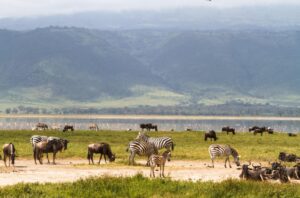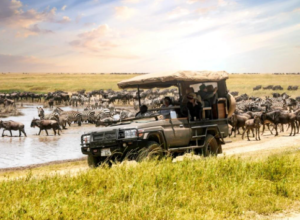
The first view of Ngorongoro Crater comes from the rim. From above, the crater floor looks like a broad sweep of grassland, with patches of woodland and water enclosed by steep slopes. Once your safari vehicle descends, the details come into focus. You might see zebras crossing the track, buffalo grazing in the open, or a spotted hyena moving through the grass while your guide scans the distance for a black rhino.
A guided Ngorongoro Crater safari experience gives you time to explore these different habitats and understand what you’re seeing. You can visit on a day trip from Arusha, stay overnight in the Karatu highlands, or include the crater in a longer Northern Tanzania safari with Tarangire and the Serengeti. The right route depends on how much time you have and where you want to spend it.
What makes Ngorongoro Crater special?
Ngorongoro Crater is a volcanic caldera, a basin formed when the land above a volcanic chamber collapsed. It lies within the larger Ngorongoro Conservation Area, a UNESCO World Heritage Site that includes highland forests, open plains and Olduvai Gorge. The crater is the part most travelers visit for a game drive. UNESCO World Heritage Centre
The landscape changes noticeably between the rim and the floor. At the rim, cool air and morning mist can soften the view. As you descend, the forest gives way to open grassland. On the floor, a single drive can take you past grazing herds, wetlands and wooded areas. The enclosed landscape also gives photographers a distinctive backdrop, with the crater walls visible behind animals in the open.
What happens on a guided crater safari?
A typical safari begins with an early pickup from your lodge or hotel. If you stay in Karatu or near the crater rim, you can spend less of the morning on the road. From Arusha, the day starts earlier to allow time for the drive to the conservation area and the return journey.
After entry formalities, your guide follows the descent road to the crater floor. The route can change with the weather, animal movements and recent sightings. Your guide might begin on the open plains to look for lions and hyenas, then move toward a pool to watch hippos or scan the grassland for a distant rhino.
Plan for around four to five hours of game viewing on many crater itineraries, with the exact timing depending on your package and conditions on the day. A picnic lunch is often included, with a stop at a designated area when the schedule allows. After the drive, you ascend the crater and continue to Arusha, your lodge or the next destination on your itinerary.
What does a safari guide add to the experience?
Your guide can help you read the small details that make a sighting interesting. A cluster of vultures may prompt a closer look across the grass. An alert herd of zebras may lead your guide to scan for a predator. If a black rhino appears far from the road, your guide can help you find it through binoculars and explain what distinguishes it from other wildlife at that distance.
Guides also help you make the most of the time you have. Tell yours if you’re particularly interested in birds, photography or big cats. On a private safari, those interests can shape where you spend more time. On a shared drive, your guide balances requests across the group.
What wildlife can you see in Ngorongoro Crater?
| Wildlife | What to look for |
|---|---|
| Lions | Scan the open plains and look for resting cats near patches of cover. Sometimes the first clue is a set of ears above the grass. |
| Black rhinos | Look across the open floor with binoculars. Rhinos can be far from the road, and sightings vary from day to day. |
| Elephants and buffalo | Watch for elephants around wooded areas or moving between habitats, and for buffalo grazing in herds across the floor. |
| Zebras, wildebeest and gazelles | These grazers give you plenty to watch, from herds crossing the tracks to zebras keeping close to their young. |
| Hippos | Scan pools for eyes and nostrils just above the water. Waiting a few minutes can reward you with a much clearer view. |
| Spotted hyenas | Look for them traveling across open country, resting near tracks or investigating activity around a herd. |
| Birds | Bring binoculars for raptors, wetland birds and species such as crowned cranes. Water levels and the season can influence what you see. |
Ngorongoro is a strong choice for travelers hoping to see several of the Big Five in one day. Lions, elephants and buffalo are among the species you can look for, while black rhino sightings may be distant and leopards are elusive. Each drive has its own mix of sightings. UNESCO World Heritage Centre
When is the best time to visit Ngorongoro Crater?
Ngorongoro Crater can be visited throughout the year. Choose your travel dates based on the scenery you want, how much flexibility you have and which other parks you’ll visit.
| Period | What to expect |
|---|---|
| June to October | Drier conditions and generally shorter grass can make animals easier to spot. This is a popular travel period, so booking early gives you more choice of lodges. |
| November to December | Short rains can bring greener scenery. Conditions vary, so pack a light waterproof layer and allow some flexibility in your plans. |
| January to February | A good period to combine the crater with a longer itinerary that includes the Ndutu area if you’re interested in the wildebeest calving season. |
| March to May | The landscape can be particularly green, with opportunities for dramatic skies and landscape photography. Rain can affect visibility and road conditions. |
An early start gives you a chance to see the crater in softer light and leaves more room in the schedule for stops. Pack a warm layer even if you expect a sunny afternoon. The rim can feel cool, particularly when you arrive early.
Should you book a shared or private crater safari?
A shared Ngorongoro safari works well for solo travelers, couples and anyone comfortable following a set itinerary. You share the vehicle and guide with other guests, which helps keep the per-person cost down. Kilipath African Safaris’ shared Northern Circuit safaris take up to seven guests per vehicle, with a window seat for each guest. Crater visits are commonly included in a multi-day shared itinerary.
A private Ngorongoro safari gives your group exclusive use of the vehicle and guide. It suits families who want to manage their breaks, photographers who want to spend longer at sightings, and travelers combining the crater with specific lodges or parks. A private tour can also work well for a day trip from Arusha when your travel dates leave room for only one safari day.
Sample three-day Ngorongoro Crater safari itinerary
This route suits travelers who want to visit the crater and see a different park without spending most of their holiday on long transfers.
| Day | Plan | Overnight |
|---|---|---|
| Day 1 | Depart Arusha for Tarangire National Park. Spend the day looking for elephants among the baobabs and watching for wildlife near the river. Continue to your lodge after the game drive. | Karatu or the surrounding area |
| Day 2 | Leave early for Ngorongoro. Descend to the crater floor for a guided game drive, look for lions and rhinos, and pause for a picnic during the visit. Return to your lodge in the afternoon. | Karatu or the surrounding area |
| Day 3 | Visit Lake Manyara National Park for a change of scenery, with groundwater forest and lakeside habitats. Return to Arusha after the visit. | Safari ends in Arusha |
If you have four days and want to see the Serengeti, a popular route is Tarangire → Central Serengeti → Ngorongoro Crater → Arusha. This generally gives you an afternoon and a morning in the Serengeti. If the Serengeti is a priority, consider adding a night there so you have a full day of game viewing between arrival and departure.
How much does a guided Ngorongoro Crater safari cost?
Your quote depends on the number of travelers, whether you choose a shared or private safari, your travel dates, and where you stay. The itinerary also matters. A day trip from Arusha has no safari accommodation to price in. An overnight stay in Karatu adds a lodge night and shortens the drive on crater morning. On a private trip, the number of guests sharing the vehicle can make a significant difference to the per-person price.
When comparing quotes, check whether the total includes:
- Conservation area entry and crater service fees
- A 4×4 safari vehicle, professional guide and fuel
- Pickup and drop-off at the locations you need
- Picnic lunch, drinking water and any other meals listed
- Accommodation and its meal plan on multi-day tours
- Any additional park visits or transfers listed in the itinerary
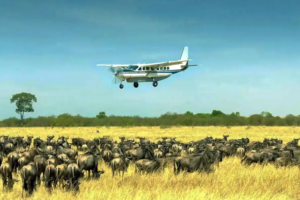
If your trip starts in Zanzibar or ends with a flight, share your flight details before booking. This helps your operator plan the pickup and final drop-off around the game drive and the road journey.
What should you bring on a crater game drive?
- Binoculars for distant rhinos, birds and wildlife activity across the floor
- A fleece or light jacket for the early start and the crater rim
- A hat, sunglasses and sunscreen for time under the pop-up roof
- A camera or phone and a power bank for photos throughout the drive
- A lightweight rain jacket if traveling during wetter months
- A small day bag to keep your essentials within reach
Plan your Ngorongoro Crater safari with Kilipath African Safaris
Tell us your travel dates, group size, starting point and preferred accommodation. We can help you choose between a crater day trip, a shared Northern Circuit safari and a private itinerary that combines Ngorongoro with Tarangire or the Serengeti.
Contact Kilipath African Safaris to request a personalized Ngorongoro Crater safari itinerary and an itemized quote.