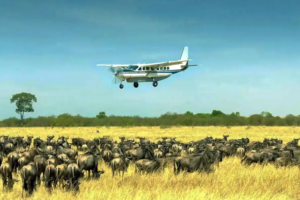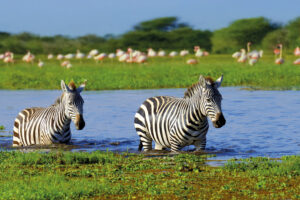
A fly-in Serengeti safari holiday can take you from breakfast in Zanzibar or Arusha to an afternoon game drive on the Serengeti plains. As your aircraft descends, you may see rocky hills, winding rivers, and dusty tracks stretching across the landscape. At the airstrip, your guide meets you in a safari vehicle and takes you to camp or begins your first game drive, depending on your arrival time.
Flying is especially convenient when you have only a few days for safari, want to spend time in a remote part of the Serengeti, or are combining wildlife viewing with a beach holiday. The biggest decision is where to land. The Central Serengeti is an excellent starting point for a first visit, the Northern Serengeti is popular during the Mara River migration season, and Ndutu draws travelers who want to see wildebeest calves on the southern plains.
What is a fly-in Serengeti safari?
A fly-in safari uses a domestic flight to reach an airstrip near your safari camp. Once you land, you explore the area by 4×4 with a guide. Your flight, airstrip transfer, game drives, and accommodation can be arranged as part of the same itinerary.
You can fly in and out to spend most of a short holiday in one area. This suits travelers returning to Zanzibar after two or three nights in the Serengeti. You can also fly in and drive out to combine the Serengeti with Ngorongoro Crater and the highlands around Karatu. With a longer trip, you can spend time in two Serengeti regions and depart from a different airstrip.
When comparing itineraries, look at the hours you will actually have for game drives. On a three-day safari, an afternoon arrival and an early departure may leave one full day in the park. An earlier arrival or a later flight out can give you time for another drive. Ask your safari planner to show how the flight times fit with the daily program.
Where can you fly to the Serengeti from?
From Arusha Airport
Arusha Airport (ARK) is a convenient starting point if you are already staying in Arusha or beginning a Northern Circuit holiday there. A morning flight can leave time for an afternoon drive, depending on the routing and the distance between the airstrip and your camp.
If you arrive in Tanzania the evening before, an overnight stay in Arusha gives you time to rest, reorganize your luggage, and prepare for the smaller aircraft. Ask whether your hotel pickup is included and when you need to be at the airport.
From Kilimanjaro International Airport
Kilimanjaro International Airport (JRO) and Arusha Airport (ARK) are separate airports. If your international flight lands at JRO and your Serengeti flight departs from ARK, you will need a road transfer. Your connection also needs to allow for immigration, baggage collection, and domestic check-in.
If your international flight arrives late, staying overnight and starting the safari the following morning is usually easier to plan. Give your safari operator the flight numbers and departure airports so they can build the transfers into your itinerary.
From Zanzibar
A fly-in Serengeti safari from Zanzibar works well if you want to add wildlife viewing to a beach holiday. You can leave your beach hotel, fly to the Serengeti, spend two or three nights on safari, and return to Zanzibar. You can also fly from Zanzibar to the Serengeti and finish by road in Arusha after visiting Ngorongoro Crater.
Ask whether your Zanzibar flight is nonstop, makes intermediate landings, or requires a change of aircraft. Some published routes include stops in Arusha or Manyara before continuing to the Serengeti. Confirm the schedule for your dates before booking beach hotels or separate onward flights. Coastal Aviation route timetable
Which Serengeti airstrip should you choose?
| Airstrip | Area | Best suited to |
|---|---|---|
| Seronera | Central Serengeti | First-time visitors, short safaris, and travelers interested in big cats and resident wildlife |
| Kogatende | Northern Serengeti | Camps near the Mara River and trips focused on the northern migration season |
| Ndutu | Ndutu and the southern plains | Seasonal safaris focused on wildebeest calving |
Ask your camp to confirm the closest airstrip for your dates before booking flights. This matters for mobile migration camps, which can use different locations during the year. A camp’s name may stay the same even when its location changes.
Central Serengeti via Seronera
The Central Serengeti is a good choice for a first safari because several habitats are within reach of one base. In the morning, your guide may look for lions around rocky outcrops known as kopjes. Later, you might follow a river valley where elephants come to drink or scan the branches for a resting leopard. On the open plains, the search can shift to cheetahs, hyenas, and grazing herds.
Central Serengeti also works well when your dates are fixed. Resident wildlife gives your guide several areas to explore throughout the year. If you only have two nights, choose a camp that gives you convenient access to the parts of the central region you want to explore. That can make a difference when your first and last drives depend on flight times.
Northern Serengeti via Kogatende
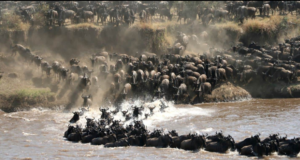
Kogatende is an option for camps near the Mara River. July through September is a useful planning window if your main goal is to look for Great Migration herds in the north. Their location varies, so ask where your proposed camp will be and which parts of the river your guide can reach from it.
A river crossing can happen suddenly, and herds may gather near the water for hours before moving away or crossing somewhere else. With three nights, you typically have two full days to explore different stretches of river and the surrounding plains. Tell your guide whether you are happy to wait at the river or prefer to spend more of the day looking for other wildlife. That preference can shape the entire day.
Ndutu and the southern plains during calving season
January and February are the main months to consider for a wildebeest calving safari. Around Ndutu, seasonal rains can bring herds onto the short-grass plains, where you may see young calves following their mothers. The abundance of prey also draws predators, and a morning drive can take you from a large herd to a search for cheetahs or lions.
The herds move with rainfall and grazing conditions. A stay of several nights gives your guide time to explore different parts of the area. Ask where your camp will be located, whether it is served by Ndutu Airstrip on your dates, and how your itinerary will adapt if the herds are concentrated farther away. Tanzania National Parks’ Serengeti guide
How many days do you need for a fly-in Serengeti safari?
| Safari length | Time on the ground | Best fit |
|---|---|---|
| 3 days / 2 nights | One full safari day, plus possible drives on arrival and departure | A short Central Serengeti safari from Arusha or Zanzibar |
| 4 days / 3 nights | Two full safari days from one camp | Migration viewing, wildlife photography, or a relaxed first safari |
| 5 days / 4 nights | Time for several Serengeti drives and a road extension | Serengeti and Ngorongoro Crater in one itinerary |
If you have only two nights, staying in one camp keeps the itinerary simple and gives you more time to explore its surroundings. If you have four nights and want to visit two regions, ask how much of the middle day will be spent transferring and whether the route can include wildlife viewing along the way.
Three sample fly-in Serengeti safari itineraries
Option 1 — Three days in Central Serengeti from Zanzibar
Day 1 — Zanzibar to Seronera. Transfer from your Zanzibar hotel to the airport and fly to Seronera. Meet your guide at the airstrip. If the flight arrives early enough, begin looking for wildlife on the way to camp or have lunch first and head out in the afternoon.
Day 2 — Full day in Central Serengeti. Leave early to explore the plains and river valleys. Depending on recent sightings, your guide may search for lions around the kopjes, look for leopards along wooded riverbanks, or follow tracks toward an open area where cheetahs hunt. Take a picnic lunch if you want to stay out, or return to camp at midday and go out again later.
Day 3 — Seronera to Zanzibar. After breakfast, transfer to the airstrip. If your flight time allows, look for wildlife along the way. On arrival in Zanzibar, continue to your beach hotel.
Option 2 — Four days near the Mara River
Day 1 — Fly to Kogatende. Meet your guide and travel through the Northern Serengeti to camp. If you have an afternoon drive, get familiar with the river and the surrounding plains.
Day 2 — Explore the Mara River area. Start early and check where herds are gathering. If conditions are promising, spend time watching their movements. Your guide can also explore nearby grasslands and woodland for other wildlife.
Day 3 — Follow recent wildlife activity. Return to a productive area or visit a different stretch of the river. A second full day gives you flexibility if the herds have moved or if you want to spend longer photographing a sighting.
Day 4 — Fly out of the Northern Serengeti. Transfer to Kogatende after breakfast and continue to your onward destination according to your ticket.
Option 3 — Five days in the Serengeti and Ngorongoro Crater
Day 1 — Fly into Central Serengeti. Land at Seronera and meet your guide for the transfer to camp and an afternoon drive if time permits.
Day 2 — Explore Central Serengeti. Spend the day moving between open grasslands, rocky outcrops, and river valleys. Your guide can adjust the route to focus on the animals and habitats you most want to see.
Day 3 — A second full Serengeti safari day. Explore a different part of the central region or add an optional sunrise balloon safari if available. Confirm the pickup, breakfast, and arrangements for rejoining your guide afterward.
Day 4 — Drive to the Ngorongoro Highlands. Leave camp by road and continue toward the highlands. Overnight near the crater rim or in the Karatu area, depending on your accommodation and the next morning’s schedule.
Day 5 — Visit Ngorongoro Crater and return to Arusha. Descend into the crater for a game drive, then continue to Arusha. If you are flying onward that evening, share your departure airport and check-in time before confirming the safari.
How to choose a Serengeti camp or lodge
Location has a direct effect on your safari day. A camp close to the airstrip can simplify arrival and departure. A camp near the wildlife areas you want to visit can shorten the drive each morning. Ask your planner for both transfer times so you can judge which location works best for your itinerary.
- Tented camps often suit travelers who want to hear the sounds of the bush at night and stay close to the landscape. Ask about the bathroom setup, hot water, charging facilities, and whether the tents are suitable for your group.
- Permanent lodges may suit travelers who want more space to relax between drives. Check the room layout, walking distances within the property, and available facilities before booking.
- Mobile migration camps move seasonally to serve different wildlife areas. Confirm where the camp will be during your stay and which airstrip serves it.
- Family accommodation can mean one tent with several beds or separate bedrooms connected by a common area. Ask for the exact setup and the camp’s age policy if you are traveling with children.
Also check who provides the game drives. With a shared vehicle, departure times and stops may follow the camp’s schedule. A private vehicle can give your group more flexibility to spend time photographing a sighting, take an early lunch, or return to camp when younger children need a break.
How much does a fly-in Serengeti safari cost?
The total depends on your travel dates, departure airport, number of travelers, camp category, and the vehicle arrangement. Flights are normally priced per traveler, while the cost of a private vehicle may be shared among the people in your party. Room arrangements and any single supplement can also change the per-person price.
A three-day fly-in safari may have a higher cost per day than a longer safari because the flight cost is spread over fewer days. If you want to add Ngorongoro Crater, compare flying one way and continuing by road with the cost and timing of a return flight.
| Quote item | What to check |
|---|---|
| Domestic flights | Departure airport, arrival airstrip, flight legs, taxes, and luggage allowance |
| Accommodation | Camp name, room type, number of nights, meals, and drinks |
| Park fees | Applicable entry fees, camping or concession fees, and any Ngorongoro charges |
| Game drives | Private or shared vehicle, guide, and the approximate time available on each day |
| Transfers | Hotel pickup, airport drop-off, and both airstrip transfers |
| Optional activities | Balloon safari, extra nights, and additional baggage |
| Payment | Total for the group, price per person, deposit, and cancellation terms |
When comparing quotes, read the arrival and departure days carefully. Two itineraries can list the same parks and number of nights while offering different amounts of time for game drives. Ask for the proposed camp, the nearest airstrip, and the expected flight times in writing.
What to pack for a Serengeti bush flight
Pack in a soft-sided bag and weigh it together with your daypack and camera equipment. As one example, Coastal Aviation lists a standard allowance of 15 kg (33 lb) per person, including carry-on. Check your own ticket for the weight and dimensions allowed. If you are combining safari with a longer holiday, ask about luggage storage or an approved extra allowance before departure. Coastal Aviation luggage policy
Keep binoculars, a hat, sunscreen, and a light layer within easy reach in case your first drive begins at the airstrip. Early starts can feel cool, while open areas can warm up by midday. A light rain jacket is useful during greener months. If photography is a priority, include lenses, batteries, and chargers when weighing your bag.
Plan your fly-in Serengeti safari with Kilipath African Safaris
Whether you want two nights in Central Serengeti from Zanzibar, three nights near the Mara River, or a longer safari that ends at Ngorongoro Crater, Kilipath African Safaris can help match your travel dates with the right airstrip, camp, and game-drive schedule.
Request your tailor-made fly-in Serengeti safari quote. Share your travel dates, number of guests, starting point, and preferred accommodation. If you are coming for the Great Migration, calving season, or big-cat photography, tell us what you hope to see so we can build your itinerary around it.