Planning a family safari should feel exciting—not overwhelming. Our family Tanzania safari planning service helps parents create a safe, comfortable, and age-appropriate adventure through Tanzania’s most spectacular national parks.
From watching elephants in Tarangire to searching for lions across the Serengeti, every day is designed around your family’s interests, children’s ages, preferred comfort level, and travel dates. You can choose a private safari, family-friendly accommodation, cultural activities, beach extensions, and a flexible daily schedule.
Tanzania offers wildlife safaris, cultural experiences, beautiful landscapes, and opportunities to see the Big Five in protected national parks and conservation areas. Tanzania Tourism highlights wildlife and cultural tourism among the country’s principal visitor experiences.
Family Tanzania Safari Package Overview
Our customizable family safari packages can include:
- Private 4×4 safari vehicle for your family
- Experienced, English-speaking safari guide
- Guaranteed window seats
- Child-friendly lodges or tented camps
- Airport transfers
- Accommodation before and after the safari
- National park and conservation fees
- Daily game drives
- Meals during the safari
- Unlimited drinking water
- Binoculars in the vehicle
- Child seats upon request
- Cultural activities
- Domestic flights when required
- Zanzibar beach extension
- 24-hour local assistance
Every itinerary can be adjusted to match your budget, available time, children’s ages, dietary needs, and preferred accommodation category.
Why Choose Tanzania for a Family Safari?
Tanzania is one of Africa’s most rewarding family safari destinations. It combines famous wildlife areas with varied landscapes, fascinating cultures, welcoming people, and accommodation options for different budgets.
A Tanzania family safari can introduce children to elephants, lions, giraffes, zebras, wildebeest, hippos, monkeys, flamingos, and hundreds of bird species. It also gives families an opportunity to learn about conservation, animal behavior, geography, and local communities through real experiences.
The Northern Safari Circuit is particularly suitable for families because Tarangire, Lake Manyara, Ngorongoro, and the Serengeti can be combined in one journey. Families with additional time can finish their holiday in Zanzibar.
Excellent wildlife viewing
Tanzania protects an extraordinary variety of wildlife and natural habitats. Depending on your itinerary and season, your family may encounter:
- Elephants
- Lions
- Leopards
- Cheetahs
- Giraffes
- Zebras
- Wildebeest
- Buffaloes
- Black rhinoceroses
- Hippopotamuses
- Hyenas
- Warthogs
- Baboons and monkeys
- Crocodiles
- Flamingos and other birds
Wildlife sightings are never guaranteed, but traveling with an experienced guide significantly improves your chances of finding and understanding the animals.
Flexible private safaris
A private safari is usually the best arrangement for families, especially those traveling with young children. Your vehicle and guide are dedicated to your family, allowing you to control the pace of each day.
You can stop for photographs, return to the lodge earlier, spend more time at an exciting animal sighting, or schedule a relaxed picnic break. This flexibility is difficult to achieve on a shared group safari.
Educational experiences
A family safari is an outdoor classroom. Children can learn how predators hunt, why animals migrate, how ecosystems function, and why conservation is important.
Your guide can adapt explanations to the children’s ages and interests. Curious children are encouraged to ask questions and keep a wildlife checklist or safari journal.
Family-friendly accommodation
Tanzania has many safari lodges and camps that welcome families. Depending on availability, we can arrange:
- Family cottages
- Interconnecting rooms
- Triple rooms
- Extra beds
- Swimming pools
- Large gardens
- Private bathrooms
- Child-friendly meal options
- Early dinners
- Laundry services
- Wi-Fi in common areas
- Babysitting at selected properties
Parents should note that some unfenced camps allow wildlife to move through the property. Guests must follow the camp’s safety instructions and may be escorted between their rooms and common areas after dark.
Best Tanzania Safari Destinations for Families
Tarangire National Park
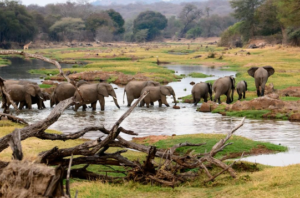
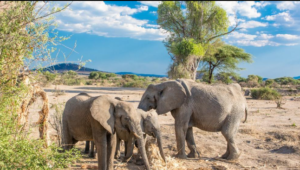
Tarangire is an excellent first safari destination for families. It is known for its elephant populations, ancient baobab trees, open landscapes, and the Tarangire River.
The park can be reached from Arusha in approximately two to three hours, depending on traffic and the location of your accommodation. This makes it suitable for the first day of a Northern Circuit itinerary.
Children often enjoy watching elephant families interact, young animals play, and giraffes walk between the acacia trees. During the dry season, animals gather near permanent water sources, creating rewarding wildlife-viewing opportunities.
Families should avoid wearing very dark blue or black clothing in areas where tsetse flies are present. Neutral-colored, lightweight clothes are generally more comfortable.
Lake Manyara National Park
Lake Manyara is a compact and visually varied destination. Its habitats include groundwater forest, open plains, woodland, and the lake environment.
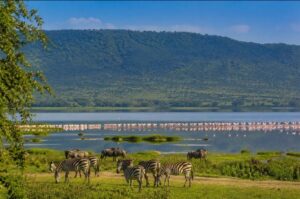
Wildlife can include elephants, giraffes, zebras, buffaloes, baboons, monkeys, hippos, and numerous bird species. The forested entrance area creates a very different atmosphere from the open plains of Tarangire and the Serengeti.
Manyara can be included in longer itineraries, although wildlife distribution can change according to water levels, rainfall, and seasonal conditions. We will advise whether Lake Manyara or additional time in another park offers better value for your travel dates.
Ngorongoro Crater
The Ngorongoro Crater is one of Tanzania’s most impressive family safari destinations. Its relatively concentrated wildlife population makes it particularly exciting for first-time visitors.
Families descend from the highlands to the crater floor, where they may encounter lions, elephants, buffaloes, zebras, wildebeest, hippos, hyenas, and, with some luck, black rhinoceroses.
The Ngorongoro Conservation Area covers approximately 8,292 square kilometres and contains volcanic landscapes, grasslands, forests, cultural sites, and important wildlife habitats. Ngorongoro Conservation Area Authority
Mornings on the crater rim can be cold, so every family member should carry a warm jacket or fleece. Layered clothing works best because temperatures become warmer after descending to the crater floor.
Serengeti National Park
The Serengeti is frequently the highlight of a family Tanzania safari. Its open plains, kopjes, rivers, and woodland support a remarkable diversity of wildlife.
Possible sightings include lions, cheetahs, leopards, elephants, giraffes, buffaloes, hippos, crocodiles, zebras, wildebeest, and many smaller animals.
Two or three nights are recommended when traveling with children. Staying longer reduces pressure to see everything in one game drive and gives the family time to explore different habitats.
The Serengeti is enormous, so accommodation must be selected carefully. A lodge that looks affordable may be located far from the best wildlife area for your dates. We choose camps according to season, migration movements, driving distances, family suitability, and availability.
Arusha National Park
Arusha National Park can be a good introduction for families arriving early or staying an additional night near Arusha. Its landscapes include forest, lakes, grassland, and views toward Mount Meru.
The park is smaller than the Serengeti but can provide a gentle first safari experience. Giraffes, buffaloes, zebras, monkeys, antelopes, and various birds may be seen.
Some activities have minimum-age or safety requirements, so we confirm suitability before including them in a family itinerary.
Lake Eyasi Cultural Experience
Families with older children may enjoy a cultural visit around Lake Eyasi. Activities can introduce travelers to the traditional lifestyles of local communities, including the Hadzabe and Datoga.
A responsible visit should be respectful rather than staged exclusively for photographs. Children can learn about traditional skills, language, food, and the relationship between communities and their environment.
Maasai Cultural Visit
A carefully selected Maasai cultural experience can add an important human dimension to a safari. Families can learn about traditional homes, livestock, clothing, songs, and community life.
Visitors should always request permission before photographing people. The Ngorongoro authority similarly advises travelers to be culturally sensitive and avoid photographing people without consent. Ngorongoro Conservation Area Authority
Recommended Seven-Day Family Safari Itinerary
The following route offers a comfortable balance between wildlife viewing and manageable driving times.
Day 1: Arrival in Tanzania
Your driver will meet your family at Kilimanjaro International Airport or Arusha Airport and transfer you to your accommodation.
The first evening is reserved for relaxation and a safari briefing. Your guide or representative will explain the itinerary, departure time, luggage arrangements, weather conditions, and essential safety information.
Overnight in Arusha.
Day 2: Arusha to Tarangire National Park
After breakfast, meet your private safari guide and depart for Tarangire National Park in a 4×4 Land Cruiser.
Enjoy your first game drive among baobab trees, acacia woodland, and open savannah. Look for elephant families, giraffes, zebras, antelopes, buffaloes, lions, and colorful birds.
A picnic or hot lunch will be arranged according to the itinerary. In the afternoon, continue to your lodge in Tarangire, Karatu, or the surrounding area.
Day 3: Tarangire to Serengeti National Park
Travel toward the Serengeti through the beautiful Ngorongoro highlands. The scenery changes dramatically as the road descends toward the plains.
Depending on timing and route, your family may stop at a viewpoint or visit a cultural or historical attraction. Continue into the Serengeti for an afternoon game drive.
This is a longer driving day, but regular comfort stops can be arranged. Families with very young children may prefer to fly into or out of the Serengeti or add an extra night to break the journey.
Day 4: Full-Day Serengeti Safari
Spend the day exploring the Serengeti. Your guide will select an area based on wildlife reports, seasonal conditions, and your family’s interests.
You might watch lions resting near a kopje, cheetahs scanning the plains, elephants feeding in the woodland, or hippos gathering in a pool.
A full-day picnic game drive is possible, but families may also divide the day into morning and afternoon activities. The second option provides a midday break at the lodge and is often more comfortable for young children.
Day 5: Serengeti Exploration
Enjoy another day in the Serengeti without rushing. Having a second full day increases the opportunity to find different species and observe interesting animal behavior.
Families may also choose an optional hot-air balloon safari, subject to age, height, safety requirements, weather, and availability. This activity must normally be reserved in advance.
Day 6: Serengeti to Ngorongoro Highlands
Take a final morning game drive before traveling toward Ngorongoro. Depending on the itinerary, you may stop at Oldupai Gorge, a Maasai cultural boma, or a scenic viewpoint.
The Ngorongoro area contains significant archaeological and cultural sites, including Oldupai Gorge and Laetoli. Ngorongoro Conservation Area Authority
Arrive at your lodge in the late afternoon and prepare for the following morning’s crater safari.
Day 7: Ngorongoro Crater and Return to Arusha
After an early breakfast, descend into the Ngorongoro Crater for a game drive.
Explore the grasslands, woodland, wetlands, and lake area while searching for lions, buffaloes, elephants, hyenas, hippos, zebras, wildebeest, and black rhinoceroses.
After lunch, ascend from the crater and drive back to Arusha. You may stay overnight or transfer to the airport, depending on your flight time.
A late-night international departure is safer than scheduling a tight connection immediately after a long road transfer.
Shorter Family Safari Options
Three-day family safari
A short safari can include:
- Day 1: Tarangire National Park
- Day 2: Ngorongoro highlands
- Day 3: Ngorongoro Crater and return to Arusha
This option is appropriate for families with limited time, but it does not include the Serengeti.
Four-day family safari
A classic four-day itinerary can cover:
- Tarangire
- Serengeti
- Ngorongoro Crater
This route includes considerable driving. It is better suited to families with older children who are comfortable spending several hours in the vehicle.
Five-day family safari
Five days provide a better balance:
- Tarangire
- Two nights in the Serengeti
- Ngorongoro Crater
This is one of the most popular options for first-time family travelers.
Ten-day safari and Zanzibar holiday
Families wanting wildlife and beach time can combine:
- Arrival night in Arusha
- Five or six days on safari
- Flight to Zanzibar
- Three or four nights by the beach
- Stone Town or spice-farm excursion
- Transfer to Zanzibar Airport
Best Time for a Family Safari in Tanzania
Tanzania can be visited throughout the year, but each season creates a different experience.
June to October
This is the main dry season. Wildlife is often easier to locate around water sources, and road conditions are generally favorable.
July through September is a popular family travel period because it coincides with school holidays in many countries. Accommodation should be reserved well in advance.
December to March
This is a good period for the Southern Serengeti and Ndutu region. The calving season generally occurs between January and February, although rainfall and animal movements vary each year.
Young animals attract predators, creating dramatic wildlife encounters. Families should book early because well-located camps can fill quickly.
April and May
These months are typically wetter and quieter. Some camps close, while others provide seasonal offers.
The landscape is green and beautiful, but rain can affect road conditions and daily schedules. This period can work well for flexible families seeking fewer vehicles and potentially lower accommodation prices.
November
November often brings short rains, although weather patterns are never completely predictable. The parks remain accessible, landscapes begin turning green, and visitor numbers may be lower than during peak months.
Is a Tanzania Safari Suitable for Young Children?
Yes, but the itinerary must be designed carefully.
There is no single ideal minimum age for every family. Some children enjoy wildlife and long game drives from an early age, while others need shorter activities and more frequent breaks.
For children under six, we normally recommend:
- A private vehicle
- Shorter driving days
- At least two nights at selected locations
- Lodges with family rooms
- Properties with open spaces or swimming pools
- Regular rest breaks
- Flexible meal times
- Limited lodge changes
- Avoiding extremely long full-day game drives
Some lodges, walking safaris, balloon operations, and other activities have age restrictions. These rules differ between providers and must be checked before confirming a booking.
Choosing the Right Family Accommodation
Accommodation strongly influences the overall safari experience.
Budget camping
Public camping is the most adventurous and affordable option. Tents, mattresses, sleeping bags, meals, and a safari cook can be included.
Bathroom and shower facilities are shared. Hot water and electricity may be limited. Camping can be exciting for older children but may not suit families seeking privacy or maximum comfort.
Mid-range lodges and tented camps
This category offers a comfortable balance between price and quality. Rooms or permanent safari tents normally include private bathrooms, proper beds, and restaurant facilities.
Selected properties offer family rooms, interconnecting units, gardens, or swimming pools.
Luxury family safari
Luxury lodges provide spacious accommodation, high service levels, impressive locations, and carefully prepared meals.
Some offer private family villas, plunge pools, children’s programs, specialized guides, or exclusive-use vehicles. Luxury properties can still be located in wilderness areas where electricity, Wi-Fi, or mobile service is limited.
What Is Included?
A typical private family safari package includes:
- Airport pickup and drop-off
- Private 4×4 Land Cruiser
- Professional safari guide
- Fuel
- National park entrance fees
- Ngorongoro conservation and crater fees
- Accommodation listed in the itinerary
- Meals during the safari
- Drinking water
- Game drives
- Binoculars
- Government taxes
- Emergency support
What Is Usually Excluded?
Unless specifically stated, the following are generally excluded:
- International flights
- Tanzania visa
- Travel insurance
- Vaccinations and medical expenses
- Optional activities
- Alcoholic beverages
- Personal purchases
- Laundry at some camps
- Guide and lodge staff gratuities
- Zanzibar infrastructure or local taxes
- Items not mentioned in the confirmed itinerary
Every quotation should be reviewed carefully because inclusions can vary.
How Much Does a Family Tanzania Safari Cost?
Family safari prices depend on:
- Number of adults and children
- Children’s exact ages
- Travel season
- Safari duration
- Accommodation category
- Private or shared arrangement
- Parks included
- Number of rooms required
- Domestic flights
- Airport transfers
- Optional activities
- Zanzibar extension
Children may qualify for reduced park fees or accommodation rates, but policies depend on their ages and on the individual lodge.
As a broad planning estimate, a private family safari can range from approximately USD 350 to more than USD 1,000 per person per day. Budget camping sits toward the lower end, while premium lodges, migration camps, family villas, and fly-in itineraries can cost considerably more.
These figures are planning estimates rather than fixed prices. A personalized quotation is necessary because park charges, room availability, child policies, and seasonal rates can change.
Safari Vehicle and Family Comfort
Your family travels in a specially prepared 4×4 Land Cruiser with a pop-up roof for wildlife viewing.
Vehicle facilities can include:
- Individual window seats
- Seatbelts
- Charging sockets or USB connections
- Cooler or refrigerator
- Drinking water
- First-aid kit
- Safari radio
- Binoculars
- Space for soft-sided luggage
A child seat can be arranged when requested in advance. Parents should provide the child’s age and approximate weight so that the correct arrangement can be discussed.
Soft-sided luggage is recommended because it is easier to store in safari vehicles and small aircraft.
Family Health and Safety
Consult a qualified travel-health professional before departure. Medical advice may depend on the travelers’ ages, health history, countries recently visited, and specific Tanzania itinerary.
Families should arrange comprehensive travel insurance covering:
- Medical treatment
- Emergency evacuation
- Trip cancellation
- Travel delays
- Lost luggage
- Safari activities
- Zanzibar activities, when applicable
During the safari:
- Never leave the vehicle without your guide’s permission.
- Do not feed or approach animals.
- Keep children supervised at all times.
- Follow lodge instructions after dark.
- Never allow children to walk alone in an unfenced camp.
- Store food securely.
- Drink safe water.
- Use sunscreen and insect repellent.
- Carry prescribed medication in hand luggage.
- Inform us about allergies and dietary restrictions before arrival.
What to Pack for a Family Safari
Pack light, practical clothing in neutral colors.
Recommended items include:
- Lightweight shirts and trousers
- Warm jacket or fleece
- Comfortable closed shoes
- Sun hats
- Sunglasses
- High-SPF sunscreen
- Insect repellent
- Reusable water bottles
- Small backpack
- Camera
- Spare batteries or power bank
- Personal medication
- Basic toiletries
- Wet wipes and hand sanitizer
- Swimsuits
- Copies of travel documents
- Children’s books or quiet games
- Wildlife checklist
- Snacks for young children
Avoid camouflage clothing because its use can be restricted or or associated with military uniforms in some destinations. Bright white clothes also become dusty quickly.
Keeping Children Engaged
Young travelers enjoy safaris more when the experience feels interactive.
Before departure, introduce them to common Tanzanian animals. During the safari, give each child a checklist and invite them to record their sightings.
Useful activities include:
- Animal spotting competitions
- Bird identification
- Drawing wildlife
- Keeping a safari journal
- Learning basic Swahili words
- Photographing animal tracks
- Asking the guide one question at every stop
- Learning about food chains and habitats
A pair of child-sized binoculars can make quiet periods between sightings more engaging.
Combining Safari and Zanzibar
A Zanzibar extension gives families time to relax after early mornings and adventurous game drives.
Possible activities include:
- Beach relaxation
- Swimming
- Stone Town exploration
- Spice-farm visit
- Cultural tours
- Prison Island excursion
- Dolphin or marine activities with responsible operators
- Jozani Forest
- Sunset boat trip
The beach location should be selected according to the season, tides, activities, and desired atmosphere. Some coastal areas experience dramatic tidal changes, while others are more suitable for swimming throughout the day.
Domestic flights connect the safari region with Zanzibar, helping families avoid long overland journeys.
Why Book Your Family Safari With Kilipath African Safaris?
We plan each safari around the family rather than forcing every traveler into the same program.
You receive:
- Local Tanzania-based assistance
- Personalized itinerary planning
- Private safari options
- Family-friendly lodge recommendations
- Experienced guides
- Clear package inclusions
- Flexible pacing
- Dietary support
- Airport and hotel coordination
- Safari and Zanzibar combinations
- Support before and during the journey
We can accommodate vegetarian, vegan, halal, allergy-sensitive, and other dietary requests when informed in advance.
Start Planning Your Family Tanzania Safari
A successful family safari begins with the right route, realistic driving times, comfortable accommodation, and enough flexibility for children.
Send us the following information to receive a personalized proposal:
- Preferred travel dates
- Number of adults
- Number of children
- Children’s ages
- Safari duration
- Preferred accommodation level
- Approximate budget
- Parks you want to visit
- International arrival and departure airports
- Interest in Zanzibar
- Dietary or medical requirements
- Special celebrations
We will use these details to create a family-friendly itinerary and quotation.
Contact Kilipath African Safaris today and let us design a safe, exciting, and unforgettable Tanzania safari for your family.