Ruaha National Park is one of Tanzania’s most remarkable safari destinations for travelers searching for remote wilderness, impressive wildlife, dramatic baobab landscapes, and fewer safari vehicles. A fly in Ruaha safari makes reaching this remote part of southern Tanzania easier and allows travelers to spend more of their holiday enjoying game drives instead of traveling long distances by road.
Ruaha National Park covers approximately 20,226 square kilometers in south-central Tanzania and is the country’s second-largest national park. Its landscapes combine the Great Ruaha River, seasonal river systems, rocky areas, open savannah, ancient baobabs and extensive miombo woodland.
This complete fly in Ruaha safari travel guide explains how to reach Ruaha by air, what animals you can expect to see, the best months to visit, safari accommodation, activities, recommended itineraries and useful travel tips.
Why Choose a Fly In Ruaha Safari?
Ruaha’s remote location is one of the reasons it remains so wild and uncrowded. However, reaching the park entirely by road may require significant travel time depending on where your journey begins.
Flying gives travelers a convenient alternative.
Scheduled and charter flights operate to Ruaha, with Msembe and Jongomero among the park’s main airstrips. TANAPA advises that lodge or safari operators generally arrange transfers between the airstrip and safari accommodation.
A fly-in safari is particularly attractive if you:
- Have limited vacation time.
- Want to spend more time on wildlife viewing.
- Prefer avoiding long road transfers.
- Are combining Ruaha with another Tanzanian safari destination.
- Are traveling from Zanzibar before or after your safari.
- Prefer a private or luxury safari experience.
- Want to explore Tanzania’s Southern Circuit efficiently.
Once your aircraft descends toward Ruaha, even the arrival becomes part of the safari experience as wilderness, river systems and enormous stretches of bushland appear below.
Where Is Ruaha National Park?
Ruaha National Park lies west of Iringa in south-central Tanzania and forms one of the major highlights of Tanzania’s Southern Safari Circuit.
The park is renowned for its immense wilderness and relatively low visitor density. Its habitats range from baobab-covered plains and rocky kopjes to miombo woodland and riverine vegetation along the Great Ruaha and seasonal rivers.
This ecological diversity is one reason Ruaha offers such varied wildlife viewing.
Unlike some more heavily visited destinations, sightings here can often feel intimate and unhurried.
Flying Into Ruaha National Park
For many international visitors, flying is one of the easiest ways to incorporate Ruaha into a Tanzania itinerary.
TANAPA lists Msembe and Jongomero airstrips as important arrival points inside Ruaha, with scheduled and charter flights operating to the park.
Depending on the itinerary and current airline schedules, fly-in safari arrangements can connect Ruaha with destinations such as:
Dar es Salaam: A common starting point for Southern Circuit safaris.
Zanzibar: Convenient for travelers combining beach relaxation with wildlife.
Arusha: Useful when linking Tanzania’s Northern Circuit with Ruaha.
Other Southern Circuit parks: Multi-park itineraries can sometimes use scheduled or charter bush flights.
Flight schedules vary according to season and operator, so connections should always be confirmed during safari planning.
Arriving at Ruaha by Bush Plane
A bush flight is quite different from traveling on a large international aircraft.
Planes operating to safari airstrips are normally smaller aircraft designed for remote destinations.
The experience is usually relaxed and scenic. As the aircraft approaches Ruaha, travelers may see winding rivers, golden plains, woodland and occasionally wildlife from above.
After landing, your safari guide normally meets you at the airstrip.
In many itineraries, the safari begins almost immediately.
Instead of simply driving directly to the lodge, your transfer can become your first game drive.
You might encounter giraffes, elephants, zebras, antelopes or predators before even reaching your accommodation.
Wildlife on a Fly In Ruaha Safari

Wildlife is the main reason travelers choose Ruaha.
The park is especially famous for elephants, buffalo, lions and a fascinating mixture of species associated with both eastern and southern African ecosystems.
TANAPA highlights Ruaha’s elephants and buffalo congregations during the dry season, as well as strong populations of lion, leopard, cheetah and spotted hyena. Greater kudu, sable antelope, roan antelope and African wild dogs are among its more distinctive sightings.
Lions
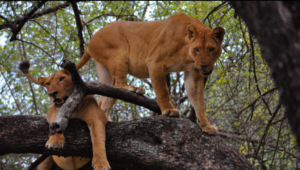
Ruaha is regarded as outstanding predator country.
Large lion prides may be seen around river systems, open plains and areas where prey concentrates.
Early morning and late afternoon are particularly productive times for predator viewing.
Watching a pride resting beneath a baobab or following lions moving through the grass can become one of the defining experiences of a Ruaha safari.
Leopards
Leopards are more secretive than lions but occur throughout suitable Ruaha habitat.
Your guide may search riverine woodland, rocky terrain and trees near drainage lines where leopards sometimes rest during daylight hours.
Cheetahs
Open areas provide opportunities to encounter cheetahs.
They are not guaranteed, but Ruaha’s mix of woodland and savannah provides suitable hunting territory.
African Wild Dogs
Wild dogs are among Africa’s most exciting predators.
Ruaha is an important destination for travelers hoping to encounter these highly social hunters. Packs can roam large territories, meaning a sighting is always special.
Elephants
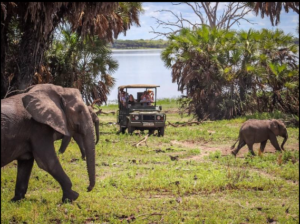
Elephants are one of Ruaha’s signature animals.
During the dry season, substantial numbers may gather near river systems and remaining water sources.
The sight of elephants walking beneath enormous baobab trees is one of the park’s most iconic scenes.
Buffalo
Buffalo can occur in large herds, particularly where water and grazing are available.
They also attract predators, making buffalo areas excellent places for guides to search for lions.
Greater Kudu
Ruaha is especially well known for greater kudu.
Their large spiral horns make mature males particularly impressive.
Sable and Roan Antelope
Travelers who have already visited better-known East African parks may appreciate Ruaha because of species such as sable and roan antelope.
These animals are associated with woodland habitats and add another dimension to wildlife viewing.
Giraffes, Zebras and Antelopes
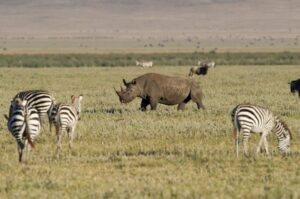
You can also encounter giraffe, zebra, impala, eland and many other herbivores throughout the park.
Their presence supports Ruaha’s rich predator population.
The Great Ruaha River
The Great Ruaha River is one of the park’s most important natural features.
Water strongly influences where wildlife moves, particularly during the dry season.
As water becomes limited, elephants, buffalo, antelopes and predators concentrate around river areas, permanent pools and sand-river seeps.
Game drives following the river can therefore produce excellent wildlife encounters.
Hippos and crocodiles may also be found around suitable pools and river sections.
For photographers, river landscapes provide attractive combinations of animals, water, dramatic light and mature vegetation.
Ruaha’s Famous Baobab Landscapes
Ruaha is famous for its striking baobab trees.
Some stand alone across golden plains while others rise above woodland and dry river systems.
During a game drive you may encounter elephants walking beside them, giraffes passing through the background or lions resting nearby.
These landscapes help distinguish Ruaha visually from many other Tanzanian safari destinations.
Sunrise and sunset can be especially beautiful when baobab silhouettes dominate the horizon.
Best Time for a Fly In Ruaha Safari
Ruaha can be visited throughout much of the year, but the experience changes considerably between the dry and wet seasons.
June to October – Dry Season
For classic big-game viewing, June through October is generally the most popular period.
TANAPA identifies this period as Ruaha’s dry season, when animals increasingly gather close to water.
Advantages include:
- Easier wildlife spotting.
- Animals concentrated around water.
- Excellent predator opportunities.
- Dry landscapes and open vegetation.
- Good conditions for photography.
- Excellent elephant encounters.
September and October can become particularly dry, and temperatures may rise significantly before the rains begin.
November to May – Green Season
Ruaha’s rainy period generally occurs from approximately late November through May.
During this season the landscape transforms.
Grass becomes greener, trees produce fresh foliage and birdlife can be excellent.
Advantages can include:
- Beautiful green landscapes.
- Fewer visitors.
- Strong birding.
- Dramatic skies.
- Excellent photography.
- A different wilderness atmosphere.
Some roads may become more challenging after heavy rain, which is one reason safari operators normally use 4×4 vehicles.
Birdwatching in Ruaha National Park
Ruaha is an exceptional birding destination.
TANAPA records more than 570 bird species, reflecting the park’s varied habitats and overlap of ecological zones.
Bird enthusiasts can search for:
- Raptors
- Hornbills
- Bee-eaters
- Kingfishers
- Rollers
- Waterbirds
- Woodland species
- Seasonal migrants
Even travelers whose primary interest is large mammals often become interested in Ruaha’s impressive birdlife.
Activities During a Fly In Ruaha Safari
A fly-in safari can include considerably more than traditional game drives.
Game Drives
Game drives remain the main activity.
A professional guide takes you through areas selected according to recent wildlife movements, water availability and seasonal conditions.
Morning drives can be excellent for predators while afternoon drives provide beautiful light.
Full-day drives can also be organized, especially for photographers or visitors wanting to explore more distant sections.
Walking Safaris
Ruaha is an excellent destination for travelers interested in exploring Africa on foot.
Walking safaris must be conducted according to park regulations with authorized guides or rangers.
Walking changes the safari perspective completely.
Instead of focusing only on large animals, you begin noticing:
- Tracks
- Plants
- Insects
- Birds
- Animal droppings
- Smaller wildlife
- Ecology
- Sounds of the bush
It can be one of the most memorable activities during a Ruaha safari.
Birdwatching
Dedicated birding drives can be organized for enthusiasts.
Early mornings are especially productive.
Photography Safaris
Ruaha is excellent for photographers because of its relatively low traffic, unusual landscapes and dramatic wildlife.
A private vehicle is particularly valuable for serious photographers because it allows additional flexibility at sightings.
Bush Meals and Sundowners
Depending on your lodge and safari package, bush breakfasts, picnic lunches or sunset drinks may be arranged.
These experiences add a relaxed element to the safari and allow travelers to spend more time in nature.
Fly In Ruaha Safari Accommodation
Accommodation options range from comfortable tented camps to high-end safari lodges.
Many properties are situated in areas with easy access to important wildlife zones.
Depending on your budget, you may choose:
Budget or Simple Safari Camps
Designed for travelers prioritizing wildlife over luxury.
Facilities are simpler, but the wilderness experience remains excellent.
Mid-Range Tented Camps
These normally provide private tents or rooms with beds, private bathrooms, meals and comfortable communal areas.
They are ideal for couples, families and travelers seeking comfort without ultra-luxury pricing.
Luxury Safari Camps
Luxury camps may provide:
- Spacious safari suites.
- Private bathrooms.
- Excellent dining.
- Personalized service.
- Premium locations.
- Private or semi-private activities.
- Sundowners and bush dining.
- More exclusive safari experiences.
Because Ruaha’s peak safari period falls mainly between June and October, advance booking is strongly recommended during these months. TANAPA similarly recommends booking accommodation early for the peak season and festive periods.
Sample 3-Day Fly In Ruaha Safari
Day 1: Fly to Ruaha – Afternoon Game Drive
Take a morning flight toward Ruaha National Park.
Upon landing at the airstrip, meet your safari guide and begin your first game drive.
Depending on wildlife locations, you may immediately encounter elephants, giraffes, zebras or antelopes.
Continue toward your lodge while exploring the surrounding area.
Enjoy lunch, relax briefly and continue with an afternoon game drive.
Look for lions, buffalo and elephants around river corridors.
Return to the lodge for dinner and overnight.
Day 2: Full-Day Ruaha Safari
After an early breakfast, depart for a full day of wildlife viewing.
Your guide may concentrate on the Great Ruaha River or explore more remote plains and woodland depending on recent sightings.
Search for:
- Lions
- Elephants
- Buffalo
- Leopards
- Greater kudu
- Wild dogs
- Giraffes
- Zebras
- Antelopes
Enjoy a picnic lunch in an approved area before continuing the afternoon game drive.
Return to your lodge as the sun begins dropping behind Ruaha’s baobab-covered landscape.
Dinner and overnight inside or near the park.
Day 3: Morning Game Drive – Fly Out
Wake early for breakfast and enjoy one final wildlife drive.
Morning is a wonderful time to search for predators before temperatures increase.
Return toward the airstrip while continuing your game drive.
Board your scheduled flight for your onward destination.
You may continue toward Dar es Salaam, Zanzibar, Arusha or another safari destination depending on your itinerary.
Sample 4-Day Fly In Ruaha Safari
For travelers with more time, four days provides a more relaxed experience.
Day 1: Fly to Ruaha and afternoon safari.
Day 2: Full-day game drive.
Day 3: Morning game drive plus optional walking safari or further wildlife exploration.
Day 4: Final game drive and return flight.
The additional day gives your guide more time to search different habitats and increases opportunities for rare sightings such as wild dogs, leopard or sable antelope.
Fly In Ruaha Safari From Zanzibar
Combining Ruaha and Zanzibar creates one of Tanzania’s most attractive bush-and-beach holidays.
You can enjoy safari landscapes for several days and then relax beside the Indian Ocean.
A typical combination might look like:
Day 1: Fly toward Ruaha and begin safari.
Days 2–3: Explore Ruaha.
Day 4: Fly toward Zanzibar.
Days 5–9: Beach holiday in Zanzibar.
Alternatively, travelers can begin with Zanzibar before flying to safari.
Flight schedules should always be checked while preparing the final itinerary because routes and timings can vary seasonally.
Ruaha and Nyerere National Park Combination
Another excellent Southern Circuit itinerary combines Ruaha with Nyerere National Park.
The two destinations offer noticeably different environments.
Ruaha is renowned for:
- Lions.
- Baobab landscapes.
- Elephants.
- Kudu.
- Wild dogs.
- Dramatic dry-season scenery.
Nyerere can add river-based experiences and another style of ecosystem.
Flying between safari areas significantly reduces overland travel and makes a multi-park Southern Circuit safari practical even for travelers with limited time.
Ruaha Versus Serengeti
Both destinations provide outstanding safaris, but their character differs.
Choose Ruaha if you want:
- Fewer vehicles.
- Remote wilderness.
- Large predator populations.
- Baobab scenery.
- Greater kudu and southern African species.
- A quieter safari atmosphere.
- An adventurous Southern Circuit experience.
Choose Serengeti if you want:
- Great Migration opportunities.
- Vast open plains.
- Extensive safari infrastructure.
- Easy integration with Ngorongoro.
- Tanzania’s classic Northern Circuit.
Neither destination is necessarily better. They simply offer different styles of safari.
Travelers with enough time can experience both.
What to Pack for a Fly In Ruaha Safari
Because bush aircraft may have luggage restrictions, lightweight packing is important.
Soft-sided safari bags are generally easier to handle than large hard-shell suitcases.
Useful items include:
- Lightweight neutral clothing.
- Long trousers.
- Comfortable shirts.
- Light jacket or fleece.
- Closed walking shoes.
- Sandals for camp.
- Sunhat.
- Sunglasses.
- Sunscreen.
- Insect repellent.
- Binoculars.
- Camera equipment.
- Spare batteries.
- Power bank.
- Personal medication.
- Small daypack.
Always check the baggage allowance for your specific domestic flight before departure.
Health and Safety
Ruaha is a wild environment, so visitors should always follow instructions from safari guides and park authorities.
Never leave a safari vehicle unless your guide confirms that it is permitted.
Wild animals should never be approached or fed.
TANAPA recommends carrying adequate drinking water, sun protection and insect repellent and following professional medical advice regarding vaccinations and malaria prevention before traveling.
Travel insurance is also highly recommended for any international safari.
Is a Fly In Ruaha Safari Good for Families?
Yes.
Ruaha can provide an excellent family safari, particularly for families whose children are comfortable with bush flights and longer wildlife drives.
Private safaris work especially well because daily schedules can be adjusted.
Families can stop for breaks, return to the lodge earlier when needed and spend longer at sightings that children particularly enjoy.
Parents should check minimum-age policies for walking safaris and specific camps before booking.
Is Ruaha Good for Honeymooners?
Ruaha is an excellent honeymoon destination.
Its low visitor numbers and remote wilderness create a naturally romantic atmosphere.
Imagine spending the morning watching lions, enjoying lunch overlooking the wilderness and ending the evening beneath an enormous African sky.
Couples can combine Ruaha with Zanzibar for an ideal safari-and-beach honeymoon.
Why Private Fly In Safaris Work So Well
Private safaris provide maximum flexibility.
With your own safari vehicle and guide, you can decide how long to remain at wildlife sightings.
This is particularly useful for:
- Photographers.
- Honeymooners.
- Families.
- Birdwatchers.
- Wildlife enthusiasts.
- Travelers wanting a relaxed pace.
If lions are hunting or elephants are gathering at a waterhole, a private safari allows you to wait rather than leaving because another guest wants to move on.
How Many Days Should You Spend in Ruaha?
A minimum of three days can provide a good introduction.
However, four or five days are even better if your budget permits.
Ruaha is enormous, and wildlife is spread across different ecosystems.
3 Days
Best for travelers with limited time.
4 Days
A balanced choice offering more relaxed game viewing.
5 Days
Excellent for photographers and wildlife enthusiasts.
6+ Days
Ideal for travelers wanting deeper exploration, walking safaris and slower-paced wilderness experiences.
Fly In Ruaha Safari Cost
The final cost depends on several factors:
- Travel season.
- Number of travelers.
- Accommodation category.
- Flight route.
- Private versus shared arrangements.
- Number of safari days.
- Walking safaris or additional activities.
- Domestic flight prices.
- Park fees.
- Concession or camping fees.
Luxury camps naturally cost more, particularly during peak months.
Private travel can become better value per person when several travelers share the same safari vehicle.
A customized quotation is therefore usually more useful than a single fixed safari price.
Plan Your Fly In Ruaha Safari
A fly in Ruaha safari offers one of the most rewarding ways to discover Tanzania beyond the famous Northern Circuit.
Flying reduces travel time and places you directly into a landscape of enormous baobabs, winding rivers, large elephant herds and exceptional predator country.
Whether you choose a three-day wildlife escape, a longer private photography safari or a Ruaha-and-Zanzibar holiday, the experience offers something increasingly difficult to find in Africa: space, wilderness and intimate wildlife encounters away from heavy safari traffic.
For travelers who want Tanzania at its wildest, Ruaha deserves a place near the top of the safari list.