A group Tarangire safari is one of the most affordable and enjoyable ways to experience the wildlife of northern Tanzania. Famous for enormous elephant herds, ancient baobab trees, seasonal wildlife concentrations, beautiful savannah and excellent birdlife, Tarangire National Park is an ideal destination for first-time safari travelers as well as visitors returning to Tanzania.
Located within Tanzania’s popular Northern Safari Circuit, Tarangire can easily be combined with Lake Manyara, Ngorongoro Crater and Serengeti National Park. It is also close enough to Arusha to be visited as a day safari, although spending a night near or inside the park gives travelers more time to explore.
Tarangire National Park covers approximately 2,850 square kilometers and takes its name from the Tarangire River, an important source of water for wildlife, particularly during the dry months. TANAPA describes the park as one of Tanzania’s major elephant destinations and reports more than 550 bird species.
This complete group Tarangire safari travel guide explains what to expect, the wildlife you may see, when to travel, what to pack, accommodation choices and how Tarangire fits into a longer Tanzania safari.
Why Visit Tarangire National Park?
Tarangire has a landscape that feels very different from some of Tanzania’s other northern parks. Huge baobab trees rise above open grasslands while acacia woodland, river valleys and seasonal wetlands provide habitats for many species.
Elephants are one of the biggest attractions.
Large family groups can often be seen walking between feeding areas and the Tarangire River. Watching elephants drinking, bathing, feeding and interacting with their calves can easily become one of the highlights of a Tanzania safari.
But Tarangire offers much more than elephants.
Travelers may encounter giraffes, zebras, wildebeest, buffaloes, impalas, waterbucks, warthogs and numerous other herbivores. Predators including lions, leopards and hyenas are also present. TANAPA highlights the Silale Swamp and Tarangire River loops as particularly important wildlife habitats and describes the park as one of East Africa’s notable birding destinations.
The scenery alone makes Tarangire worth visiting. Baobab trees, termite mounds, golden grasslands and elephants crossing dusty tracks create the classic African safari atmosphere many travelers imagine before coming to Tanzania.
What Is a Group Tarangire Safari?
A group safari allows travelers to share a safari vehicle and guide with other visitors following a similar itinerary.
Instead of paying the full cost of a private 4×4, transportation and guide yourself, the main safari expenses are divided among the participants. This makes group safaris particularly attractive to solo travelers, couples, students, friends and visitors looking for a more affordable Tanzania safari.
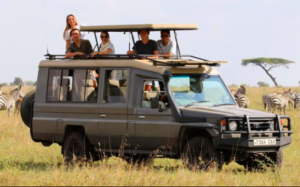
At Kilipath African Safaris, our shared safaris normally use 4×4 Land Cruisers with a maximum of seven travelers, allowing each guest to have a window seat.
The safari vehicle usually has a pop-up roof so passengers can stand safely inside the vehicle while observing and photographing animals.
Sharing a safari also creates a social experience. Travelers from different countries often begin the journey as strangers and finish their safari exchanging photographs, stories and contact details.
Getting to Tarangire From Arusha
Arusha is the main starting point for most Northern Tanzania safaris.
Tarangire lies roughly 120 kilometers from Arusha. TANAPA currently advises travelers to allow approximately 2.5 to 3 hours by road, depending on traffic, road conditions, stops and the location of your accommodation.
Most group safaris depart Arusha early in the morning.
An early departure allows travelers to reach the park with plenty of time for game viewing. After entering Tarangire, the guide raises the vehicle’s pop-up roof and begins searching for wildlife along the different game-drive circuits.
Travelers flying into Tanzania commonly arrive through Kilimanjaro International Airport or Arusha Airport. If you are joining an early group departure, arriving in Arusha the previous day is usually the safest arrangement.
Wildlife You Can See on a Tarangire Group Safari
Wildlife sightings can never be guaranteed because the animals move naturally through a large ecosystem. Nevertheless, Tarangire supports an impressive diversity of species.
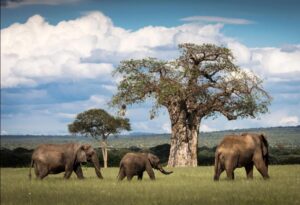
Elephants are the signature animals. Families containing adults, juveniles and tiny calves can sometimes gather around the river or move together through the woodland.
Zebras and wildebeest become particularly noticeable when animals concentrate around remaining water sources during drier periods. Buffaloes may appear in sizeable herds, while giraffes are often spotted moving between acacia trees.
Other possible sightings include impala, dik-dik, waterbuck, eland, hartebeest, warthog, mongoose and baboons.
Lion sightings are possible throughout the park, while leopards are naturally more elusive. Hyenas may also be encountered, especially in productive wildlife areas.
TANAPA additionally identifies species such as greater and lesser kudu, gerenuk and oryx among the animals associated with the wider Tarangire ecosystem.
Every game drive is different, which is part of the excitement of visiting Tarangire.
Tarangire’s Famous Elephant Herds
Few images represent Tarangire better than an elephant standing beside a massive baobab tree.
During dry periods, animals increasingly depend on permanent or reliable water sources, making the Tarangire River particularly important. Elephants may travel considerable distances between feeding grounds and water.
Visitors might watch a herd drinking quietly before younger elephants begin playing in the mud. At other times, elephants can appear beside the safari track, feeding on branches and grass.
Responsible guides keep an appropriate distance and avoid blocking the animals’ route. TANAPA specifically advises visitors to give elephants and buffaloes generous space and never obstruct their paths to water.
These encounters can provide outstanding opportunities for photography, especially when the animals are framed by baobab trees or golden afternoon light.
Best Time for a Group Tarangire Safari
Tarangire is open throughout the year, and every season offers something different.
The June to October dry season is particularly popular for wildlife viewing. As water becomes scarce in surrounding areas, animals increasingly gather near permanent water sources. Vegetation may also become thinner, which can make some wildlife easier to see. TANAPA describes the dry season as an especially productive period around the Tarangire River and Silale Swamp.
November and December normally bring short rains. The landscape becomes greener, while birds and fresh vegetation transform the scenery.
January and February can also provide excellent safari conditions.
The longer rainy period generally occurs between March and May. The park becomes beautifully green and can be excellent for travelers interested in landscapes, photography and birdwatching. Some tracks may become muddy during wetter conditions, so four-wheel-drive vehicles are important.
There is therefore no single month when Tarangire is worth visiting. Your best period depends on whether your priority is wildlife concentrations, green scenery, photography, birding or avoiding the busiest months.
Birdwatching in Tarangire
Bird lovers should not overlook Tarangire.
TANAPA records more than 550 bird species in the park, making it an important birdwatching destination.
The combination of wetlands, grasslands, woodland and riverine habitats creates conditions for an extraordinary range of birds. Travelers can watch colorful species alongside large birds such as ostriches, kori bustards and different raptors.
Even people who arrive with little interest in birding often begin asking their guide about species after seeing their first brilliantly colored bee-eater, hornbill or roller.
Binoculars significantly improve the experience, particularly around wetlands and woodland.
What Happens During a Typical Tarangire Group Safari?
A typical safari starts early in Arusha after breakfast.
After meeting your driver-guide and fellow travelers, you drive toward Tarangire National Park. Along the way you see villages, farms and changing landscapes before reaching the park.
After registration at the entrance, the game drive begins.
Your guide follows wildlife tracks and uses experience, animal behavior, fresh tracks, calls and communication with other professional guides to locate interesting sightings.
Lunch is normally enjoyed at a designated picnic area or according to your safari arrangements.
The afternoon continues with additional wildlife viewing before leaving the park and either driving back to Arusha or continuing to your accommodation.
Travelers joining a longer Northern Circuit safari may instead continue toward Karatu, Ngorongoro, Serengeti or another destination.
One-Day Tarangire Safari or Multi-Day Safari?
A one-day Tarangire safari works well for visitors with limited time.
You can leave Arusha early, spend several hours exploring the park and return in the evening.
However, Tarangire becomes even more rewarding when incorporated into a longer itinerary.
A popular route may combine Tarangire with Serengeti National Park and Ngorongoro Crater. This provides a range of landscapes and wildlife experiences instead of focusing on only one ecosystem.
Travelers with additional time can also add Lake Manyara or cultural experiences around northern Tanzania.
For a first Tanzania safari, a multi-day circuit normally offers greater variety than visiting Tarangire alone.
Accommodation Around Tarangire
Travelers can choose between camping, tented camps and lodges, depending on their safari style and budget.
Camping is popular on budget group safaris because it keeps the overall trip affordable and provides a more adventurous experience.
Mid-range tented camps combine the feeling of sleeping close to nature with additional comfort, usually including proper beds and private bathroom facilities.
Lodges provide another level of comfort and may feature restaurants, lounges, swimming pools and scenic views.
TANAPA notes that accommodation includes public and special campsites as well as lodges and tented camps in and around the park. Availability can become limited during busy dry-season months, so booking earlier is recommended.
What to Pack for Tarangire
Pack light and prioritize practical safari clothing. Useful items include neutral-colored lightweight shirts and trousers, comfortable shoes, sunglasses, sunscreen, insect repellent, a hat, binoculars, camera equipment, spare batteries or charging cables, personal medication and a warmer layer for cool early mornings.
Avoid overly bright clothing while game viewing.
Dark blue and black clothing may also attract tsetse flies in areas where they occur, so khaki, beige, olive, brown and other neutral shades are generally better choices.
Always carry sufficient drinking water and follow instructions from your safari guide. TANAPA similarly recommends sun protection, insect repellent and neutral clothing for Tarangire visitors.
Group Safari vs Private Tarangire Safari
The biggest advantage of a group Tarangire safari is affordability.
Because travelers share transportation and guide costs, the price per person can be considerably lower than arranging the same route privately.
Group safaris can also be more social and are particularly convenient for solo travelers who do not want to pay a single private-vehicle price.
A private safari, however, gives travelers more control over departure times, photography stops and the overall pace of the day.
For travelers mainly interested in seeing Tarangire’s wildlife at an affordable price, joining a group is often an excellent solution.
For photographers, families or travelers wanting maximum flexibility, a private safari may be preferable.
Responsible Safari Travel
Wildlife conservation depends partly on visitors respecting park regulations.
Remain inside your safari vehicle unless your guide confirms that you are at an authorized place to leave it. Never feed animals, call animals toward the vehicle or pressure your guide to drive dangerously close to wildlife.
Noise should be kept low at sightings.
Allow elephants and other wildlife to cross roads without interference. Never throw rubbish into the park.
TANAPA requires visitors to remain on designated tracks, follow speed limits and only undertake walking activities with authorized personnel.
Responsible behavior protects both travelers and wildlife while ensuring future visitors can continue enjoying Tarangire.
Is a Group Tarangire Safari Worth It?
For many travelers, absolutely.
Tarangire combines wildlife, scenery, excellent elephant viewing and accessibility from Arusha. It works equally well as the first stop on a longer Northern Circuit safari or as a short wildlife experience for visitors with limited time.
A group safari makes the destination accessible to travelers who want to keep their Tanzania safari budget under control without missing the essential game-drive experience.
The sight of elephants walking beneath giant baobabs, giraffes crossing the plains and lions resting in the shade can create memories that last far beyond the journey itself.
Plan Your Group Tarangire Safari With Kilipath African Safaris
A Tarangire safari gives travelers the opportunity to experience one of Tanzania’s most distinctive wildlife landscapes without needing an extremely long itinerary.
Whether you are traveling alone, as a couple or with friends, joining a group Tarangire safari can provide an affordable way to see elephant families, magnificent baobab trees, predators, plains animals and hundreds of bird species.
Kilipath African Safaris offers shared Tanzania safaris in specially equipped 4×4 Land Cruisers with professional guides and guaranteed window seats for every guest. Tarangire can be booked as part of a short safari or combined with Serengeti and Ngorongoro for a complete Northern Tanzania adventure.
Ready to explore Tarangire National Park? Contact Kilipath African Safaris today to check available group safari departure dates, itinerary options and current prices for your Tanzania safari.