A Nyerere National Park safari Serengeti tour is one of the most rewarding ways to experience two completely different sides of Tanzania. Nyerere offers huge wilderness areas, the Rufiji River, boat safaris, African wild dogs, elephants, hippos, crocodiles and relatively uncrowded game viewing. Serengeti National Park, meanwhile, is famous worldwide for its vast plains, extraordinary predator populations and the Great Wildebeest Migration.
Combining them creates a safari that goes far beyond simply visiting several parks. Travelers experience both Tanzania’s Southern Safari Circuit and its famous Northern Safari Circuit, with contrasting landscapes, wildlife encounters and safari activities.
What Is Nyerere National Park?
Nyerere National Park is located in southern Tanzania and was established from part of the historic Selous Game Reserve. TANAPA describes it as a vast wilderness of more than 30,000 square kilometers, dominated by miombo woodland, floodplains, river channels and the Rufiji River system.
The Rufiji River is one of the park’s defining features. It creates channels, sandbanks and oxbow lakes that attract wildlife throughout the year.
Visitors may encounter:
- Elephants
- Lions
- Buffalo
- Giraffes
- Hippos
- Crocodiles
- Leopards
- Hyenas
- African wild dogs
- Waterbuck
- Impala
- Sable antelope
- Lichtenstein’s hartebeest
- Numerous bird species
Nyerere is particularly important for travelers hoping to see African wild dogs. TANAPA identifies the park as one of East Africa’s important strongholds for this endangered predator.
What Makes Nyerere Different From Other Tanzania Safari Parks?
A major attraction of Nyerere is the variety of activities.
Unlike many classic northern-circuit itineraries that focus mainly on vehicle game drives, Nyerere can offer several styles of exploration.
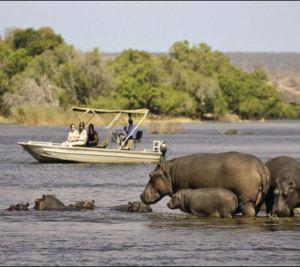
Boat safaris
Boat safaris on the Rufiji River are among the park’s signature experiences.
From a boat you can watch:
- Hippos resting in the water
- Crocodiles on sandbanks
- Elephants approaching the river
- Waterbirds along the shoreline
- Fish eagles hunting
- Wildlife drinking near riverbanks
TANAPA specifically highlights boat safaris along the Rufiji as one of Nyerere’s defining visitor experiences.
Traditional game drives
Morning and afternoon game drives explore floodplains, woodland and areas surrounding lakes and river systems.
Because the park is enormous, game viewing can feel particularly wild and remote.
Walking safaris
Authorized guided walks can provide a completely different perspective on the ecosystem. Travelers may learn about animal tracks, plants, insects and smaller species that are easily missed from a vehicle.
Walking and boating activities should always be undertaken with appropriately authorized guides and according to park regulations.
What Is Serengeti National Park?
Serengeti National Park lies in northern Tanzania and covers approximately 14,750 square kilometers. It forms part of the much larger Serengeti ecosystem and is internationally celebrated for its wildlife and annual migration.
Its landscapes include:
- Vast grassland plains
- Acacia woodland
- River valleys
- Rocky kopjes
- Northern hills
- Seasonal watercourses
The park supports exceptionally rich predator and plains-game populations.
Typical sightings include:
- Lions
- Leopards
- Cheetahs
- Elephants
- Buffalo
- Giraffes
- Hyenas
- Jackals
- Hippos
- Crocodiles
- Wildebeest
- Zebras
- Gazelles
Serengeti is also one of Tanzania’s major destinations for travelers hoping to experience the Big Five.
The Great Migration
For many travelers, the Great Migration is the biggest reason to visit Serengeti.
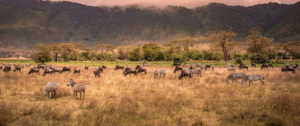
Huge numbers of wildebeest, accompanied by zebras and other grazing animals, move through the wider Serengeti ecosystem in response to rainfall and fresh grass.
TANAPA describes the migration as one of Serengeti’s defining natural spectacles and notes that more than one million wildebeest participate in this ecosystem-wide movement.
The animals do not remain in one location throughout the year, which is why choosing the correct Serengeti region for your travel month matters.
Nyerere National Park vs Serengeti
These parks provide very different safari experiences.
| Feature | Nyerere National Park | Serengeti National Park |
|---|---|---|
| Location | Southern Tanzania | Northern Tanzania |
| Landscape | Rivers, lakes, floodplains, miombo woodland | Open savannah, kopjes, woodland and rivers |
| Major attraction | Rufiji River and wild wilderness | Great Migration and abundant plains wildlife |
| Game drives | Yes | Yes |
| Boat safari | Major highlight | Not a standard park activity |
| Walking safari | Available in authorized areas | More limited and location-dependent |
| African wild dogs | Particularly notable | Possible but less central to most itineraries |
| Migration | No Serengeti-style migration spectacle | World-famous Great Migration |
| Safari atmosphere | Remote and quieter | Famous and generally busier |
| Predator viewing | Excellent | Exceptional |
| Best combination | Wildlife + river safari | Big game + migration |
Rather than thinking of Nyerere and Serengeti as competitors, it is more useful to see them as complementary destinations.
Nyerere gives variety. Serengeti gives scale and wildlife spectacle.
Why Combine Nyerere and Serengeti?
A combined safari works particularly well for travelers who have already decided that they want more than a standard northern Tanzania itinerary.
1. Experience Northern and Southern Tanzania
Many first-time visitors follow:
Arusha → Tarangire → Serengeti → Ngorongoro
It is an excellent route, but combining Nyerere adds an entirely different ecosystem.
You move from riverine southern wilderness to the sweeping grasslands of northern Tanzania.
2. Enjoy More Safari Activities
Nyerere may offer:
- Boat safaris
- Walking experiences
- Game drives
- Birdwatching
Serengeti emphasizes:
- Extended game drives
- Predator tracking
- Migration viewing
- Photography
- Optional balloon safaris
The combination prevents longer itineraries from becoming repetitive.
3. Excellent Wildlife Diversity
Nyerere gives travelers strong opportunities for wild dogs, elephants, river animals and birdlife.
Serengeti provides outstanding opportunities for lions, cheetahs, leopards, hyenas and enormous concentrations of grazing animals.
4. Fewer Crowds in Part of Your Safari
Serengeti is one of Africa’s best-known parks and can become busy around major sightings, particularly during peak migration months.
Nyerere generally provides a more remote wilderness atmosphere.
Combining the parks gives travelers both experiences.
How Do You Travel From Nyerere to Serengeti?
One of the biggest planning considerations is distance.
Nyerere National Park is in southern Tanzania, while Serengeti is in the north.
Trying to drive directly between them is usually inefficient for a normal holiday.
Flying Is Usually the Best Option
A well-planned itinerary typically uses domestic flights to connect safari regions.
TANAPA notes that Nyerere is accessible by air from Dar es Salaam to airstrips including locations such as Mtemere, Siwandu and Beho Beho. Road access is also possible but can involve a long journey.
Depending on flight schedules, a combined itinerary may look like:
Dar es Salaam → Nyerere → northern Tanzania → Serengeti
or
Zanzibar → Nyerere → Arusha/Serengeti → Zanzibar
Sometimes an overnight connection may be required.
Exact flight routing changes with airline schedules and season, so it is best to design the itinerary before purchasing separate domestic tickets.
Best Time for a Nyerere National Park Safari Serengeti Tour
There is no single perfect month because the parks have different seasonal characteristics.
June to October
This is one of the strongest overall periods.
Nyerere enters its dry season, and wildlife becomes increasingly concentrated near rivers and permanent water.
Serengeti wildlife viewing is also excellent.
July through October can be especially attractive for travelers interested in northern Serengeti and the Mara River migration season.
Best for:
- First-time safari travelers
- Wildlife photography
- Predator sightings
- Northern Serengeti migration
- Nyerere river wildlife
January to March
This period can be excellent if migration is an important priority.
The wildebeest herds are usually associated with the southern Serengeti/Ndutu ecosystem during the calving season.
Travelers can encounter:
- Large wildebeest concentrations
- Newborn calves
- Lions
- Cheetahs
- Hyenas
- Other predators following the herds
Nyerere is greener during this broader period and provides a very different visual experience from the dry-season landscape.
November and December
Short rains can transform many areas into greener landscapes.
These months may suit travelers who value:
- Green scenery
- Birdlife
- Photography
- Potentially fewer visitors than peak season
Wildlife remains excellent, although movement of the Serengeti migration depends on rainfall.
April and May
These are traditionally wetter months in Tanzania.
Some travelers appreciate:
- Green landscapes
- Dramatic skies
- Lower visitor numbers
- Strong photography conditions
However, rain can affect road conditions, camp operations and accessibility in some areas.
A specialist should therefore confirm that the chosen Nyerere accommodation and activity schedule will be operating before booking.
Suggested 8-Day Nyerere and Serengeti Safari
For travelers with limited time, combining these parks works best when flights are carefully coordinated.
Day 1 – Arrive in Tanzania
Arrive in Dar es Salaam or Zanzibar.
Meet your representative and prepare for the safari.
Overnight according to your arrival schedule.
Day 2 – Fly to Nyerere National Park
Take a morning flight into Nyerere.
Your guide meets you at the airstrip.
Enjoy an afternoon game drive through woodland and floodplains.
Possible sightings include:
- Elephants
- Giraffes
- Lions
- Impala
- Buffalo
- Wild dogs
Overnight at a safari camp or lodge.
Day 3 – Nyerere Game Drive and Boat Safari
Begin with a morning game drive.
After lunch and some relaxation, explore the Rufiji River by boat.
Look for:
- Hippos
- Crocodiles
- Elephants
- Kingfishers
- Fish eagles
- Bee-eaters
Sunset over the Rufiji can be one of the most beautiful moments of a southern Tanzania safari.
Day 4 – Nyerere Safari and Transfer North
Enjoy another morning activity before flying onward.
Depending on scheduled aviation connections, you may travel via Dar es Salaam, Zanzibar or Arusha.
Overnight where required by the flight schedule.
Day 5 – Fly or Drive to Serengeti
Continue to Serengeti National Park.
After entering the park, start game viewing immediately.
Possible sightings include lions, elephants, giraffes, buffalo, wildebeest, zebras and hyenas.
Overnight in Serengeti.
Day 6 – Full-Day Serengeti Safari
Spend the whole day exploring Serengeti.
Your precise area should depend on the season.
Possible focus:
December–March: Southern Serengeti/Ndutu region
April–June: Central and western movement
July–October: Northern Serengeti migration areas
Most of the year: Central Serengeti for resident wildlife
A full day allows enough time to remain at important sightings without rushing.
Day 7 – Serengeti Game Drive
Enjoy another extensive game drive.
Search for:
- Lions
- Leopards
- Cheetahs
- Elephants
- Buffalo
- Hippos
- Wildebeest
- Zebras
Travelers interested in photography benefit greatly from having multiple Serengeti days because wildlife encounters cannot be scheduled.
Day 8 – Fly Out of Serengeti
Take a scheduled flight toward Arusha, Kilimanjaro or Zanzibar depending on your onward plans.
Better Option: 10-Day Nyerere and Serengeti Safari
If your budget and schedule allow it, 9–10 days is better than rushing the combination.
For example:
Day 1: Arrival
Day 2: Fly to Nyerere
Day 3: Nyerere game drive
Day 4: Walking safari + boat safari
Day 5: Additional Nyerere safari
Day 6: Fly north
Day 7: Serengeti
Day 8: Full-day Serengeti
Day 9: Full-day Serengeti
Day 10: Fly out
This gives both parks enough time to justify the travel between them.
Can You Add Ngorongoro Crater?
Yes.
A very strong itinerary could include:
Nyerere → Serengeti → Ngorongoro Crater → Arusha
Ngorongoro provides another completely different environment.
The crater floor supports:
- Lions
- Buffalo
- Elephants
- Hippos
- Zebras
- Wildebeest
- Hyenas
- Black rhinos
Travelers with around 10–12 days can comfortably combine all three areas without making the trip excessively rushed.
Can You Combine Nyerere, Serengeti and Zanzibar?
Absolutely.
In fact, it is one of Tanzania’s strongest safari-and-beach combinations.
A sample route is:
Zanzibar → Nyerere → Serengeti → Ngorongoro → Zanzibar
or:
International arrival → Nyerere → Serengeti → Zanzibar
After several days of early mornings and wildlife drives, Zanzibar provides time to relax.
Travelers can enjoy:
- White-sand beaches
- Snorkeling
- Diving
- Stone Town
- Spice tours
- Sunset cruises
- Seafood
- Beach resorts
Domestic flights make this combination far more practical than overland travel.
Wildlife in Nyerere National Park
Nyerere’s wildlife is closely associated with the Rufiji River and surrounding habitats.
African Wild Dogs
Wild dogs are among Africa’s most fascinating predators.
Nyerere is particularly important for them, and TANAPA highlights the ecosystem as a major wild-dog stronghold.
Sightings are never guaranteed because packs travel over large territories, but Nyerere remains one of Tanzania’s most interesting destinations for travelers who have wild dogs on their safari wish list.
Elephants
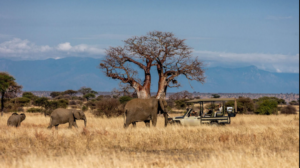
Elephants occur across the park and can sometimes be observed near riverbanks and water channels.
Watching elephants from a boat offers a very different perspective from a standard vehicle encounter.
Hippos and Crocodiles
The Rufiji system provides excellent habitat for both.
Boat safaris can bring travelers close enough for impressive viewing while maintaining safe distances under the direction of professional guides.
Lions and Leopards
Both species occur in Nyerere.
Lions may be encountered around open plains and areas containing abundant prey, while leopards remain more secretive.
Birds
TANAPA reports more than 430–440 bird species in the Nyerere ecosystem, depending on the park resource consulted.
Birding possibilities include:
- African fish eagle
- Kingfishers
- Bee-eaters
- Waders
- Waterbirds
- Raptors
Wildlife in Serengeti National Park
Serengeti is famous for the quantity and variety of large mammals.
Lions
The park is one of Africa’s premier lion destinations.
Pride territories overlap with prey-rich plains, river systems and kopjes.
Cheetahs
The open grasslands provide excellent cheetah habitat.
They are especially associated with areas where visibility allows them to hunt using speed.
Leopards
Leopards are often searched for along riverine woodland and in large trees.
Central Serengeti is particularly popular with safari guides searching for them.
Wildebeest and Zebras
These animals form the visual centerpiece of the Great Migration.
At certain times, travelers may see enormous herds stretching across the landscape.
Accommodation Options
Both destinations have accommodation ranging from comfortable tented camps to high-end safari lodges.
Mid-Range Safari
A mid-range combination typically offers:
- Private bathroom
- Proper beds
- Hot showers
- Restaurant or dining tent
- Comfortable tented accommodation
- Good wildlife locations
This category works well for couples, families and first-time visitors.
Luxury Safari
Luxury camps may offer:
- Spacious suites
- Premium locations
- Private decks
- Gourmet dining
- Swimming pools at some properties
- Personalized service
- More exclusive atmosphere
Fly-in safaris between Nyerere and Serengeti naturally work particularly well with mid-range and luxury camps.
How Much Does a Nyerere and Serengeti Safari Cost?
Prices vary significantly.
The main factors are:
- Number of travelers
- Number of safari days
- Accommodation category
- Domestic flights
- Season
- Private versus shared arrangements
- Number of Serengeti nights
- Park and conservation fees
- Optional activities
A Nyerere–Serengeti combination is generally more expensive than a simple northern-circuit road safari because the parks are far apart and domestic flights are normally required.
Current park fees should always be checked before confirming a quotation because TANAPA publishes official tariffs and these can change.
Private vs Group Safari
For this particular combination, private travel is usually the most practical option.
A private safari gives you:
- Your own vehicle and guide during road-based sections
- Flexible game-drive timing
- More time at sightings
- Easier photography
- Accommodation choice
- Better coordination with domestic flights
Shared safaris are generally much easier to arrange on popular northern-circuit routes than for a custom itinerary connecting Nyerere and Serengeti.
What Is Usually Included?
A well-designed package may include:
- Airport transfers
- Safari vehicle
- Professional English-speaking safari guide
- Park entrance fees
- Accommodation
- Meals during safari
- Drinking water
- Domestic flights specified in the itinerary
- Game drives
- Boat safari in Nyerere when listed
- Government taxes and conservation charges where applicable
Always inspect the quotation carefully because inclusions differ between operators.
What Is Usually Excluded?
Common exclusions are:
- International flights
- Visa fees
- Travel insurance
- Guide tips
- Alcoholic beverages
- Personal expenses
- Optional balloon safari
- Laundry at some camps
- Zanzibar excursions unless specified
What to Pack
Pack lightly, especially if your itinerary includes small domestic aircraft.
Useful items include:
- Lightweight neutral safari clothing
- Comfortable walking shoes
- Sun hat
- Sunglasses
- Sunscreen
- Insect repellent
- Binoculars
- Camera
- Spare batteries
- Power bank
- Light jacket
- Personal medication
- Small daypack
Soft-sided luggage is generally more convenient for safari aircraft than rigid suitcases.
For Nyerere boat activities, TANAPA recommends sun protection, binoculars, lightweight neutral clothing and a light jacket.
Is This Safari Good for Photographers?
Yes—particularly when arranged privately.
Nyerere provides:
- River reflections
- Elephants around water
- Birds in flight
- Wild dogs
- Sunset boat scenes
- Less congested sightings
Serengeti provides:
- Predator action
- Cheetahs in open plains
- Lions on kopjes
- Migration herds
- River crossings seasonally
- Dramatic sunrise and sunset landscapes
Photographers should consider spending at least three nights in Serengeti and two or three nights in Nyerere.
Is It Suitable for Families?
Yes, although the itinerary should be adjusted according to children’s ages.
Families may especially enjoy Nyerere because the change from vehicle safari to boat safari keeps the trip varied.
Before booking walking safaris, however, check minimum-age requirements with the operator or lodge.
Nyerere or Serengeti: Which Should You Choose if You Only Have Time for One?
Choose Serengeti if your priorities are:
- Great Migration
- Big cats
- Classic African plains
- First safari to Tanzania
- Large concentrations of wildlife
Choose Nyerere if your priorities are:
- A quieter safari
- Boat safari
- Wild dogs
- River wildlife
- Remote wilderness
- Southern Tanzania
Choose both if you have enough time and want the most complete experience.
Final Thoughts
A Nyerere National Park safari Serengeti tour is an excellent choice for travelers who want to see Tanzania beyond a standard safari circuit.
Nyerere delivers the wild character of southern Tanzania through the Rufiji River, boat safaris, elephants, African wild dogs, hippos, crocodiles and extensive wilderness. Serengeti provides a completely different spectacle with open plains, extraordinary predator populations, the Great Migration and some of Africa’s most iconic wildlife viewing.
Because the parks are far apart, the best itineraries usually use domestic flights rather than attempting to connect everything by road. Allowing at least eight days—and ideally nine to twelve—creates a much better balance between travel time and actual safari experience.
For travelers looking for one journey that combines river safari, remote wilderness, big cats, Great Migration possibilities and classic Tanzania landscapes, few itineraries provide as much diversity as Nyerere National Park and Serengeti together.