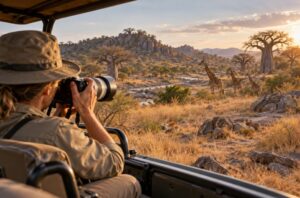
A photography safari in Ruaha offers time to capture wildlife, ancient baobabs, and wide landscapes in Tanzania’s Southern Circuit. However, the cost depends on much more than the number of days you travel. Your accommodation, transport, vehicle arrangement, and level of photographic support all affect the final budget.
Understanding photography Ruaha safari cost starts with distinguishing an ordinary wildlife safari from a trip designed around photography. Both can offer excellent sightings, but a dedicated photography itinerary may include a private vehicle, fewer passengers, longer stops, and guidance from a professional photographer.
This guide explains how to compare these options and choose the services that matter most to your trip.
How Much Does a Photography Safari in Ruaha Cost?
There is no single fixed price for a Ruaha photography safari. A short road safari with basic accommodation can cost considerably less than a fly-in trip with luxury camps and a photography workshop.
Published operator examples illustrate this difference. Bushlife Adventures lists a three-day Ruaha safari at USD 660, although travelers should confirm the pricing basis and inclusions before treating it as a photography package. At the specialist end, Africa Photography advertises a seven-day Nyerere and Ruaha photographic safari for November 2027 at USD 5,800 per person, based on four participants and two guests per tent. These are different products and should not be compared as equivalent offers.
For an accurate quotation, provide your travel dates, number of travelers, preferred accommodation, departure location, and whether you require a private vehicle or photography tuition.
What Determines Photography Ruaha Safari Cost?
1. Accommodation and Location
Accommodation affects both your budget and the time available for photography.
When comparing camps or lodges, look beyond room comfort. Ask where the property sits in relation to the areas you expect to explore, how early game drives can depart, and whether meals can fit around your photographic schedule.
Useful questions include:
- Is the accommodation inside or outside the park?
- Are meals and drinks included?
- Are game drives shared with other guests?
- Is a private vehicle available at an additional charge?
- Are charging facilities suitable for your equipment?
A lower room rate may offer good value, but longer daily transfers can reduce time spent photographing wildlife.
2. Private or Shared Safari Vehicle
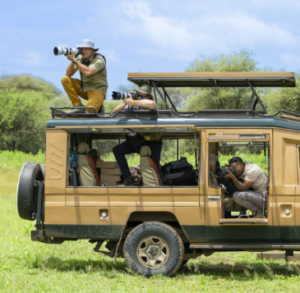
A private vehicle gives your party more control over stops, positioning, and the pace of the drive, within park rules and the guide’s judgment.
This can be valuable when you want to wait for animal behavior, revisit a location, or photograph a subject from several angles. Sharing the cost among a small group with similar interests can make this arrangement more affordable.
For a shared vehicle, confirm the actual passenger number and seating arrangement. A window seat alone does not establish whether there is enough room to handle a large camera and lens comfortably.
3. Wildlife Guide or Photography Leader
An experienced wildlife guide and a professional photography leader provide different services.
Your guide locates wildlife, interprets behavior, and manages the safari. A photography leader may also help with exposure, autofocus, composition, image review, and editing.
Ask whether photographic instruction is explicitly included. A tour described as a “photography safari” may simply offer a photography-friendly schedule rather than a structured workshop.
4. Road Transfers or Domestic Flights
Your starting point makes a substantial difference to transport costs.
Compare road and fly-in quotations using the whole itinerary. Check how much time each option leaves for game drives, rather than comparing only the transfer price.
For flights, request the current baggage allowance before booking. Camera bodies, telephoto lenses, laptops, and batteries can make equipment bags heavy. Confirm any excess-baggage arrangements directly with the airline or booking agent.
5. Travel Dates and Safari Length
Camp rates and availability vary by date. Obtain quotations for your exact travel period and ask whether moving your dates changes the price.
Longer stays increase the total cost, but they also provide more opportunities to revisit subjects under different light and weather conditions. For photography, compare the number of full game-drive days as well as the advertised trip length.
A four-day itinerary containing substantial arrival and departure travel may offer less field time than its title suggests.
When Is the Best Time for Ruaha Photography?
Your preferred subjects should help determine your travel dates.
Asilia describes June as the transition from the rains into the dry season, when the landscape can still be green. Its Ruaha guidance identifies July to November as a strong period for wildlife viewing in hot, dry conditions. Seasonal conditions vary, so use these periods as planning guidance rather than a guarantee of specific sightings.
For your quotation, explain whether your priorities are mammals, birds, greener scenery, or dry-season landscapes. The operator can then advise on suitable dates and camp locations.
Also confirm seasonal opening dates. Asilia notes that some of its southern Tanzania camps close during the heavier rains from mid-March to the beginning of June. Availability should be checked for the particular property you intend to book.
What Should a Ruaha Photography Safari Quote Include?
A useful quotation should identify each service clearly.
| Cost item | What to confirm |
|---|---|
| Accommodation | Named properties, room type, and number of nights |
| Meals and drinks | Included meals, drinking water, and chargeable drinks |
| Vehicle | Private or shared use and maximum passenger number |
| Guiding | Wildlife guiding, photography tuition, or both |
| Park charges | Applicable entry, accommodation-related charges, and taxes |
| Transfers | Exact pickup and drop-off locations |
| Flights | Routes, baggage allowance, and whether fares are included |
| Activities | Included game drives and any separately charged experiences |
Also check exclusions such as international flights, tips, personal purchases, equipment rental, and additional hotel nights.
Avoid assuming that “all-inclusive” covers every part of your journey. Request a written inclusion and exclusion list.
A Sample Five-Day Ruaha Photography Itinerary
The following outline shows how a trip can prioritize photography. The final schedule depends on your arrival route, camp location, and departure arrangements.
Day 1: Arrival and Equipment Preparation
Transfer to your accommodation and discuss your photographic interests with the guide. If arrival time allows, take an introductory game drive.
Use the evening to prepare batteries, memory cards, and camera settings.
Day 2: Wildlife and Behavior
Plan the day around suitable light and wildlife activity. Allow time to observe subjects instead of moving immediately after the first photograph.
Your guide can help identify opportunities to photograph interactions, movement, and animals in their surroundings.
Day 3: Landscapes and Environmental Portraits
Include wider compositions alongside wildlife close-ups. Trees, river scenery, and the surrounding habitat can help tell the story of the destination.
Keep the itinerary flexible if an unexpected sighting deserves more time.
Day 4: Revisit and Refine
Return to productive areas where appropriate. Repeated visits provide opportunities to improve composition or photograph familiar subjects under different conditions.
If your package includes a photography leader, this is also a useful point for image review.
Day 5: Departure
Arrange a final drive only if the transfer or flight schedule allows enough time. Confirm this before booking rather than assuming departure day includes a full game drive.
How to Reduce Costs Without Losing Valuable Photography Time
Travel With People Who Share Your Interests
A small group can divide private vehicle and guiding costs while maintaining a similar pace. Agree on priorities before booking, especially if some travelers want long photographic stops.
Choose Accommodation for Access and Practicality
Consider location, departure flexibility, charging facilities, and meals alongside room standard. Spend where it supports the way you want to photograph.
Request Alternative Dates
Ask the operator to compare two or three date options. Savings depend on actual camp rates and availability.
Focus on Fewer Destinations
Additional parks can add flights, transfers, and travel days. Spending longer in Ruaha may suit a photography trip better than moving frequently.
Select the Right Level of Support
Travelers comfortable with their equipment may prefer a private safari with an experienced wildlife guide. Those seeking instruction should compare photographer-led trips and check exactly how much tuition they include.
What Camera Equipment Should You Bring?
Pack around your subjects and transport arrangements.
Useful equipment can include:
- A camera with dependable autofocus.
- A telephoto lens for wildlife.
- A shorter lens for landscapes and animals within their habitat.
- Spare batteries and memory cards.
- A backup drive or another reliable storage method.
- A dust cover and lens-cleaning supplies.
- A beanbag or support suited to the safari vehicle.
A flexible telephoto zoom and a shorter lens are also recommended in Africa Photography’s Nyerere and Ruaha trip guidance. Confirm the vehicle setup before bringing bulky supports.
Plan Your Ruaha Photography Safari With Kilipath African Safaris
To request a tailored quotation, share your preferred dates, group size, starting location, accommodation preference, and main photography interests.
Tell Kilipath African Safaris whether you want a private vehicle, a wildlife-focused guide, or a trip with photography instruction. These details help shape a quotation around the field time, comfort, and support you need.