A Serengeti safari takes you into one of Tanzania’s most remarkable wildlife landscapes. Open grasslands, rocky outcrops, and river valleys provide habitats for animals ranging from elephants and giraffes to lions and cheetahs. Whether you are visiting Africa for the first time or returning for another adventure, the Serengeti offers plenty to explore.
Planning your trip starts with choosing when to travel, how long to stay, and which part of the park suits your interests. This guide introduces the essentials for a memorable Serengeti safari.
Why Choose a Serengeti Safari?
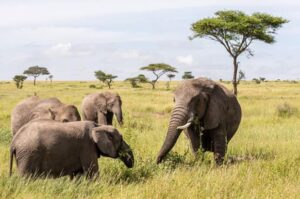
The Serengeti combines abundant wildlife with wide, varied landscapes. You might spend the morning watching lions resting beside a rocky kopje, then encounter giraffes feeding on acacia trees or elephants moving across the plains.
Its size also makes time an important part of the experience. Staying several nights allows you to explore different areas and enjoy wildlife encounters without rushing between destinations.
A Serengeti safari can suit couples, families, photographers, and solo travelers. Options range from shared camping adventures to private journeys with comfortable tented camps or luxury lodges.
Wildlife You May See
The Serengeti supports a rich variety of animals, although sightings always depend on location, conditions, and luck.
Animals you may encounter include:
- Lions: Often seen resting, socializing, or watching nearby herds.
- Elephants: Found moving between feeding areas and water sources.
- Giraffes: Commonly associated with woodland and acacia habitats.
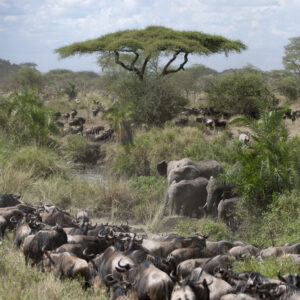
- Wildebeest and zebras: Particularly impressive when gathered in large herds.
- Cheetahs: Sometimes spotted scanning open plains for prey.
- Leopards: More elusive, occasionally seen resting in trees.
- Hippos and crocodiles: Associated with suitable rivers and pools.
Birdlife adds another dimension, from large ostriches to colorful smaller species. A good guide helps you notice animal behavior and smaller details that are easy to overlook.
Understanding the Great Migration
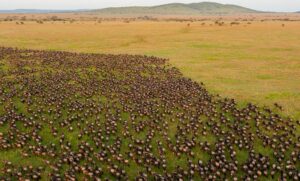
The Great Migration involves vast herds of wildebeest, accompanied by zebras and other grazing animals, moving through the wider Serengeti–Mara ecosystem in search of fresh pasture and water.
The herds do not follow an exact calendar. Rainfall and grazing conditions influence their movements, so migration itineraries should allow flexibility.
The southern plains, including the wider Ndutu area, are associated with the calving season. Other stages of the migration take the herds through western and northern areas.
River crossings are unpredictable. Booking a safari during a migration period creates an opportunity to encounter the herds, but it does not guarantee a crossing.
When Should You Visit?
The Serengeti offers wildlife viewing throughout the year. Your preferred experience should guide your timing.
Drier conditions can make wildlife easier to observe in some areas as vegetation thins and animals use available water sources. Greener periods bring changing scenery, dramatic skies, and rewarding photographic opportunities.
If the migration is your priority, choose your accommodation around the expected herd location for your dates. If you mainly want varied wildlife encounters, a well-paced itinerary is more useful than planning the entire trip around one possible sighting.
How Many Days Do You Need?
Allowing several days gives you more time to explore and reduces the pressure to find everything during a single game drive.
For travelers arriving by road from Arusha, remember that reaching the Serengeti requires a substantial transfer. Two nights provide a useful introduction, while three or more nights allow a more relaxed visit.
A northern Tanzania itinerary may combine:
- Tarangire National Park.
- Serengeti National Park.
- Ngorongoro Crater.
Travelers with limited time can consider a fly-in itinerary, subject to flight availability and the location of their accommodation.
Choosing Your Accommodation
Camping safaris appeal to travelers seeking a simpler outdoor experience. Public campsites generally have shared facilities, and equipment arrangements should be confirmed before booking.
Tented camps offer proper beds and varying levels of comfort. Many include private bathrooms, but facilities differ between properties.
Safari lodges provide another option, with amenities depending on the property.
Location matters as much as comfort. Accommodation close to your planned game-drive area can reduce daily driving time.
Shared or Private Safari?
A shared safari can help travelers manage costs while meeting other visitors. Routes and departure times are usually arranged around the group.
A private safari provides a dedicated vehicle and guide, with greater flexibility over your schedule and wildlife interests. It can suit families, photographers, or travelers hoping to explore particular regions.
Ask your operator about group size, seating, driving distances, and exactly what the quoted price includes.
What Should You Pack?
Bring comfortable clothing in neutral colors, a warm layer for cool mornings, a hat, sunscreen, and insect repellent. A camera, spare batteries, and binoculars are useful for wildlife viewing.
Soft luggage is often easier to accommodate in safari vehicles. If your itinerary includes flights, check the airline’s baggage allowance before packing.
Plan Your Serengeti Safari with Kilipath African Safaris
The best itinerary gives you enough time to enjoy the landscape and follows your interests, travel dates, and budget.
Contact Kilipath African Safaris with your preferred dates, number of travelers, and accommodation choice to receive a personalized Serengeti safari proposal.