Tanzania is famous for extraordinary wildlife, but travelers who combine the legendary Serengeti with the remote wilderness of Ruaha experience two very different sides of the country. Serengeti safari Ruaha tours bring together the vast plains and Great Migration of northern Tanzania with the baobab landscapes, river systems, elephants and predator-rich wilderness of the south.
The Serengeti is internationally celebrated for its immense savannah ecosystem and annual movement of wildebeest, zebras and gazelles. UNESCO describes the migration across the Serengeti ecosystem as one of the world’s most impressive natural events. Ruaha, by contrast, offers a quieter and more remote safari environment where visitors can explore large wilderness areas with fewer vehicles.
For experienced safari travelers, photographers, honeymooners and anyone wanting more than a standard Northern Circuit itinerary, combining these parks can create one of Tanzania’s most rewarding wildlife journeys.
Why Combine Serengeti and Ruaha National Parks?
Serengeti and Ruaha complement each other beautifully because their landscapes, wildlife experiences and atmosphere are different.
The Serengeti is characterized by open grasslands, kopjes, woodland areas and river systems. It is especially famous for the Great Wildebeest Migration and exceptional populations of large predators. UNESCO records the Serengeti as covering approximately 1.5 million hectares of savannah and supporting one of the world’s most important predator-prey ecosystems.
Ruaha National Park lies in south-central Tanzania and covers about 20,226 square kilometers, making it one of the country’s largest protected wilderness areas. TANAPA highlights its elephants, buffalo, lions, leopards, crocodiles, hippos and both greater and lesser kudu.
A combined safari therefore gives travelers the excitement of Tanzania’s most internationally recognized safari destination alongside the feeling of exploring a more secluded wilderness.
The Serengeti Safari Experience
A Serengeti safari is often one of the main reasons people visit Tanzania.
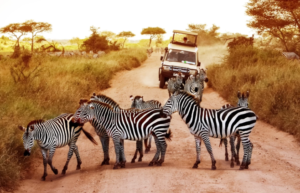
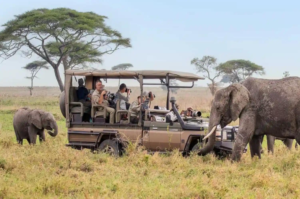
The enormous landscape allows wildlife to move naturally according to rainfall, grazing conditions and water availability. Game drives can reveal lions resting around rocky kopjes, cheetahs scanning open grasslands, elephants walking between woodland areas and enormous groups of wildebeest and zebra.
The location of the Great Migration changes throughout the year, which means the best part of the Serengeti to visit depends largely on your travel dates.
From roughly December through the early months of the year, migrating herds generally concentrate in the southern Serengeti and Ndutu ecosystem during the calving period. As conditions change, the animals gradually move north and west. During the middle of the year, travelers may encounter large herds farther north, while the northern Serengeti becomes especially important during the period associated with Mara River crossings.
Wildlife movement is natural and cannot be guaranteed for an exact location or date, so flexible planning remains important.
The attraction extends far beyond the migration. Serengeti safaris are excellent year-round for resident wildlife including lions, elephants, giraffes, buffalo, hyenas, hippos, leopards and numerous antelope species.
What Makes Ruaha National Park Special?
Ruaha feels noticeably different from the Serengeti.
Instead of seemingly endless open plains, visitors encounter dramatic baobab trees, miombo woodland, rocky areas, seasonal sand rivers and the Great Ruaha River. TANAPA describes the river as one of the park’s principal attractions and an important focus for wildlife, especially as conditions become drier.
The park is particularly attractive to travelers wanting a less crowded safari.
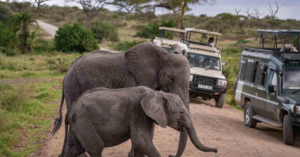
Game drives may follow river systems where elephants gather to drink or move through woodland searching for kudu, sable and roan antelope. Large lion prides are another major attraction, while leopard, cheetah, spotted hyena and African wild dogs may also be encountered. TANAPA specifically highlights Ruaha’s predator populations and dry-season concentrations of elephants and buffalo.
Birdwatchers also have strong reasons to include Ruaha. TANAPA reports more than 570 recorded bird species, making the park a valuable destination for both dedicated birders and general wildlife enthusiasts.
Serengeti vs Ruaha: What Is the Difference?
Both parks deliver outstanding wildlife viewing, but the experiences are not identical.
| Safari Feature | Serengeti | Ruaha |
|---|---|---|
| Famous for | Great Migration and predators | Remote wilderness and predators |
| Landscape | Open plains, kopjes and woodland | Baobabs, rivers and miombo woodland |
| Wildlife highlights | Wildebeest, zebra, lions, cheetah | Elephants, lions, kudu, wild dogs |
| Safari atmosphere | Iconic and popular | Remote and less crowded |
| Photography | Migration, big cats, open landscapes | Elephants, baobabs, predators, wilderness |
| Best for | First-time and migration travelers | Repeat visitors and wilderness lovers |
Choosing between them can be difficult. Combining them removes that compromise.
How Do You Travel Between Serengeti and Ruaha?
Because Serengeti is in northern Tanzania and Ruaha is in the south-central part of the country, flying is usually the most practical way to combine them.
Bush flights dramatically reduce transfer time and allow travelers to spend more of their holiday on safari rather than completing very long road journeys.
Current Coastal Aviation information lists connections between Serengeti and Ruaha, with flights serving Ruaha airstrips such as Msembe and Jongomero. Some routes can depend on minimum passenger requirements, season and operating schedule, so flights should always be reconfirmed when booking.
This makes a Serengeti-and-Ruaha itinerary particularly suitable as a fly-in safari.
Travelers can also connect through Arusha, Dar es Salaam or other safari hubs depending on airline schedules and their wider Tanzania itinerary.
Suggested Serengeti Safari Ruaha Tours Itinerary
A combined itinerary works best when enough time is allocated to each destination.
For example, an eight- to ten-day safari could begin with arrival in Arusha followed by a flight or road transfer into the Serengeti. Travelers can spend several nights exploring Central Serengeti or another region selected according to the migration season.
After the Serengeti experience, a scheduled bush flight can connect travelers toward Ruaha. Three or four nights in Ruaha provide time for morning and afternoon game drives and, where arranged with an authorized operator, walking safari experiences.
TANAPA confirms that guided walking safaris are available in Ruaha and must be conducted under the appropriate arrangements and regulations.
The safari can then finish with a flight to Dar es Salaam or Zanzibar, making it easy to combine wildlife viewing with an Indian Ocean beach holiday.
Best Time for Serengeti Safari Ruaha Tours
There is no single perfect month because the two parks offer different seasonal advantages.
For travelers whose priority is the Great Migration, the Serengeti portion should first be planned around the expected herd location. The exact timing varies because the migration is driven by rainfall and grazing rather than a fixed calendar.
Ruaha is particularly rewarding during the dry season. As water becomes scarcer, animals tend to concentrate near rivers and remaining water sources, creating excellent opportunities for wildlife viewing. TANAPA notes that permanent pools and sand-river seeps attract elephants, predators and birdlife as the dry season progresses.
For many travelers, June through October provides an excellent overall combination. Conditions are generally favorable for wildlife viewing in Ruaha while the Serengeti migration is often progressing through its western and northern phases.
Travel during the greener months can still be highly rewarding. Landscapes become lush, birdlife is excellent and some properties may offer attractive seasonal value.
Wildlife You Can See
A major advantage of combining the two parks is the exceptional diversity of wildlife.
In the Serengeti, travelers can search for lion, leopard, cheetah, elephant, buffalo, giraffe, hippo, wildebeest, zebra, gazelle and numerous other species. UNESCO identifies the Serengeti as an ecosystem with extremely high biological diversity and remarkable concentrations of both herbivores and large predators.
Ruaha adds another dimension.
Greater kudu are an important specialty, while sable and roan antelope may be encountered in suitable habitats. Elephants and buffalo can gather in impressive numbers around water sources during dry conditions. Lions are a major highlight, with leopard, cheetah, hyena and African wild dog adding to the park’s reputation as predator country.
No safari can guarantee particular wild animals, but visiting two major ecosystems increases the variety of habitats and wildlife encounters during a single trip.
Is This Safari Good for Photography?
Serengeti safari Ruaha tours can be exceptional for photographers.
The Serengeti offers broad horizons, dramatic sunrise and sunset photography, predators on open plains, migration herds and classic African wildlife scenes.
Ruaha provides completely different compositions. Ancient baobabs, elephants crossing dry riverbeds, dramatic woodland, dusty dry-season landscapes and wildlife near the Great Ruaha River can create powerful images.
A private vehicle can be especially useful for serious photographers because the day’s pace can be adjusted around wildlife behavior and lighting. It can also provide additional space for cameras, lenses and other equipment.
Early morning and late afternoon are normally particularly attractive for photography because of softer light and increased wildlife activity.
Accommodation in Serengeti and Ruaha
Both destinations offer accommodation ranging from adventurous tented camps to comfortable luxury safari lodges.
Serengeti has one of Tanzania’s widest selections of safari accommodation. Choosing the correct camp location is important because the park is enormous. A lodge that is ideal during one migration period may be less convenient during another.
Ruaha has fewer properties, which contributes to its remote character. TANAPA lists options including campsites, bandas, tented camps and lodges in different areas of the park. Popular peak-season dates should be reserved early.
Travelers combining both parks can maintain the same comfort level throughout the journey, whether they prefer adventurous tented camps, mid-range properties or luxury accommodation.
Private or Group Safari?
For a Serengeti and Ruaha combination, a private safari is generally the most practical option.
The long-distance logistics and bush-flight connections make fixed shared departures much more complicated. Private arrangements also make it easier to coordinate specific camps, migration locations, flight schedules and the number of nights spent in each ecosystem.
Private safaris are particularly valuable for honeymooners, families, photographers and travelers wanting more flexibility around game-drive times.
Budget-conscious visitors can still control costs by choosing comfortable mid-range tented camps rather than premium luxury lodges.
Can You Combine the Safari With Zanzibar?
Yes. Combining Serengeti, Ruaha and Zanzibar creates an excellent bush-and-beach Tanzania holiday.
Travelers can begin with the vast plains of northern Tanzania, continue to Ruaha’s remote wilderness and finish beside the Indian Ocean.
Current regional flight networks connect Ruaha with Dar es Salaam and Zanzibar, although routes and timings should be checked for the exact travel date.
A typical journey might therefore follow:
Arusha → Serengeti → Ruaha → Zanzibar
This route gives travelers three completely different experiences without requiring lengthy overland transfers between every destination.
How Many Days Do You Need?
Around 8 to 12 days works particularly well for a combined Serengeti and Ruaha safari.
Three or four nights in each park give travelers enough time to appreciate the difference between the ecosystems without feeling rushed. Additional nights can be added if migration photography, walking safaris or a slower luxury itinerary is important.
Travelers with fewer than six safari days may be better focusing on one region rather than losing valuable time transferring between northern and southern Tanzania.
Who Should Choose Serengeti Safari Ruaha Tours?
This combination is particularly suited to travelers who want something deeper than a classic introductory safari.
First-time visitors can certainly enjoy it, but it is especially attractive for wildlife enthusiasts, photographers, honeymoon couples and repeat safari travelers.
The Serengeti provides the world-famous Tanzania safari scenes people often dream about before visiting Africa. Ruaha adds wilderness, solitude and discovery.
Together, they demonstrate just how varied Tanzania really is.
Planning Your Serengeti and Ruaha Safari
Good planning is essential because this itinerary combines two distant safari regions.
Your travel dates should first determine which section of the Serengeti makes the most sense. Accommodation can then be selected around the expected wildlife movements, followed by coordinating the flight connection to Ruaha.
Your Ruaha stay should ideally include several game drives, while travelers wanting a more immersive experience can enquire about professionally guided walking safaris.
Flights, camp availability and seasonal routing should be confirmed before finalizing international tickets because bush-flight schedules can change.
Start Planning Your Serengeti Safari Ruaha Tour
Serengeti safari Ruaha tours offer one of the most complete wildlife experiences available in Tanzania. Instead of seeing only one safari circuit, travelers experience the enormous migration ecosystem of northern Tanzania and the remote, baobab-filled wilderness of the south.
From wildebeest herds and cheetahs on the Serengeti plains to elephants beside the Great Ruaha River and lions moving through quiet wilderness, every part of the journey offers a different perspective on Tanzania.
For travelers with enough time, combining Serengeti and Ruaha is not simply about adding another national park. It is an opportunity to experience two remarkably different African ecosystems in one carefully designed safari.