Top Ngorongoro Crater Safari Travel Guide
A Ngorongoro Crater safari offers one of the most remarkable wildlife experiences in Tanzania. Within a single day, travelers can descend from a cool, forested crater rim into an immense volcanic basin inhabited by lions, elephants, buffaloes, hippos, hyenas, wildebeest, zebras and the critically endangered black rhinoceros.
Located on Tanzania’s celebrated Northern Safari Circuit, the Ngorongoro Crater is frequently combined with Serengeti National Park, Tarangire National Park and Lake Manyara National Park. It is an excellent destination for first-time safari visitors, families, honeymooners, photographers and experienced wildlife enthusiasts.
This top Ngorongoro Crater safari travel guide explains everything you should know before visiting. Discover the best time to travel, animals you may encounter, where to stay, what to pack and how Kilipath African Safaris can create the right itinerary for your trip.
What Is the Ngorongoro Crater?
The Ngorongoro Crater is a massive volcanic caldera located inside the Ngorongoro Conservation Area in northern Tanzania. A caldera forms when a large volcano collapses inward after a major eruption.
The crater is approximately 20 kilometers across and around 600 meters deep. Its floor contains roughly 260–300 square kilometers of grasslands, freshwater pools, woodland and wetlands. These varied habitats support an exceptional concentration of wildlife.
Ngorongoro is often called a national park, but it is officially part of the Ngorongoro Conservation Area. Unlike a conventional national park, the conservation area was created as a multiple-use landscape in which wildlife and people coexist.
UNESCO recognizes Ngorongoro as a mixed World Heritage property because of both its natural importance and its evidence of human evolution. The protected area includes the crater, highland plains, forests, archaeological locations and part of the wider Serengeti ecosystem. UNESCO describes it as the world’s largest caldera and an area of outstanding biodiversity and archaeological importance.
Why Visit the Ngorongoro Crater?
Ngorongoro provides a combination of scenery, wildlife and geological history that is difficult to find elsewhere.
Exceptional wildlife concentration
The crater’s grasslands, springs and permanent sources of water support animals throughout the year. Although wildlife sightings can never be guaranteed, visitors frequently see many species during one game drive.
Possibility of seeing the Big Five
The Big Five are:
- Lion
- Leopard
- Elephant
- Cape buffalo
- Black rhinoceros
Ngorongoro is especially famous as one of Tanzania’s most promising locations for spotting black rhinos from a respectful distance. Leopards are present but can be difficult to see because they often remain in forested areas.
Spectacular scenery
The descent into the crater is an unforgettable part of the experience. From the rim, you look across an enormous green or golden basin surrounded by steep volcanic walls. Mist may cover parts of the rim early in the morning before revealing the landscape below.
Suitable for shorter safari itineraries
Travelers do not always need several days to enjoy Ngorongoro. A well-planned day on the crater floor can provide excellent game viewing, making it suitable for two-day or three-day safari packages from Arusha.
Easy to combine with other parks
Ngorongoro lies between several major attractions on Tanzania’s Northern Circuit. It can be combined with:
- Serengeti National Park
- Tarangire National Park
- Lake Manyara National Park
- Lake Eyasi
- Olduvai Gorge
- The Ndutu plains
- Maasai cultural experiences
Wildlife in the Ngorongoro Crater
The crater is known for its resident wildlife and predator-prey activity. Its open terrain also makes many animals relatively easy to observe.
Lions
Lions are among the most frequently encountered predators on the crater floor. They may be seen resting in the grass, walking near safari roads or watching herds of zebras, buffaloes and wildebeest.
Early mornings are particularly rewarding because lions are more active during the cooler hours.
Black rhinoceroses
The endangered black rhinoceros is one of Ngorongoro’s most treasured animals. Rhinos are commonly observed at a distance on the open plains, so binoculars are useful.
Your guide will look for their distinctive body shape while ensuring that all wildlife-viewing regulations are followed.
Elephants
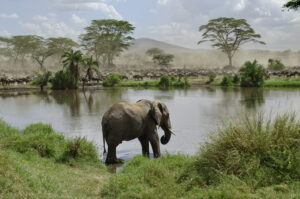
Large bull elephants are regularly seen in and around the crater. Elephant families are often more noticeable in the highlands, forests and other sections of the Ngorongoro Conservation Area.
Cape buffaloes
Buffaloes may be seen in large herds, near wetlands or moving across open grasslands. Older males sometimes stay alone or form small groups.
Wildebeest and zebras
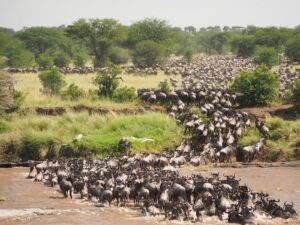
Resident wildebeest and zebra populations help support the crater’s predators. Their large herds create classic African safari scenes against the caldera walls.
Spotted hyenas
Ngorongoro supports a significant population of spotted hyenas. They are skilled hunters as well as scavengers and may be seen alone or in clans.
Hippos
Hippos can often be found in permanent pools and wetlands. Some safari routes include a designated picnic area near a hippo pool, depending on operating conditions and official instructions.
Other animals
Additional species you may encounter include:
- Thomson’s and Grant’s gazelles
- Warthogs
- Golden and black-backed jackals
- Elands
- Waterbucks
- Serval cats
- Ostriches
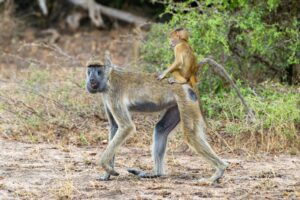
- Baboons
- Vervet monkeys
- Flamingos and other waterbirds
Giraffes are generally uncommon on the crater floor, partly because the steep descent routes and limited suitable vegetation make the basin less favorable for them. They can, however, be seen in other parts of the conservation area.
Is the Ngorongoro Crater Good for Birdwatching?
Yes. Ngorongoro’s habitats attract numerous resident and migratory birds. Birdwatchers should look around Lake Magadi, the wetlands, grasslands and forested crater walls.
Possible sightings include:
- Lesser and greater flamingos
- Kori bustards
- Crowned cranes
- Ostriches
- Secretary birds
- Sacred ibis
- Egrets
- Herons
- Eagles
- Vultures
- Oxpeckers
Birdlife varies according to rainfall, water conditions and migration patterns.
Best Time to Visit the Ngorongoro Crater
Ngorongoro is a year-round safari destination. The best season depends on your interest in weather, photography, wildlife or crowd levels.
June to October: Dry season
The dry season usually provides cool conditions, clear views and excellent wildlife watching.
Advantages include:
- Animals can be easier to spot in shorter grass.
- Roads are generally drier.
- Rain is less frequent.
- Wildlife congregates around water sources.
- Conditions are suitable for combining Ngorongoro with the Serengeti.
July and August are popular months, so lodges and safari vehicles can be busy. Booking early is strongly recommended.
November to December: Short rains
The short rains transform parts of the landscape into fresh green scenery. Rain usually comes in intermittent showers rather than lasting throughout every day.
This period can provide:
- Green landscapes
- Dramatic cloud formations
- Excellent birdwatching
- Fewer visitors than peak-season months
- Attractive photographic conditions
January to March: Calving season
January through March can be an excellent period to combine Ngorongoro with the Ndutu region. Depending on rainfall and migration movements, large herds gather on the southern Serengeti and Ndutu plains to give birth.
The crater itself remains rewarding, while the wider region offers opportunities to observe young wildebeest and increased predator activity.
April to May: Long-rain season
April and May are typically the wettest months. The landscape becomes beautifully green, and visitor numbers may be lower.
Travelers should expect:
- Possible muddy roads
- Regular rain showers
- Cool and misty conditions around the rim
- Excellent green-season photography
- Reduced availability at camps that close seasonally
A professional safari operator will monitor road and weather conditions and adjust the trip when necessary.
How Long Should You Spend at Ngorongoro?
Most travelers spend one night close to the crater and complete one game drive on the crater floor. This is sufficient for a classic Ngorongoro experience when it forms part of a longer Northern Circuit safari.
Two nights may be suitable if you want to explore the wider conservation area, enjoy a slower schedule or add another nearby activity.
A common schedule includes:
- Arrival in Karatu or at a crater-rim lodge
- Overnight stay
- Early breakfast
- Morning descent into the crater
- Extended game drive
- Picnic lunch
- Afternoon ascent and onward transfer
Crater visits are controlled by official regulations. The exact schedule should therefore be planned around permit conditions, road conditions and the timing of your wider itinerary.
Popular Ngorongoro Safari Itineraries
Two-day Tarangire and Ngorongoro safari
This is a good choice for visitors with limited time.
Day 1: Arusha to Tarangire National Park
Travel from Arusha to Tarangire for a game drive. The park is famous for elephants, baobab trees and seasonal wildlife concentrations. Overnight near Karatu or Mto wa Mbu.
Day 2: Ngorongoro Crater to Arusha
Leave early for the crater, enjoy a game drive and return to Arusha later in the day.
Three-day Serengeti and Ngorongoro safari
This itinerary combines two of Tanzania’s most celebrated destinations.
Day 1: Arusha to Serengeti
Travel through the Ngorongoro highlands to Serengeti National Park and begin your game drive.
Day 2: Serengeti to Ngorongoro
Enjoy further wildlife viewing in the Serengeti before traveling toward Ngorongoro.
Day 3: Ngorongoro Crater
Descend into the crater for a game drive before returning to Arusha.
Travel times are substantial, so this itinerary suits adventurous visitors who are comfortable with a faster schedule.
Four-day Northern Circuit safari
A four-day itinerary provides more time for wildlife viewing.
A typical route is:
- Tarangire National Park
- Serengeti National Park
- Serengeti to Ngorongoro
- Ngorongoro Crater and return to Arusha
Five-day Tanzania safari
Five days provides a more relaxed experience and may include:
- Tarangire National Park
- Serengeti National Park
- Full-day Serengeti game drive
- Serengeti to Ngorongoro
- Ngorongoro Crater
Lake Manyara can also be included depending on the preferred route and travel pace.
Seven-day Tanzania safari
A seven-day itinerary allows travelers to explore the Northern Circuit without rushing. It can include Tarangire, Serengeti, Ngorongoro and Lake Manyara, with additional time in the Serengeti.
Kilipath African Safaris can arrange shared, private, camping, mid-range or luxury versions of these itineraries.
Shared or Private Ngorongoro Safari?
Both options can provide a memorable experience, but they suit different travelers.
Shared safari
A shared safari is ideal for:
- Solo travelers
- Couples seeking an affordable trip
- Visitors comfortable following a fixed itinerary
- Travelers who enjoy meeting other guests
Kilipath African Safaris uses safari vehicles with a pop-up roof, and each guest is provided with a viewing seat. Shared itineraries follow an agreed route and daily schedule.
Private safari
A private safari is recommended for:
- Families with children
- Honeymoon couples
- Photographers
- Friends traveling together
- Travelers wanting greater flexibility
- Guests requiring a specific language guide
- Visitors interested in special accommodation
A private vehicle allows your guide to tailor game-viewing time more closely to your interests, although all official park rules and permit schedules still apply.
Where to Stay Near Ngorongoro
Accommodation falls into three main categories.
Crater-rim lodges
These properties provide convenient access and spectacular crater views. They are generally premium or luxury options.
Benefits include:
- Beautiful views
- Shorter journey to a descent gate
- Memorable sunrise and sunset scenery
- Convenient early-morning access
The crater rim is high and can become cold, especially at night.
Karatu lodges
Karatu is located outside the main conservation-area gates and provides a wide range of accommodation.
It is popular because it offers:
- Mid-range and luxury lodges
- Attractive gardens and farmland
- Good access to Ngorongoro
- More accommodation choices
- Convenient connections to Lake Manyara and Tarangire
Camping
Camping is suitable for adventurous and budget-conscious visitors. A camping safari normally includes tents, mattresses, sleeping bags, meals and support from a safari chef, depending on the package.
Temperatures around Ngorongoro can fall significantly at night, so warm clothing is essential.
What to Pack for a Ngorongoro Safari
Conditions on the rim and the crater floor can differ considerably. Early mornings may be cold, while midday on the crater floor can feel warm and sunny.
Pack the following items:
- Warm fleece or light insulated jacket
- Neutral-colored shirts and trousers
- Comfortable closed shoes
- Sunhat
- Sunglasses
- Sunscreen
- Insect repellent
- Camera and spare batteries
- Binoculars
- Personal medication
- Small day bag
- Reusable water bottle
- Passport or identification
- Travel insurance details
Layered clothing works best. You can remove warmer layers as the temperature rises during the game drive.
Avoid packing only shorts and thin shirts, even if the rest of your Tanzania holiday includes Zanzibar. Ngorongoro’s altitude makes it cooler than many coastal destinations.
Photography Tips for Ngorongoro
Ngorongoro is excellent for landscape and wildlife photography.
Bring a zoom lens
A lens in the 100–400mm range is useful for distant animals such as rhinos, birds and predators. A wider lens is helpful for crater views and environmental portraits.
Use the early light
Morning light can be soft and atmospheric, especially when mist moves across the crater rim.
Include the landscape
Instead of photographing every animal in close-up, include the crater wall, grassland or wetland. This helps communicate the scale of the destination.
Protect your equipment
Dust can enter the vehicle during the dry season. Carry a protective camera bag and lens cloth, and avoid changing lenses unnecessarily.
Respect wildlife
Never ask your guide to drive off designated routes, crowd an animal or disturb wildlife for a photograph. Responsible viewing protects both visitors and animals.
Can Children Visit the Ngorongoro Crater?
Yes. Ngorongoro is an excellent destination for families because children can see many animals within a relatively compact area.
Parents should consider:
- Choosing a private vehicle for flexibility
- Packing snacks and warm clothes
- Bringing child-friendly binoculars
- Planning bathroom breaks
- Avoiding an itinerary with excessive daily driving
- Confirming suitable family rooms before booking
A private safari gives parents more control over departure times and rest stops.
How to Reach Ngorongoro Crater
Most Ngorongoro safaris begin in Arusha.
International arrival
Kilimanjaro International Airport is the principal international gateway for Tanzania’s Northern Safari Circuit. The airport is located between Arusha and Moshi and serves domestic, regional and international flights. Kilimanjaro Airports Development Company identifies JRO as a main gateway to northern Tanzania’s wildlife destinations.
From Arusha
The journey from Arusha to the Ngorongoro highlands generally takes approximately four hours, depending on traffic, road conditions, stops and the location of your lodge.
The route passes through areas such as:
- Makuyuni
- Mto wa Mbu
- The Great Rift Valley escarpment
- Karatu
From the Serengeti
Ngorongoro is frequently visited after a Serengeti safari. Travel time depends on your camp’s location, wildlife stops, road conditions and gate formalities.
Combining Ngorongoro with Zanzibar
A safari-and-beach holiday is one of Tanzania’s most popular travel combinations.
A well-balanced itinerary could include:
- Arrival in Arusha
- Tarangire safari
- Serengeti safari
- Ngorongoro Crater game drive
- Flight to Zanzibar
- Beach relaxation and cultural activities
Domestic flights connect northern Tanzania with Zanzibar. The correct flight should be selected according to the safari’s expected finishing time. Avoid booking a tight connection after the crater without discussing it with your tour operator.
Additional Attractions in the Ngorongoro Conservation Area
The conservation area offers much more than its main crater.
Olduvai Gorge
Olduvai Gorge is one of the world’s most important archaeological and paleoanthropological locations. Research in this area has contributed greatly to scientific understanding of human evolution.
A museum visit can be added to certain private itineraries between Ngorongoro and the Serengeti.
Empakaai Crater
Empakaai is a smaller and less-visited crater containing a deep soda lake. Guided walking experiences may be available with the required permits and official escort arrangements.
Olmoti Crater
Olmoti offers hiking opportunities through highland landscapes. Visits should be arranged in advance with an authorized operator.
Ndutu plains
Ndutu lies within the wider Serengeti–Ngorongoro ecosystem. It is particularly famous for the Great Migration’s calving period, usually associated with the green season. Exact herd locations depend on rainfall.
Maasai cultural experiences
Visitors may have an opportunity to learn about Maasai traditions, livestock and daily life. Choose a respectful experience that benefits the host community and allows meaningful cultural interaction.
Responsible Ngorongoro Safari Travel
Ngorongoro is a sensitive natural and cultural landscape. Responsible behavior helps protect it.
Travelers should:
- Follow their guide’s instructions.
- Remain inside the vehicle unless in an authorized area.
- Never feed animals.
- Avoid loud noises.
- Do not leave litter.
- Maintain a respectful distance from wildlife.
- Do not pressure guides to break park regulations.
- Ask permission before photographing people.
- Choose ethical cultural experiences.
- Carry reusable containers when practical.
Ngorongoro’s status as a multiple-use conservation area also means that its human history and present-day communities should be discussed thoughtfully and respectfully.
How Much Does a Ngorongoro Safari Cost?
The final price depends on several factors:
- Number of safari days
- Shared or private vehicle
- Group size
- Accommodation category
- Travel season
- Crater and conservation fees
- Transfers
- Additional parks
- Domestic flights
- Optional activities
A shared camping safari is generally the most affordable option. Private mid-range and luxury packages cost more but provide greater comfort and flexibility.
Ngorongoro fees and regulations can change. For this reason, request a current, itemized quotation instead of relying on an old online price.
A Kilipath African Safaris package can include:
- Professional English-speaking safari guide
- Safari Land Cruiser with pop-up roof
- Park and conservation fees stated in the itinerary
- Crater service fee
- Accommodation
- Meals during the safari
- Drinking water
- Game drives
- Airport or hotel transfers when specified
- Camping equipment and safari chef for camping packages
Typical exclusions may include:
- International flights
- Tanzania visa
- Travel insurance
- Guide gratuities
- Personal purchases
- Alcoholic drinks unless specified
- Optional activities
- Additional accommodation not listed in the itinerary
Always review the exact inclusions and exclusions in your quotation before confirming.
Why Travel with Kilipath African Safaris?
Planning a Ngorongoro safari involves accommodation availability, park permits, crater entry schedules, transport and connections with other destinations. Working with an experienced local operator makes these arrangements easier.
Kilipath African Safaris offers:
- Local safari planning expertise
- Shared and private safari packages
- Camping, mid-range and luxury options
- Customized Tanzania itineraries
- Professional safari guides
- Well-equipped 4×4 safari vehicles
- Window viewing seats
- Family and honeymoon planning
- Safari-and-Zanzibar combinations
- Clear support before and during your trip
Whether you want an affordable two-day adventure or a private luxury journey through northern Tanzania, our team can design a safari around your dates, budget and preferred accommodation.
Book Your Ngorongoro Crater Safari
The Ngorongoro Crater brings together dramatic scenery, extraordinary geology and some of Tanzania’s most exciting wildlife viewing. Whether you are planning your first African safari, a family holiday, a honeymoon or a photographic adventure, Ngorongoro deserves a place in your itinerary.